

How tall kids to use 16 bike
A 16-inch bike is a starting match for a child 40–48 inches (102–122 cm) tall, usually age 4–7. Measure the child, then confirm stand-over clearance, comfortable reach, brake control and confidence on the actual bicycle.
How tall should a child be for a 16-inch bike?
Use the child’s current measured height—not an estimate or age alone. The XBikes starting range for a 16 Inch bicycle is 40–48 inches (102–122 cm). Age 4–7 is only a secondary reference because children of the same age can have different proportions, reach and riding ability.
A child within that height range is a candidate for a 16-inch bike, but the number does not prove the bike fits. Frame shapes and control positions can differ. Have the child try the exact bicycle whenever possible, and do not choose an oversized bike merely to allow room for growth.
Measure height and inseam before comparing
Measure without shoes and record both figures:
- Standing height: Have the child stand upright against a wall, looking straight ahead. Mark the top of the head and measure from the floor.
- Inseam: With the child standing naturally, place a firm, thin book between the legs to represent the bicycle’s top contact point. Measure from the floor to the top edge of the book.
Compare standing height with the 40–48-inch range first. Then take the inseam measurement to the actual bike and check whether the child can stand over it without the frame interfering. No universal stand-over number is supplied here, so the exact bicycle’s fit and product manual should guide the decision.
Compare the neighboring wheel sizes
| Wheel label | XBikes starting height | Starting age |
|---|---|---|
| 14 Inch | 37–45 in / 94–114 cm | 3–6 |
| 16 Inch | 40–48 in / 102–122 cm | 4–7 |
| 18 Inch | 43–52 in / 109–132 cm | 5–9 |
| 20 Inch | 48–60 in / 122–152 cm | 7–12 |
The overlapping ranges are intentional starting points, not proof that multiple sizes fit equally well. If the child is near 40 inches, compare the actual 14-inch and 16-inch bicycles. Near 48 inches, compare the actual 16-inch and next-size options. Choose according to present control and fit rather than the larger wheel label.
Perform the fit check on the bicycle
With an adult holding the bike steady, check four things on the exact model:
- Stand-over: The child can straddle the bicycle without the frame obstructing a stable stance.
- Reach: The child can hold the steering controls in a natural position without stretching or leaning excessively.
- Brake control: The child can reach and operate the supplied braking controls confidently. Do not assume control details from wheel size alone.
- Confidence: The child can start, steer, stop and dismount without appearing overwhelmed by the bicycle’s dimensions.
If any check fails, the 16-inch label is not enough to justify the choice—even when the child’s height falls inside the stated range. Compare another size or model and repeat the same checks.
How the supplied catalog option helps
The Light Pink XJD Girls' Bicycle with Basket & Training Wheels is listed under Training Wheel Bikes and offers 12 Inch, 14 Inch, 16 Inch and 20 Inch SKU labels. Its 16 Inch option directly matches the wheel size in the title, while the 14 Inch and 20 Inch labels provide catalog comparison points around it. The supplied facts do not establish frame dimensions, brake type or current availability, so selection still requires an individual fit check.

Training wheels can describe the bicycle’s setup, but they do not change the child’s required reach, stand-over clearance or ability to operate the controls. Follow the exact product manual for assembly, adjustment, compatibility, maintenance and any limits not stated in the catalog facts. If the instructions are unclear or the bicycle cannot be adjusted appropriately, use a qualified bicycle mechanic.
Helmet and final decision
Include a bicycle helmet in the fit process. It should fit properly, sit level and have its straps positioned according to the helmet manufacturer’s instructions. A helmet that is merely labeled for children is not automatically a correct fit.
Proceed with a 16-inch bike only when the child measures about 40–48 inches tall and passes the on-bike stand-over, reach, brake-control and confidence checks. If the child cannot control the actual bike comfortably, compare a different size now rather than buying the 16-inch bicycle for future growth.
Bikes for your next adventure
-
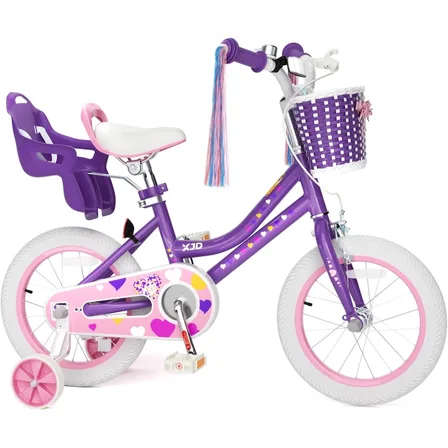
Purple XJD Girls' Bike with Doll Seat & Basket
For girls 71–122 cm tall (about ages 3–7), this XJD girls' bike in Purple pairs …$75.99
$99.99 -

Blue XJD Girls Bike with Training Wheels – 12/14/16 Inch
If you're shopping for a first pedal bike for a daughter roughly 3 to 8 years ol…$149
$169 -

XJD Boys 12/14/16" Training Wheel Bike – Blue
The XJD Boys Bike in Blue is a training wheel bike for riders 71–122 cm tall—rou…$169
$199