

How tall of a kid for a 12 inch bike
A 12-inch bike is an XBikes starting point for a child 34–40 inches (86–102 cm) tall, typically age 3–4. Measure the child and check the actual bike before deciding.
Measure height and inseam first
“12 inch” describes the wheel size, not the child’s height or the bicycle’s seat height. Have the child stand straight against a wall without shoes, then measure from the floor to the top of the head. Compare that result with the 34–40 inch (86–102 cm) starting range.
Next, measure inseam. With the child still barefoot, place a firm, thin book between the legs to represent the saddle, then measure vertically from the floor to the top edge of the book. There is no supplied universal inseam number for a 12-inch bike, so use this measurement to compare against the actual bicycle’s minimum saddle position and stand-over space. Follow the exact product manual when adjusting the seat or other components.
Use this size comparison
| Wheel size | XBikes rider-height starting point | Age starting point |
|---|---|---|
| 12 Inch | 34–40 in / 86–102 cm | 3–4 |
| 14 Inch | 37–45 in / 94–114 cm | 3–6 |
| 16 Inch | 40–48 in / 102–122 cm | 4–7 |
The overlapping ranges are intentional starting points, not proof that two sizes fit equally. Height should carry more weight than age, and neither replaces trying the bicycle. A child near 40 inches may fall within more than one range, so compare both bicycles rather than automatically choosing the larger one.
Check the child on the actual bicycle
A suitable number on a chart is only the first screen. With an adult stabilizing the bicycle, check whether the child can:
- stand over the bicycle comfortably rather than being forced onto tiptoes;
- sit in a controlled position and reach the handlebar without an awkward stretch;
- turn the handlebar while remaining balanced and in control;
- reach and operate the brakes confidently, where the bicycle has rider-operated brake controls; and
- start, stop and put a foot down without panic or loss of control.
Current confidence matters. A hesitant beginner may handle a correctly fitted smaller bicycle more successfully than an oversized one. Do not buy a larger bike solely for future growth: the child needs safe stand-over, steering control and usable brake reach now.
When these catalog options are relevant
The supplied catalog choices are relevant because each has a verified 12 Inch SKU label, while also offering verified 14 Inch and 16 Inch labels for a direct size comparison. Training wheels are part of each supplied product description, but they do not correct poor reach, inadequate stand-over or an oversized frame.
XJD Girls Bike for Kids Ages 3-8, 12/14/16 Inch with Training Wheels – Purple has supplied 12 Inch, 14 Inch and 16 Inch SKU labels. The age wording is part of its catalog title only; use the XBikes height ranges and an individual fit check instead.
Girls 12/14/16 Inch Kids Bike by XJD with Training Wheels – Peach also provides supplied 12 Inch, 14 Inch and 16 Inch choices. It is relevant when the measured child falls around the overlapping size ranges and needs to try more than one wheel size.
XJD Light Purple Girls Bike with Basket, Training Wheels, 12/14/16/20 Inch includes a basket and training wheels in its catalog title. For this comparison, the supplied available SKU labels are 12 Inch, 14 Inch and 16 Inch; confirm the exact selectable variant rather than relying only on title wording.
These particular options help answer the question because all three let a shopper begin with the requested 12-inch label and compare adjacent verified sizes without treating age in a product name as fit evidence.
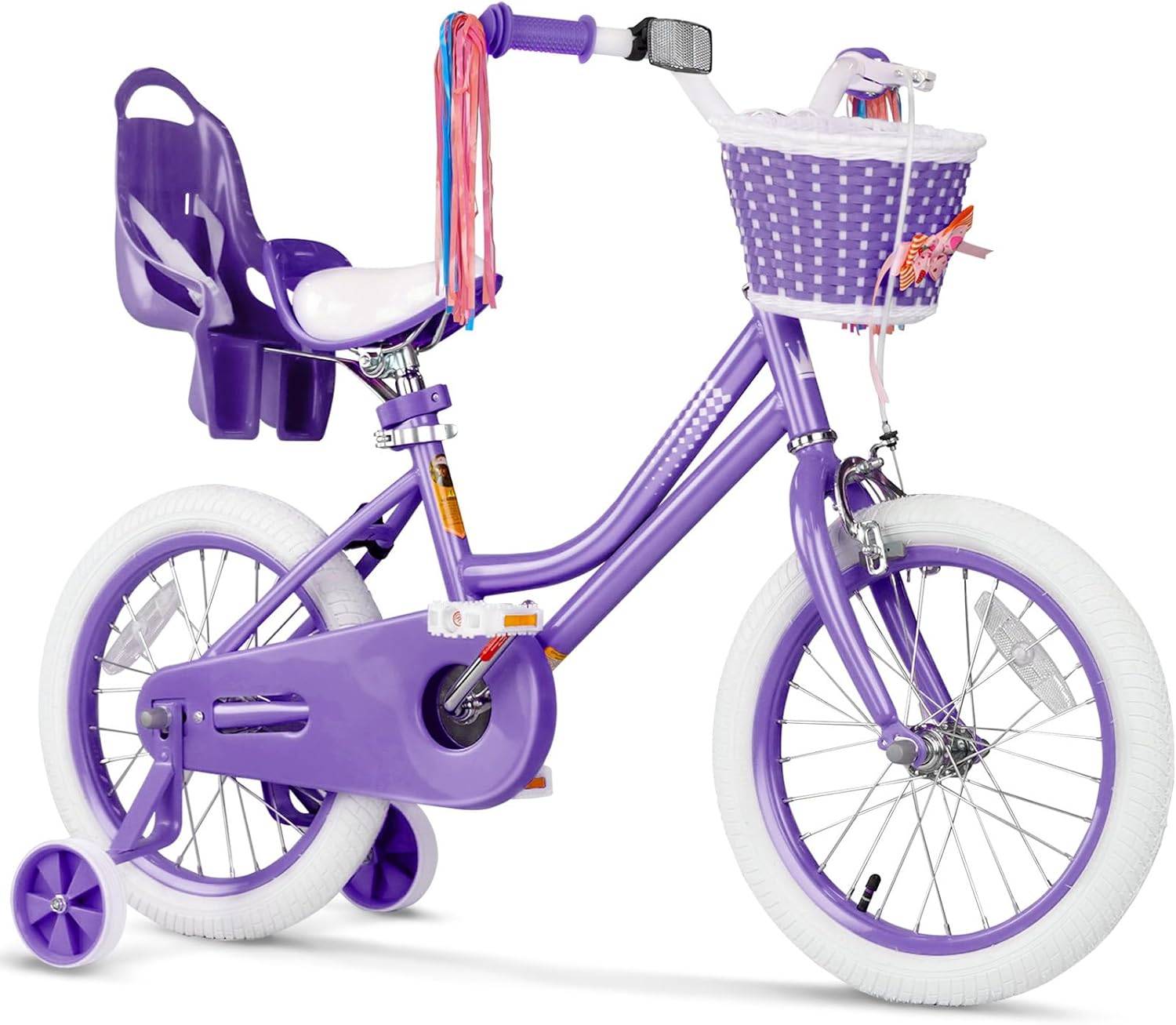 XJD Girls Bike for Kids Ages 3-8, 12/14/16 Inch with Training Wheels – Purple
Its verified 12 Inch SKU makes it directly relevant, with 14 Inch and 16 Inch labels for comparison. “Ages 3-8” is catalog-title wording, not individual fit evidence.
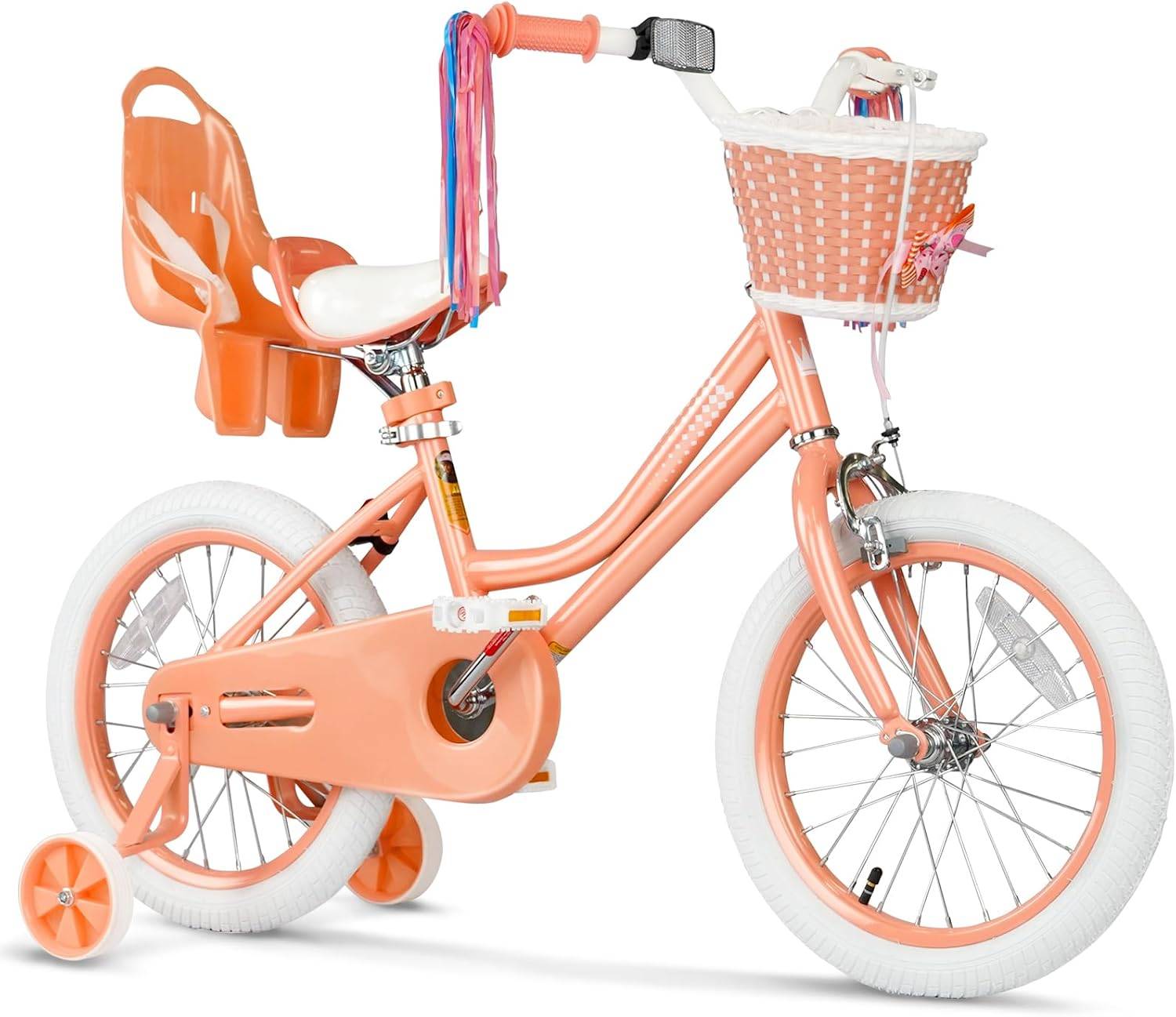 Girls 12/14/16 Inch Kids Bike by XJD with Training Wheels – Peach
This training-wheel bike has verified 12 Inch, 14 Inch and 16 Inch SKU labels, allowing parents to compare adjacent sizes after measuring the child and checking stand-over, reach and control.
 XJD Light Purple Girls Bike with Basket, Training Wheels, 12/14/16/20 Inch
The supplied available SKU labels are 12 Inch, 14 Inch and 16 Inch. Its title also mentions a basket and training wheels; confirm the exact selectable variant during comparison.
Know when a 12-inch bike is not the answer
Move beyond the 12-inch starting point if the child is taller than 40 inches (102 cm), or if a real fit check shows cramped steering, poor control or an unsuitable riding position. Consider a smaller or differently proportioned bicycle if the child is below 34 inches (86 cm), cannot stand over it comfortably, cannot reach the controls, or lacks the confidence to start and stop.
Do not assume training wheels make an ill-fitting bicycle appropriate. They can support balance as described by a product, but wheel size, stand-over, reach and control still need separate checks. For assembly, maintenance, compatibility and adjustment procedures not stated here, follow the exact product manual or ask a qualified bicycle mechanic.
Make the final 12-inch decision
Choose a 12-inch bike only when the child measures within the 34–40 inch starting range and demonstrates comfortable stand-over, reach, brake operation and control on that exact bicycle. Finish the setup with a properly fitting bicycle helmet worn level, with its straps used according to the helmet manufacturer’s instructions. If any fit check fails, compare another size now instead of buying room to grow.
Bikes for your next adventure
-

Blue XJD Girls Bike with Training Wheels – 12/14/16 Inch
If you're shopping for a first pedal bike for a daughter roughly 3 to 8 years ol…$149
$169 -
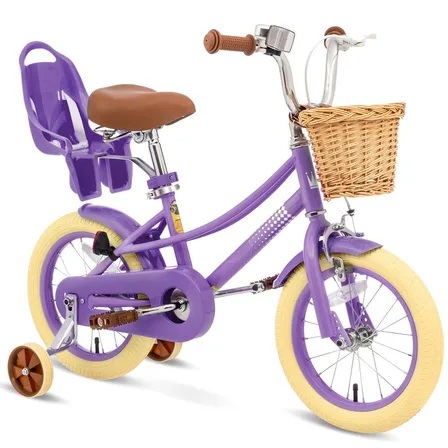
XJD Girls' Bike with Training Wheels, 12/14/16/20 Inch – Purple
The XJD girls' bike with training wheels in Purple is built to grow with your ri…$139
$159 -

XJD Kids Bike for Girls – Pink, 12/14/16/20 Inch with Training Wheels
The XJD Kids Bike for Girls in Pink is a training-wheel bike built to carry your…$139
$159