

How to get a toddler to pedal a bike
To get a toddler to pedal a bike, begin with a correctly fitted cycle, teach the circular foot motion off the bike, then practise one small skill at a time in a flat, traffic-free area.
Check fit before teaching the motion
Measure the child’s height without shoes and measure inseam from the floor to the crotch. Age is only a starting point: compare the measurements with the bike, then check what the child can actually control.
For a 12-inch bike, the XBikes starting range is ages 3–4 and a rider height of 34–40 in (86–102 cm). For a 14-inch bike, it is ages 3–6 and 37–45 in (94–114 cm). These ranges overlap, so height alone does not decide between them.
Have the child try the bike. Check that they can stand over it, reach the handlebar without stretching, turn it comfortably and operate the brakes within easy reach. Follow the American Academy of Pediatrics guidance not to buy an oversized bicycle merely for future growth. If either size leaves the child stretched, perched or unable to control the brakes, it is not suitable now.
Teach what pedalling feels like
A toddler may understand “push” but not the alternating circular movement. Demonstrate slowly with your hands, then let the child rehearse away from the bike: seated on a stable chair, ask them to make forward circles with their feet. Keep it playful and stop before frustration takes over.
On the bike, position one pedal slightly forward and high enough to provide a useful first push. Ask the child to press that pedal forward and down, then find the other pedal. A short cue such as “push, find, push” is easier to follow than several instructions at once. If the pedals move backward, calmly reset them; avoid forcing the child’s legs through the motion.
Practise the start in tiny steps
- Choose a level, open place away from vehicles, slopes and obstacles.
- Hold the bike steady while the child places both feet on the pedals.
- Let the child make one forward pedal push, then stop.
- Repeat until they can find the second pedal without looking down for long.
- Progress to two or three rotations while you support balance lightly.
- Reduce assistance only when steering, braking and confidence remain controlled.
Support the child or the bike without steering the handlebar for them whenever possible. This allows them to feel their own corrections. Praise a specific action—such as finding the pedal or looking ahead—rather than demanding a certain distance.
Separate pedalling from balance
If the child cannot yet steer and balance, trying to learn all three actions at once may stall progress. Let them practise sitting, looking ahead, steering and stopping before expecting continuous pedalling. Training wheels can reduce the immediate balance demand, but they do not correct poor fit or teach brake control by themselves.
Pause when the child repeatedly loses the pedals, cannot start without substantial pushing, looks frightened or cannot stop on request. Recheck seat position and overall fit using the exact product manual; for assembly, adjustment, compatibility or torque instructions not stated in the catalog, use that manual or a qualified bicycle mechanic.
Where the supplied bike is relevant
The XJD Boys 12/14/16" Training Wheel Bike – Blue is a training-wheel model offered with 12 Inch, 14 Inch and 16 Inch SKU labels. For a toddler learning to pedal, its 12-inch and 14-inch options provide relevant fit comparison points; the 16-inch option starts at ages 4–7 and 40–48 in (102–122 cm), so it should not be chosen for growth if the child cannot currently fit and control it.
These particular catalog options help answer the title because they let you compare three labeled wheel sizes within one training-wheel bike listing while still choosing by measured fit, reach, brake control and confidence rather than the product name or age alone.

The listing does not establish which option fits your child. Compare the measured rider with the starting ranges, then require a successful in-person control check. If the child is shorter than the 12-inch starting range or cannot safely stand over, reach and brake on that option, this supplied product is not relevant yet.
Protect the practice session
Use a bicycle helmet for every ride. Following U.S. Consumer Product Safety Commission guidance, choose one that fits properly, sits level and has its straps adjusted according to the helmet manufacturer’s instructions. Close supervision and a traffic-free practice space remain necessary even when training wheels are fitted.
Measure height and inseam today, compare 12-inch and 14-inch starting ranges, and try only the size the child can stand over, reach, steer and brake confidently. Then practise one pedal push at a time; if control breaks down, stop and revisit fit before the next attempt.
Bikes for your next adventure
-
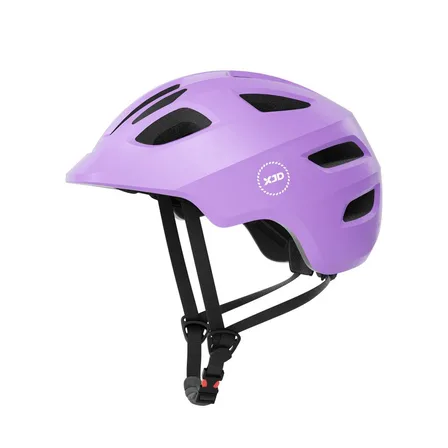
Girls' Bike Helmet from XJD – Purple
The XJD kids bike helmet in purple is a multi-sport helmet built for toddlers an…$59.99
$49 -

XJD Boys 12/14/16" Training Wheel Bike – Blue
The XJD Boys Bike in Blue is a training wheel bike for riders 71–122 cm tall—rou…$169
$199 -

Light Pink XJD Girls' Bicycle with Basket & Training Wheels
The Light Pink XJD Girls' Bicycle with Basket & Training Wheels is a retro-style…$109.99
$129.99