

How to get child to ride bike
To get a child to ride a bike, remove pressure, choose a bike they can comfortably control, and practise one small skill at a time in a quiet, open area.
Start by finding out what is stopping them
Ask one simple question: “Which part feels hard or scary?” The answer determines what to do next. A child may dislike wobbling, fear falling, struggle to reach the brakes, or simply not want an audience. Treat hesitation as useful information rather than disobedience.
Check the setting too. Move away from traffic, steep slopes, crowds and rushed schedules. Choose a level, predictable surface with plenty of clear space. Keep the first session short and stop while the child still feels successful.
Measure before asking them to practise
Measure the child’s standing height and inseam, then have them try the actual bicycle. Age is only a starting point. They should be able to stand over the bike appropriately, reach the controls without stretching, steer without strain and operate the brakes confidently. Do not buy an oversized bicycle for future growth.
| Wheel size | Starting age | Rider height |
|---|---|---|
| 12 Inch | 3–4 | 34–40 in / 86–102 cm |
| 14 Inch | 3–6 | 37–45 in / 94–114 cm |
| 16 Inch | 4–7 | 40–48 in / 102–122 cm |
| 18 Inch | 5–9 | 43–52 in / 109–132 cm |
| 20 Inch | 7–12 | 48–60 in / 122–152 cm |
| 24 Inch | 10–14 | 54–64 in / 137–163 cm |
| 26 Inch | Youth and adults | Over 60 in / 153 cm |
When ranges overlap, compare the child’s measured height, inseam, reach, brake control and current confidence on each candidate. A wheel-size label alone cannot confirm fit.
Teach control in small steps
- Make the bike familiar. Let the child walk beside it, steer it and practise using the brakes while you hold it steady.
- Practise getting on and stopping. Repeat these actions until they feel routine. Reliable stopping often reduces fear more effectively than encouragement alone.
- Work on balance. In an appropriate setup, let the child practise short, controlled glides while keeping close to the ground. Follow the bicycle manual for adjustments or component removal; use a qualified bicycle mechanic when unsure.
- Add pedalling. Ask for a few pedal turns toward a clear marker, then practise a controlled stop. Extend the distance only when the child requests or comfortably handles more.
- Reduce your help gradually. Support the child rather than pulling or pushing the bike unpredictably. Tell them before changing how much assistance you provide.
Avoid surprise releases, repeated comparisons with other children and promises that falling cannot happen. Praise a specific action—looking ahead, braking smoothly or trying again—rather than demanding a complete ride.
Use training wheels for the right problem
Training-wheel bikes can help a hesitant child become familiar with pedalling, steering and stopping while receiving lateral support. They do not remove the need to learn independent balance, so decide which skill currently blocks progress and plan a later balance step when the child is ready.
The supplied catalog options are relevant when a training-wheel bicycle matches the child’s measured fit and learning needs. The XJD Kids Bike for Girls – Pink, 12/14/16/20 Inch with Training Wheels offers 12, 14, 16 and 20 Inch labels. The XJD Pink Girls' Bike – Kids 12/14/16 Inch Training Wheel Bicycle offers 12, 14 and 16 Inch labels. These choices make it possible to compare overlapping sizes, while the first also provides a 20 Inch option.
 XJD Kids Bike for Girls – Pink, 12/14/16/20 Inch with Training Wheels
A training-wheel bicycle offered in 12, 14, 16 and 20 Inch labels. Compare the child’s measurements and control at the overlapping sizes; the 20 Inch option is relevant only when an individual fit check supports it.
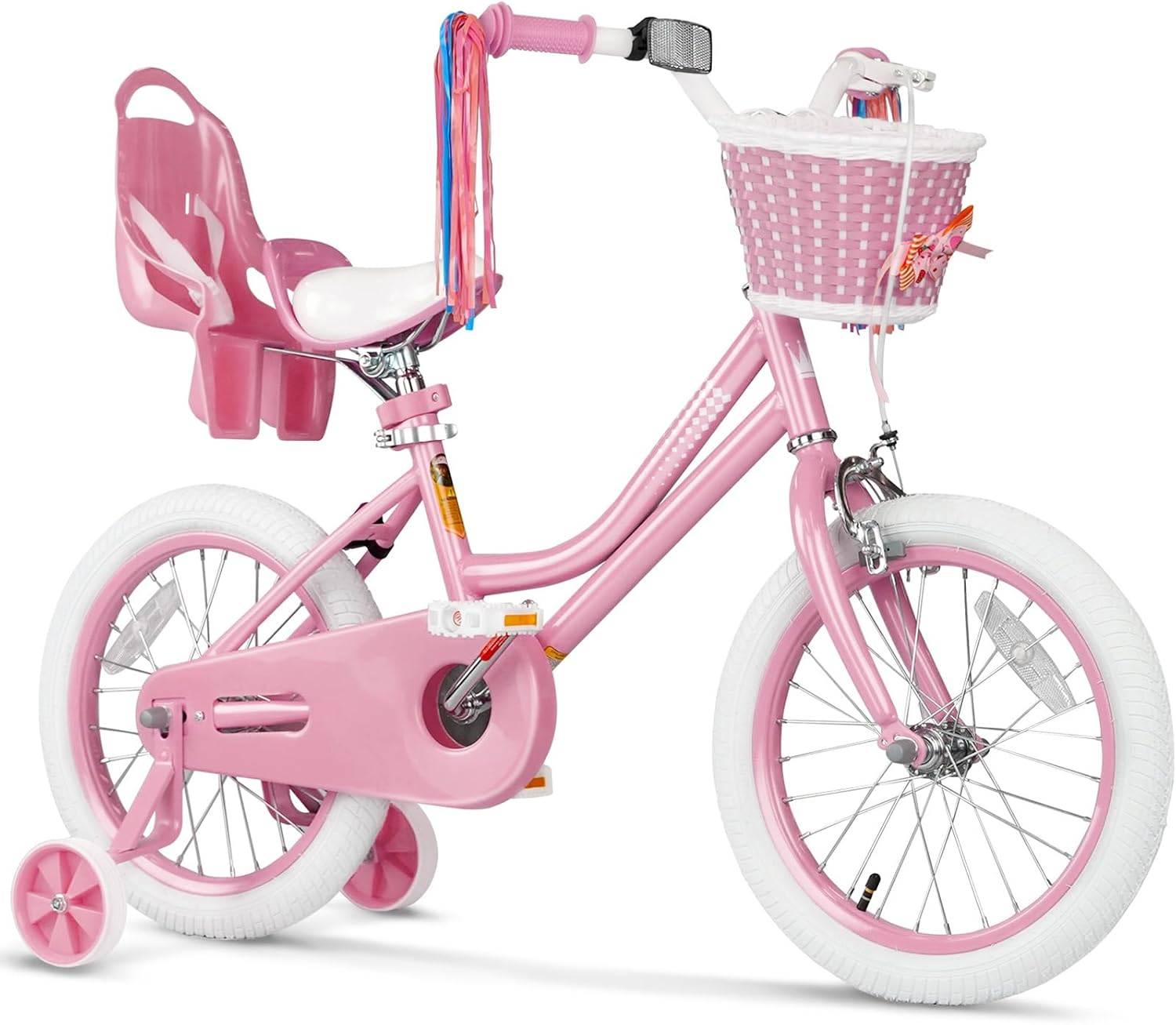 XJD Pink Girls' Bike – Kids 12/14/16 Inch Training Wheel Bicycle
A training-wheel bicycle offered in 12, 14 and 16 Inch labels. It is relevant for practising supported pedalling, steering and stopping when one of those sizes fits the child after an individual check.
Neither supplied product has an 18, 24 or 26 Inch option. If the fit check points to one of those sizes, these products are comparison points only, not substitutes. Wording such as “Kids” or “Girls” in a catalog title is not proof that a particular child fits the bike.
Make safety part of the routine
Use a bicycle helmet that fits properly, sits level and has straps adjusted according to its manufacturer’s instructions. Check the riding area before every session and supervise according to the child’s ability and surroundings.
Before riding, follow the exact bicycle manual for assembly, adjustments, maintenance, compatibility, load limits and torque. If the instructions are unavailable or the bike’s condition is uncertain, use a qualified bicycle mechanic rather than guessing.
Know what to do next
If the child can mount, steer, brake and place themselves securely but remains nervous, repeat short, predictable exercises and let them choose when to progress. If they cannot comfortably reach or control the bike, pause the lesson and compare a better-fitting size instead of pushing through.
Today’s useful goal is not “ride independently.” Measure the child, verify fit and brake control on the actual bike, then complete one calm start-and-stop practice that leaves them willing to return.
Bikes for your next adventure
-
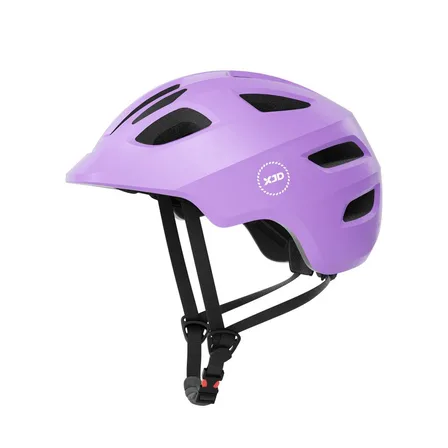
Girls' Bike Helmet from XJD – Purple
The XJD kids bike helmet in purple is a multi-sport helmet built for toddlers an…$59.99
$49 -

XJD Boys 12/14/16" Training Wheel Bike – Blue
The XJD Boys Bike in Blue is a training wheel bike for riders 71–122 cm tall—rou…$169
$199 -

Light Pink XJD Girls' Bicycle with Basket & Training Wheels
The Light Pink XJD Girls' Bicycle with Basket & Training Wheels is a retro-style…$109.99
$129.99