

How to ride a bike with a 5 year old
To ride a bike with a 5-year-old, first fit the child’s bike by measured height and control, then practise stopping and steering in a traffic-free area before riding side by side on a short, simple route.
Measure before choosing the bike
Measure the child’s height without shoes. Then have the child try the actual bicycle: check that they can stand over it comfortably, reach the handlebar without stretching, turn it without losing balance, and operate the brakes reliably. Age is only a starting point; inseam, reach, brake control and confidence decide whether the fit works.
For a 5-year-old, the XBikes starting points overlap:
| Wheel size | Starting range | What to compare |
|---|---|---|
| 12 Inch | Ages 3–4; 34–40 in / 86–102 cm | Usually below the age starting point; consider only if measured height and actual fit support it. |
| 14 Inch | Ages 3–6; 37–45 in / 94–114 cm | A possible starting comparison for a smaller rider. |
| 16 Inch | Ages 4–7; 40–48 in / 102–122 cm | A possible starting comparison when height and control match. |
| 18 Inch | Ages 5–9; 43–52 in / 109–132 cm | Also relevant to compare, especially for a taller 5-year-old. |
Do not buy an oversized bicycle merely to leave room for growth. If the child cannot control it now, choose a different size or wait.
Decide how much support is needed
Before riding together, observe a few controlled starts and stops. The child should be able to look forward, steer around a gentle curve, stop when asked, and put a foot down without panic. A child still learning balance may need training wheels or direct adult practice; a confident independent rider can move toward a shared route.
The supplied catalog options are useful when comparing 12-, 14- and 16-inch training-wheel bicycles. They do not include an 18-inch option, so they are nearest-size comparison points—not substitutes—if the child’s measurements and fit check indicate 18 inches.
 XJD Kids Bike for Girls – Pink, 12/14/16/20 Inch with Training Wheels
Offers training-wheel configurations in 12, 14, 16 and 20 Inch. For a 5-year-old, compare only a size supported by measured height and an individual control check.
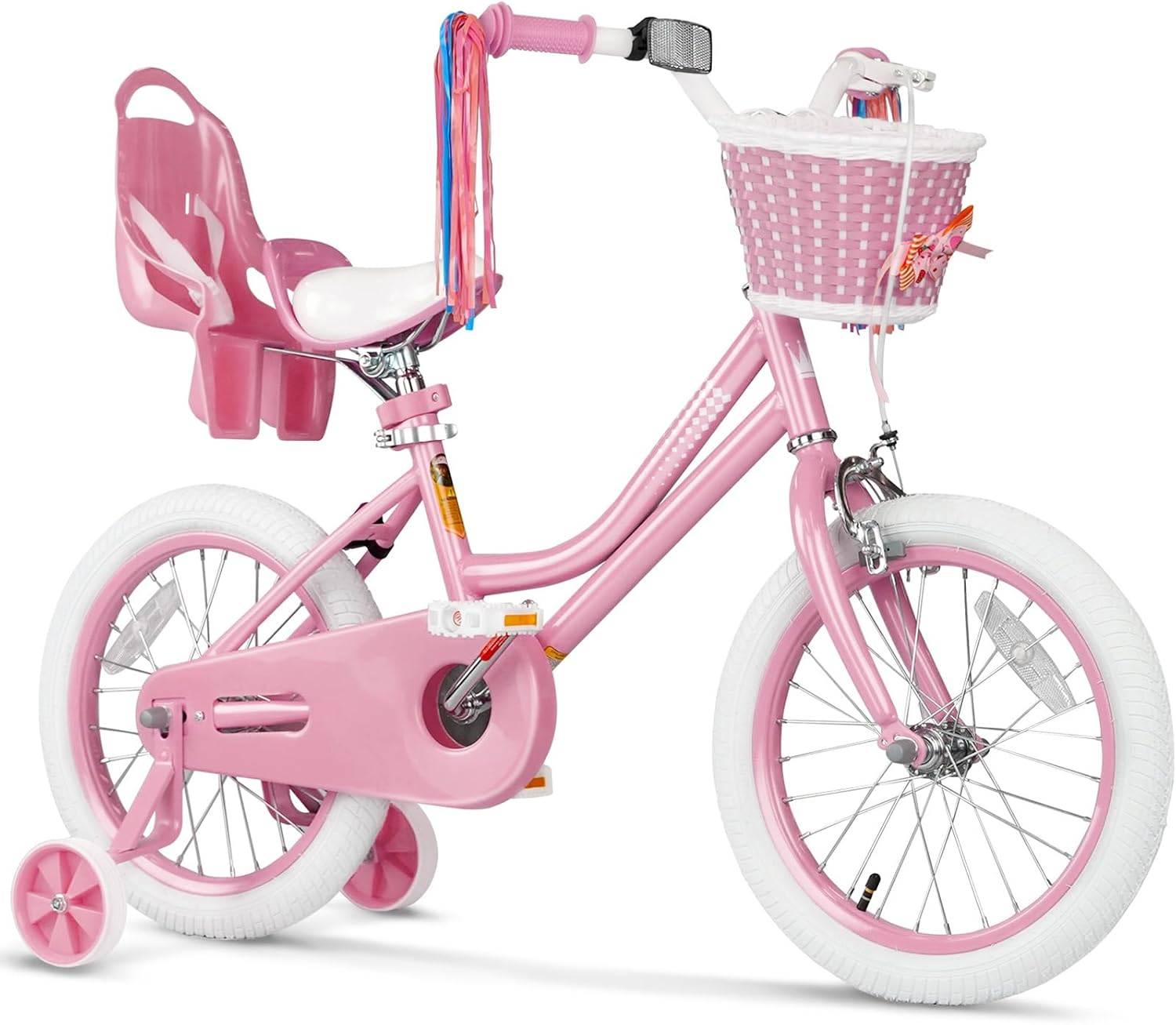 XJD Pink Girls' Bike – Kids 12/14/16 Inch Training Wheel Bicycle
A training-wheel bicycle listed in 12, 14 and 16 Inch, making it relevant when one of those sizes matches the child’s height, reach, braking and confidence.
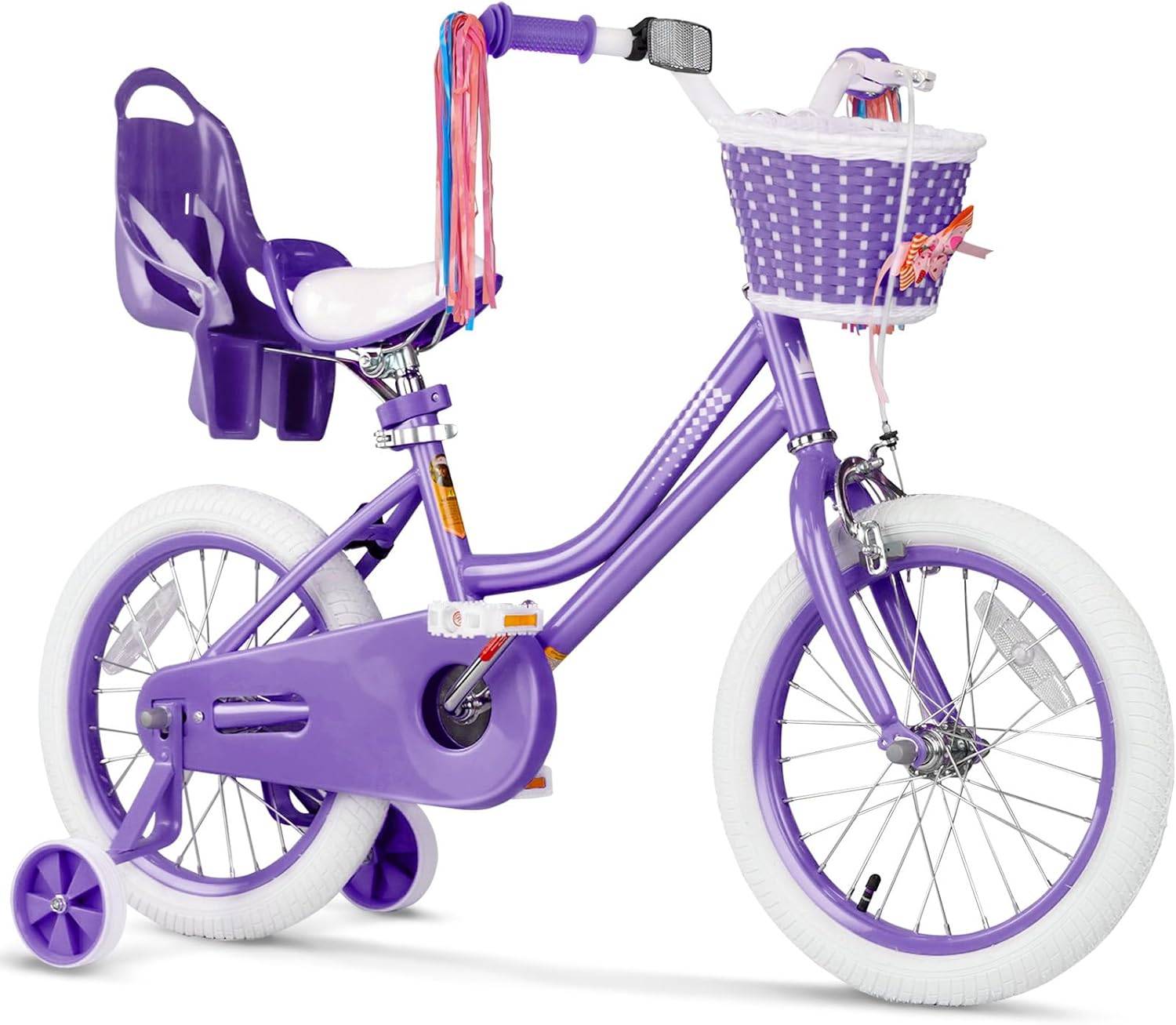 XJD Girls Bike for Kids Ages 3-8, 12/14/16 Inch with Training Wheels – Purple
Provides 12-, 14- and 16-inch training-wheel choices. Its “Ages 3-8” wording is a catalog label; measured height and an actual fit check must guide selection.
Compare the supplied options correctly
XJD Kids Bike for Girls – Pink, 12/14/16/20 Inch with Training Wheels provides the widest listed size choice: 12, 14, 16 and 20 Inch. For this decision, compare only the size supported by the child’s measurements. The XBikes 20-inch starting point is ages 7–12 and 48–60 in / 122–152 cm, so it should not be selected for a typical 5-year-old on age wording alone.
XJD Pink Girls' Bike – Kids 12/14/16 Inch Training Wheel Bicycle offers 12-, 14- and 16-inch labels. XJD Girls Bike for Kids Ages 3-8, 12/14/16 Inch with Training Wheels – Purple offers the same listed sizes. Treat “Ages 3-8” in that exact title only as a catalog label, not proof of fit.
These products are relevant only if training wheels suit the child’s present learning stage and one listed size passes the individual fit check. The supplied facts do not establish brake type, weight, load limit, assembly details or training-wheel compatibility procedures. Follow the exact product manual or ask a qualified bicycle mechanic about those points.
Practise before sharing a route
- Choose a flat, open, traffic-free area with plenty of stopping space.
- Check the bicycle according to its manual and fit a bicycle helmet properly. It should sit level, with straps adjusted according to the helmet manufacturer’s instructions.
- Practise starting, riding a straight line, gentle turns and controlled stops. Use a clear stop word and confirm that the child responds consistently.
- Walk or jog nearby until the child can repeat those actions without being held.
- Ride a short loop together only after control is predictable.
If the child freezes, looks down continuously, cannot stop on request or struggles to reach the brakes, return to practice or reassess the bicycle fit.
Ride where communication is easy
For the first shared ride, choose a familiar, low-complexity route away from motor traffic, steep slopes, crowded paths and difficult crossings. Keep the outing short enough that fatigue does not erode control.
Position yourself where you can see the child and speak without shouting. Explain the formation before moving: who leads, where to stop and what signal means “slow down.” At every crossing or confusing junction, stop together and reset rather than expecting an improvised decision.
Make the go-or-wait decision
Ride together now only if the measured height points to an appropriate wheel-size range, the actual bike fits, the child can steer and brake reliably, the helmet fits, and the planned route matches current confidence. Otherwise, measure again, compare 14, 16 and—when indicated—18 Inch in person, or continue traffic-free practice before attempting the family ride.
Bikes for your next adventure
-

Kids Bike Helmet by XJD for Boys & Girls – Black, Blue, Green, Pink, Purple
The XJD Kids Bike Helmet covers a wide 2-to-8-year age range thanks to two head-…$59.99
-

Kids Bike Helmet by XJD for Girls – Pink
The XJD Kids Bike Helmet in Pink is a lightweight multi-sport helmet for girls r…$59.99
$99 -

XJD Kids Bike for Girls – Pink, 12/14/16/20 Inch with Training Wheels
The XJD Kids Bike for Girls in Pink is a training-wheel bike built to carry your…$139
$159