

Is there a child seat for a full suspension bicycle
Yes, a child seat can sometimes fit a full-suspension bicycle, but only when both the bicycle and seat makers explicitly approve the exact mounting arrangement.
Why compatibility is more difficult
A full-suspension frame moves as the suspension compresses. A child seat, clamp, rack or support arm must not obstruct that movement, contact a tyre, interfere with cables or controls, or attach to an unsuitable part of the frame.
Do not assume that a seat fits because its clamp closes around a tube. Confirm the permitted mounting points in the bicycle manual and the child-seat manual. If either manual excludes full-suspension bicycles, requires a feature your bicycle lacks, or leaves the combination unclear, do not install the seat without guidance from the manufacturers or a qualified bicycle mechanic.
Measure and inspect before choosing a seat
Record the bicycle's exact make, model, frame size and year, then identify whether the frame has approved mounting points for a rack or child seat. With the suspension both unloaded and compressed through its usable travel, inspect the changing clearance around the rear tyre, saddle, frame and any proposed mounting area.
- Measure the relevant frame-tube shape and dimensions where a clamp would sit.
- Check the space between the rear tyre and the proposed seat or rack throughout suspension movement.
- Compare the bicycle's mounting points with every fitting required by the seat instructions.
- Confirm that cables, hoses, controls and the rider's pedalling path remain unobstructed.
- Compare the child's current size with the seat maker's stated limits, without estimating or rounding upward.
Use the exact manuals for load limits, fasteners, assembly sequence, compatibility and torque. Those details vary, so they should not be guessed or transferred from another bicycle or seat.
Compare the possible mounting systems
Child seats may use front, frame or rear-rack mounting systems. The relevant question is not which type is generally preferable, but which system is expressly allowed on your particular bicycle and provides all required clearances while the suspension moves.
A rack-mounted seat requires a rack and bicycle mounting arrangement approved for the intended use. A frame-mounted design requires a permitted tube shape, size and location. A front-mounted design still needs verified steering, knee, cable and control clearance. Approval of one mounting style does not imply approval of another.
What to do before carrying a child
- Read both manuals and locate their compatibility and load-limit sections.
- Send the bicycle model, year, frame size and mounting details to the seat manufacturer if compatibility is not explicit.
- Have a qualified bicycle mechanic inspect the proposed installation when mounting points, suspension clearance or instructions are uncertain.
- After an approved installation, perform every pre-ride and maintenance check required by the manuals.
The child and adult rider should each wear a properly fitting bicycle helmet. The helmet should sit level, and its straps should be adjusted according to the helmet manufacturer's instructions. If the loaded bicycle feels difficult to balance, start, stop or control, do not carry the child on it.
When these XBikes products are relevant
The supplied catalog items are complete children's training-wheel bicycles, not child seats or full-suspension mounting hardware. They are relevant only when comparing an independent-riding option for a child; they cannot establish whether a passenger seat fits the adult bicycle.
The Girls' Training Wheel Bike by XJD, 12–20 Inch Wheels – Blue, XJD Girls' Bike with Training Wheels, 12/14/16/20 Inch – Purple, and XJD Kids Bike for Girls – Pink, 12/14/16/20 Inch with Training Wheels each offer catalog choices labelled 12 Inch, 14 Inch, 16 Inch and 20 Inch. These options help distinguish a separate child bicycle from the child-seat solution asked about here.
 Girls' Training Wheel Bike by XJD, 12–20 Inch Wheels – Blue
A separate training-wheel bicycle offered in 12 Inch, 14 Inch, 16 Inch and 20 Inch labels; it is relevant for comparing independent riding, not for mounting a child seat.
 XJD Girls' Bike with Training Wheels, 12/14/16/20 Inch – Purple
This purple training-wheel bicycle has 12 Inch, 14 Inch, 16 Inch and 20 Inch catalog options. It does not answer full-suspension child-seat compatibility but may suit an independent-riding comparison.
 XJD Kids Bike for Girls – Pink, 12/14/16/20 Inch with Training Wheels
A pink children's training-wheel bicycle with 12 Inch, 14 Inch, 16 Inch and 20 Inch options. Consider it only as a separately fitted child bicycle, not as child-seat hardware.
If considering one of those bicycles instead, begin with measured rider height: 12 Inch corresponds to 34–40 in / 86–102 cm, 14 Inch to 37–45 in / 94–114 cm, 16 Inch to 40–48 in / 102–122 cm, and 20 Inch to 48–60 in / 122–152 cm. Age is only a starting point: have the child try the bicycle and check stand-over clearance, reach, brake control and confidence. Do not buy an oversized bicycle merely for growth.
Make the final decision
Proceed with a child seat only after the bicycle and seat instructions both confirm the exact mounting system and all clearances remain adequate through suspension movement. If approval is missing or the fit is uncertain, pause and ask both manufacturers or a qualified mechanic; otherwise, compare a correctly fitted independent children's bicycle instead.
Bikes for your next adventure
-
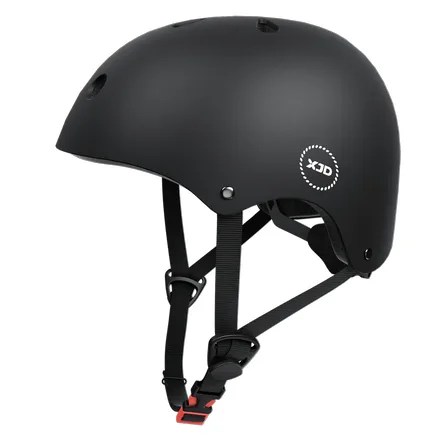
7-in-1 Kids Helmet & Protective Gear Set from XJD – Black or Blue
If you're outfitting one kid (or a couple of siblings) for biking, scootering, o…$59.99
-
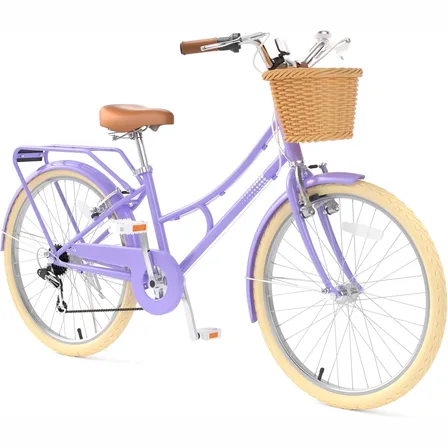
24-Inch Purple XJD Beach Cruiser Bike with U-Brake
The XJD 24-Inch Purple Beach Cruiser is built for girls and young women roughly …$159.99
-
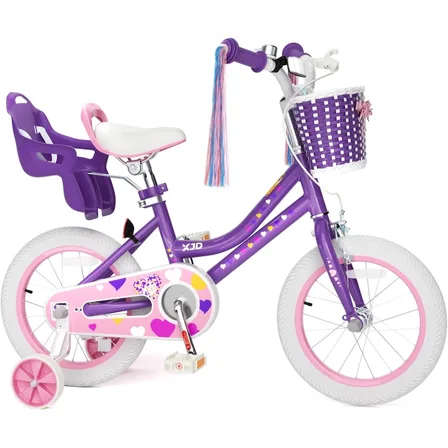
Purple XJD Girls' Bike with Doll Seat & Basket
For girls 71–122 cm tall (about ages 3–7), this XJD girls' bike in Purple pairs …$75.99
$99.99