

What age 2 wheel bike
A child can start a two-wheel bike when they can balance, steer, stop and reach the controls confidently; age alone does not decide readiness.
What age is right for a two-wheel bike?
There is no single correct age. First measure the child, then check their balance and control on the actual bicycle. Some children are ready sooner than others of the same age, and a familiar wheel size can still fit differently across bicycle designs.
A child is ready to try a two-wheel bike when they can sit securely, look ahead while steering, keep the bicycle balanced, and stop when asked. They should also understand simple instructions and be willing to practise. Hesitation is a reason to slow down, not to move up to a larger bicycle.
Measure height before comparing wheel sizes
Measure the child’s standing height without shoes, against a wall. Also measure the inseam from the floor to the crotch while the child stands naturally. Height gives you a starting wheel-size range; inseam helps you judge clearance and whether the child can put their feet down as intended for that bicycle.
| Wheel size | Starting age | Rider height |
|---|---|---|
| 12 Inch | 3–4 | 34–40 in / 86–102 cm |
| 14 Inch | 3–6 | 37–45 in / 94–114 cm |
| 16 Inch | 4–7 | 40–48 in / 102–122 cm |
| 18 Inch | 5–9 | 43–52 in / 109–132 cm |
| 20 Inch | 7–12 | 48–60 in / 122–152 cm |
| 24 Inch | 10–14 | 54–64 in / 137–163 cm |
| 26 Inch | Youth and adults | Over 60 in / 153 cm |
These XBikes figures are starting points, not a substitute for checking fit. Where ranges overlap, choose by the child’s measured height, inseam, reach, brake control and current confidence—not by the older age printed beside a size.
Check the bicycle with the child present
Have the child try the bicycle rather than ordering an oversized model for future growth. While standing over it, they need appropriate clearance instead of being pressed against the frame. Seated, they should reach the handlebar without stretching, turn it without losing their stable position, and operate the brakes comfortably.
Ask the child to demonstrate four things in a quiet, traffic-free practice area:
- Start while keeping the bicycle under control.
- Ride straight and make a gentle turn while looking ahead.
- Reach and use the brakes without shifting their hands into an awkward position.
- Stop predictably and place a foot down without panic.
If any step is unreliable, adjust the bicycle only as its manual permits, try a more suitable frame or wheel size, or continue practising balance before removing support. For assembly, adjustments, compatibility and torque requirements, follow the exact product manual or use a qualified bicycle mechanic.
How the supplied catalog option helps
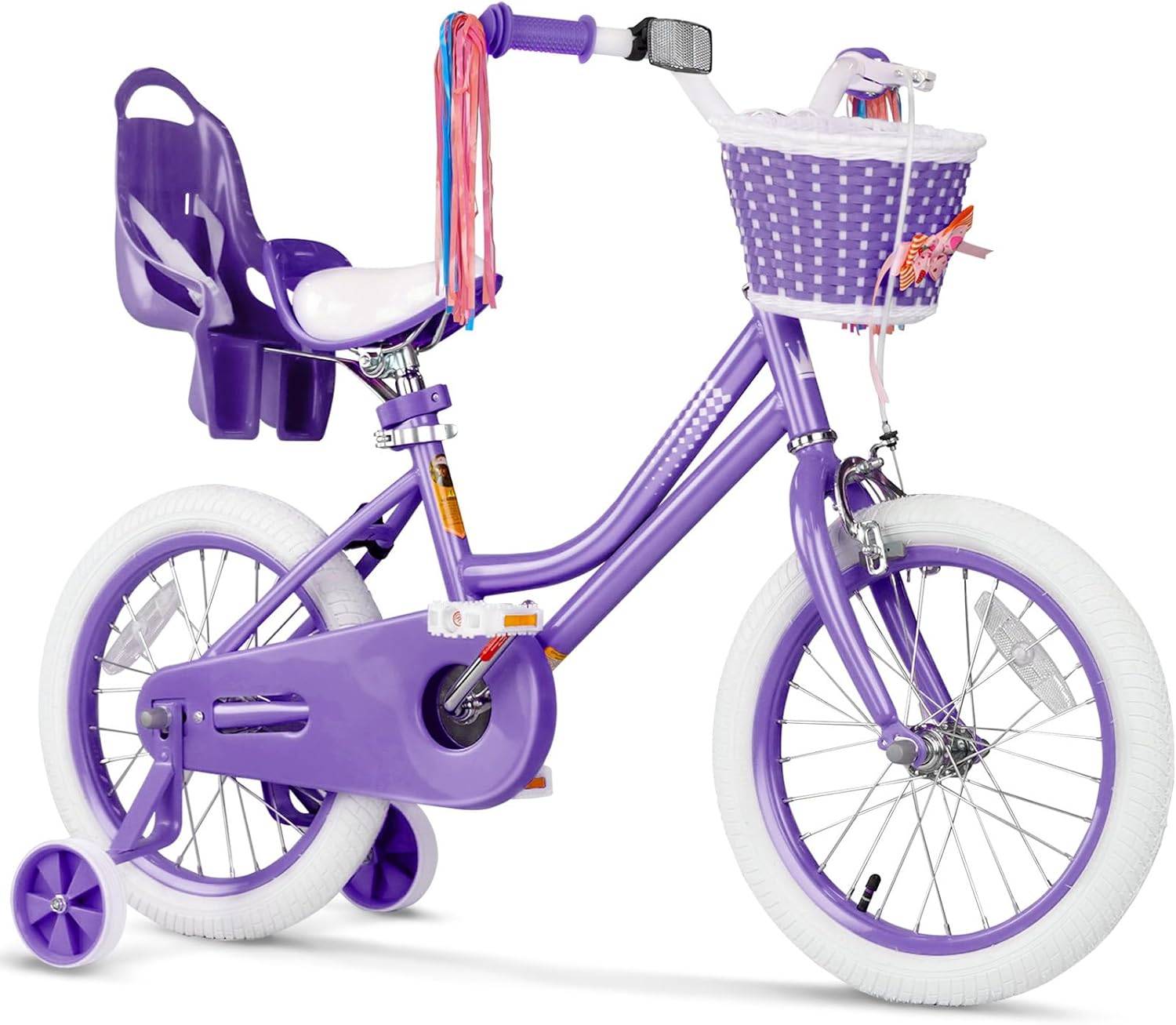
The XJD Girls Bike for Kids Ages 3-8, 12/14/16 Inch with Training Wheels – Purple offers 12 Inch, 14 Inch and 16 Inch SKU labels in the Training Wheel Bikes category. Those sizes cover XBikes starting ranges from 34 to 48 inches in rider height, with overlaps that make measured fit especially important. The “Ages 3-8” wording is part of its catalog title, not evidence that it fits every child in that span.
This product is relevant when a parent is comparing a first pedal bicycle with training wheels in one of those three supplied sizes. It does not establish that a child is ready to ride independently on two wheels; balance, reach, braking and confidence still need to be checked on the bicycle.
Training wheels versus independent two-wheel riding
A bicycle fitted with training wheels is still a two-wheeled bicycle by wheel-size classification, but the training wheels provide added support. If by “two-wheel bike” you mean riding without training wheels, do not treat their removal as an age milestone. Make the change when the child can balance, steer and stop consistently and wants to attempt it.
Because the supplied product is specifically categorized as a training-wheel bike, confirm removal, adjustment and compatibility only from its exact manual or with a qualified bicycle mechanic. No unsupported conversion procedure should be assumed.
Helmet and final decision
Use a bicycle helmet that fits the child properly. It should sit level, with its straps arranged and adjusted according to the helmet manufacturer’s instructions. Recheck the fit whenever the helmet is worn.
Do this next: measure standing height and inseam, select the matching starting range, and have the child try that bicycle. Choose it only if stand-over clearance, reach, brake use and confidence all work now; if they do not, do not size up for growth or remove support simply because the child has reached a particular age.
Bikes for your next adventure
-
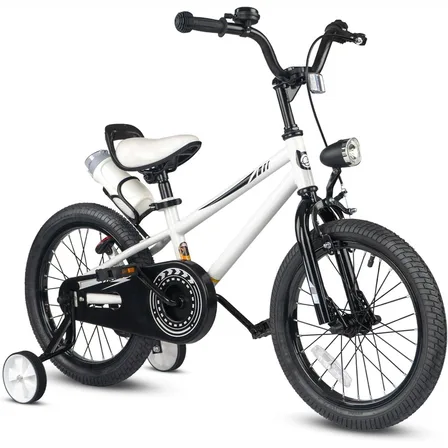
XJD Kids' Training Wheel Bike for Boys & Girls, 12/14/16 Inch – White
The XJD kids' training wheel bike in White is made for riders ages 3–8 (roughly …$169
$199 -
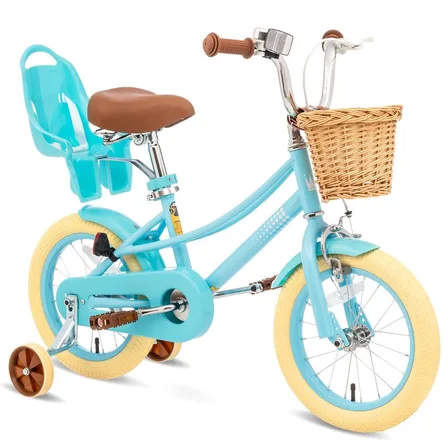
Girls' Training Wheel Bike by XJD, 12–20 Inch Wheels – Blue
This XJD girls' training wheel bike in Blue covers one of the widest fit ranges …$139
$159 -
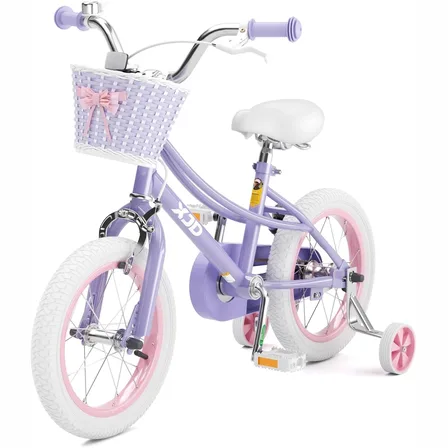
Girls' Training Wheel Bike by XJD with Basket – Purple
If you're shopping for a first bike for a girl roughly 3 to 12 years old (91–152…$75.99