

What age bike 20 inch
A 20-inch bike generally suits ages 7–12 and riders 48–60 in (122–152 cm) tall, but measured fit and control matter more than age.
Is a 20-inch bike right for your child?
Use age only as a starting point. Under the XBikes wheel-size standard, a 20-inch bike is intended as an initial comparison for children ages 7–12 whose height falls between 48 and 60 inches (122–152 cm). Children of the same age can have very different proportions, reach and riding ability, so the label cannot confirm fit by itself.
Do not deliberately choose an oversized bicycle for extra growing room. A child who cannot stand over, steer or stop the bike comfortably may struggle to stay in control. The useful next step is to measure the rider and then arrange an individual fit check on the exact bicycle.
What to measure before comparing bikes
Measure the child without shoes, standing upright against a wall. Record total height from the floor to the top of the head. Then measure inseam from the floor to the crotch, using a book held level between the legs to represent the saddle area.
Height lets you compare the rider with the XBikes starting range. Inseam helps you assess stand-over clearance and whether the child can get on, stop and stabilize the bicycle comfortably. Because frame shapes vary, an inseam measurement should be checked against the actual bike rather than converted into a universal wheel-size answer.
- Height: Is the rider within the 48–60 in (122–152 cm) starting range?
- Inseam and stand-over: Can the child straddle the bike without being pressed against the frame?
- Reach: Can the child hold the controls without stretching or leaning excessively?
- Brake control: Can the child reach and operate the supplied braking controls confidently?
- Confidence: Can the child start, steer, stop and put a foot down without panic?
Compare the neighboring wheel sizes
The nearby XBikes ranges help identify when a 20-inch bike deserves a trial and when another size is a more sensible starting point. Overlap is intentional: it allows body proportions and confidence to decide between sizes.
| Wheel size | Starting age | Starting rider height |
|---|---|---|
| 16 Inch | 4–7 | 40–48 in / 102–122 cm |
| 18 Inch | 5–9 | 43–52 in / 109–132 cm |
| 20 Inch | 7–12 | 48–60 in / 122–152 cm |
| 24 Inch | 10–14 | 54–64 in / 137–163 cm |
A rider near an overlap should try the relevant sizes. For example, height alone does not settle the choice between 18 and 20 inches at 48–52 inches, or between 20 and 24 inches at 54–60 inches. Choose the bike on which the child has the better stand-over position, reach, brake access and control.
How the supplied 20-inch option helps
The Girls' Training Wheel Bike by XJD, 12–20 Inch Wheels – Blue is relevant because its supplied size labels include 12 Inch, 14 Inch, 16 Inch and the requested 20 Inch. Its 20 Inch catalog option therefore gives you an exact-size candidate to compare with the rider’s measurements and trial fit. The smaller labels are distinct alternatives, not equivalent fits. No supplied fact establishes frame measurements, component details or suitability for a particular child.
This catalog option helps answer the title by providing a 20-inch choice alongside smaller wheel-size choices, so a parent can compare the requested size without assuming that every version fits the same rider.

Perform the fit check in person
Have the child try the exact bicycle while wearing ordinary riding clothes and shoes. First, check that mounting and dismounting are manageable. Ask the child to straddle the frame, settle into the riding position, look ahead and turn the handlebar both ways.
Next, check whether the rider can reach the handlebar and braking controls naturally. The child should demonstrate a controlled start, straight-line steering, a deliberate stop and a stable foot-down position in a suitable traffic-free area. Hesitation, excessive stretching, difficulty operating the brakes or an inability to stabilize the bike are reasons to compare another size or setup.
For assembly, adjustment procedures, compatibility, maintenance, load limits and torque values, follow the exact product manual. If anything is unclear or the controls cannot be adjusted appropriately, use a qualified bicycle mechanic rather than improvising.
Helmet and final decision
A bicycle helmet must fit the individual rider properly, sit level on the head and have its straps used according to the helmet manufacturer’s instructions. A helmet does not correct a poor bicycle fit, so check both separately before riding.
Choose a 20-inch bike when the child is within the 48–60 in (122–152 cm) starting range and can pass the stand-over, reach, braking and confidence checks on the exact bike. If any check fails, compare the overlapping 18- or 24-inch starting range instead of buying the 20-inch bike for age or future growth alone.
Bikes for your next adventure
-
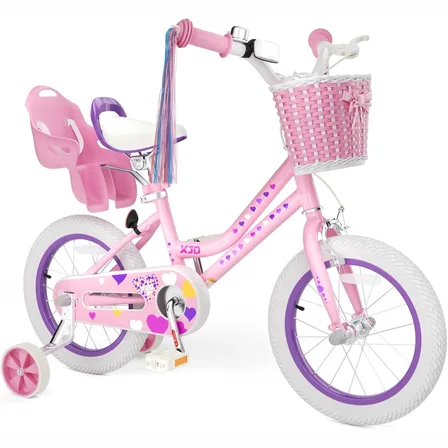
Light Pink XJD Girls' Bicycle with Basket & Training Wheels
The Light Pink XJD Girls' Bicycle with Basket & Training Wheels is a retro-style…$109.99
$129.99 -
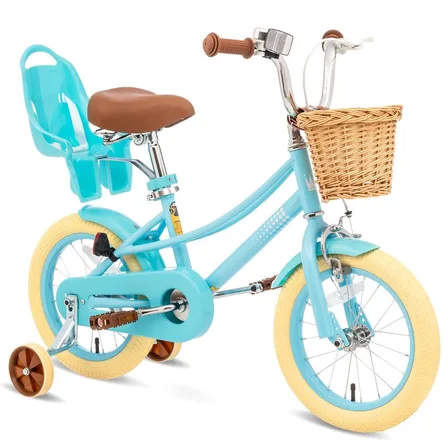
Girls' Training Wheel Bike by XJD, 12–20 Inch Wheels – Blue
This XJD girls' training wheel bike in Blue covers one of the widest fit ranges …$139
$159 -
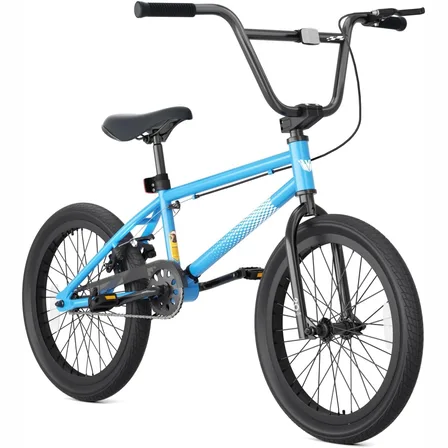
Blue XJD Freestyle BMX Bike, 20-Inch – No Pegs
The XJD 20-Inch Blue Freestyle BMX is an entry-level BMX bike for boys and girls…$189.99