

What age can a baby go in a bike seat
A baby can go in a bike seat only when they can sit unsupported, hold their head steady while wearing a properly fitted helmet, and meet the seat maker’s limits. There is no single safe age for every baby or seat.
Use readiness, not a birthday alone
Before riding, confirm that your baby has reliable head and neck control for the entire trip—not merely for a few seconds at home. The child must remain upright in the harness and tolerate the helmet without their head tipping forward or sideways.
Next, read the exact child-seat manual. Compare its minimum age, minimum and maximum child weight, harness requirements and permitted bicycle mounting method with your child and bicycle. Follow any applicable local passenger and helmet rules. If the manual gives no clear answer, do not guess; contact the manufacturer or ask a qualified bicycle mechanic.
Prematurity, low muscle tone, developmental differences or uncertainty about head control are reasons to ask the child’s pediatrician before riding. A pediatrician can assess the child, but the seat and bicycle must still satisfy their own manuals.
What to measure and compare
- Your child’s current weight: Measure it and compare it with the limits printed in the child-seat manual. Do not estimate from age or clothing size.
- Seated stability: Check whether the child sits unsupported and consistently keeps their head upright while wearing the helmet.
- Harness fit: Use the manufacturer’s adjustment instructions. The restraint should fit as designed, without bulky clothing interfering with it.
- Helmet fit: Use an appropriately sized bicycle helmet. It should sit level and its straps should be adjusted according to the helmet manufacturer’s directions.
- Bicycle compatibility: Confirm the permitted frame or rack type, attachment points and load limits in both manuals. A rack’s presence alone does not establish child-seat compatibility.
Check the bicycle and installation
A child seat changes how a bicycle balances, starts, turns and stops. Confirm that the bicycle manufacturer permits the intended seat installation and that the child-seat maker approves that bicycle and mounting arrangement. Follow the exact manuals for assembly, fasteners, load limits, compatibility, inspections and torque values.
Have a qualified bicycle mechanic assess the setup when either manual is unclear, when adapters are involved or when you cannot verify secure mounting. Do not carry the child until all required restraints and foot protection are correctly fitted and the bicycle operates properly.
Before the first passenger ride, practise mounting, dismounting, starting, steering and braking with an equivalent non-living load only if the seat manufacturer permits that procedure. Choose a controlled area away from traffic. Never leave a child unattended in a mounted seat, especially while the bicycle is supported only by a kickstand.
Where the supplied bicycle fits—and does not
The XJD Kids Beach Cruiser Bicycle, Rear Rack & V-Brakes, Mint Green is offered in 20 Inch, 24 Inch and 26 Inch labels. These options help clarify the difference between carrying a baby in a purpose-designed child seat and choosing a bicycle that an older child can ride independently. They are bicycle size comparison points, not baby seats or substitutes for one.

The supplied catalog information does not establish whether its rear rack accepts any child seat, what load it supports or which mounting system is permitted. Do not infer compatibility from the words “Rear Rack.” Check the bicycle and seat manuals together or use a qualified bicycle mechanic.
When those wheel sizes become relevant
For a future independent rider, XBikes uses these starting points: 20 Inch for ages 7–12 and heights 48–60 in (122–152 cm); 24 Inch for ages 10–14 and heights 54–64 in (137–163 cm); and 26 Inch for youth and adults over 60 in (153 cm). These ranges describe bicycle sizing, not eligibility to ride as a baby passenger.
When that stage arrives, measure the rider’s height and evaluate inseam, stand-over clearance, reach, brake control and current confidence. Have the child try the bicycle. Do not choose an oversized model merely to allow room for growth; age is only a starting point, while individual control determines fit.
Make the go-or-wait decision
- Wait unless your baby sits unsupported and maintains steady head control in a properly fitted helmet.
- Measure the child’s current weight and compare it with the exact seat manual.
- Verify that both the seat and bicycle manuals permit the proposed mounting arrangement and total load.
- Fit the harness and helmet exactly as their manufacturers direct.
- Have a pediatrician or qualified bicycle mechanic resolve developmental or installation uncertainty before the child rides.
If any one of those checks is unresolved, the answer today is to wait. The supplied XJD bicycle sizes are relevant later for independent riding, but they do not answer or replace the requirements for carrying a baby in a bike seat.
Bikes for your next adventure
-
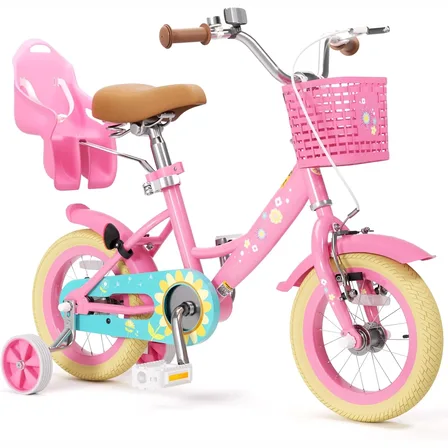
Flower Pink XJD Girls Bike with Doll Seat & Basket
The XJD Flower Pink girls' bike is made for riders 71–122 cm tall (roughly ages …$69.99
-
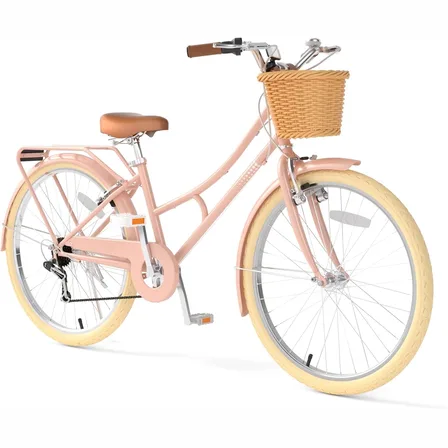
Pink XJD Beach Cruiser Bike, 24"/26", U-Brake
The XJD Pink Beach Cruiser Bike is a single-speed cruiser built for older kids a…$159.99
-
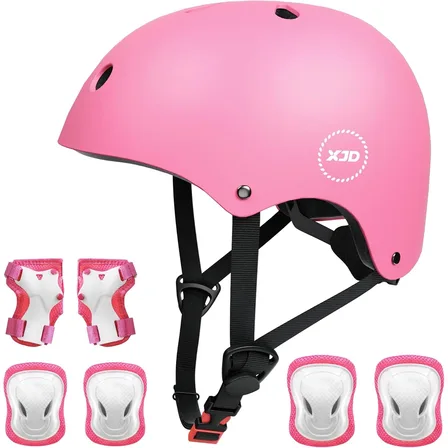
XJD Kids Helmet & Protective Gear Set for Girls, Pink
The XJD Kids Helmet & Protective Gear Set in Pink is a complete safety kit for g…$24.64