

What age can a baby go in bike seat
A baby can go in a bike seat only after they can sit upright unsupported, keep their head steady while wearing a properly fitted helmet, and meet the seat maker’s age, size and load rules. Age alone is not enough.
Check readiness before checking the calendar
A child needs enough neck and trunk control to remain stable when the bicycle starts, stops, turns and travels over small bumps. If the helmet makes the child’s head tip forward, or the child slumps or cannot stay upright, they are not ready for that seat.
Do not guess readiness from a birthday or from another family’s experience. Compare your child with every requirement in the exact bike-seat manual. Requirements differ, and no universal minimum age or load limit should be assumed. If development, muscle tone, prematurity or head control raises any doubt, ask the child’s pediatrician before riding.
What to measure and compare
Measure the child’s current height and weight, then compare both with the seat manufacturer’s stated limits. Check any minimum-age requirement, not just the maximum capacity. Confirm that the harness, foot supports and retention system adjust to the child’s present body size without improvised padding or modifications.
- Posture: The child sits unsupported and does not slump sideways or forward.
- Head control: The child keeps their head steady with the helmet on.
- Seat fit: The harness and foot restraints fit exactly as the manual describes.
- Compatibility: The seat is approved by its manufacturer for the specific bicycle and mounting position.
- Capacity: The child and any carried items remain within every stated load limit.
If the manual is missing, unclear or does not identify compatibility with the bicycle, do not improvise. Obtain the exact instructions or have a qualified bicycle mechanic assess the combination. Follow the manual for assembly, maintenance and torque values.
Helmet fit is part of the decision
A bicycle helmet must fit properly, sit level on the head and use its straps according to the helmet manufacturer’s instructions. A loose, tilted or oversized helmet is not a solution for future growth. Check the fit with the child seated because the back of some seats may interfere with the helmet or push the head forward.
If a properly fitted helmet and the seat back prevent a natural upright head position, that seat-and-helmet combination is not suitable. Change to a compatible setup; do not loosen the helmet or alter the seat.
Do a stationary fit check first
Install the seat exactly as directed, then place the bicycle on level ground while another adult holds it securely. Fasten the child according to the instructions and check posture, harness placement, foot retention and helmet clearance. Never rely on a kickstand to support the bicycle during loading.
Before carrying the child, practice mounting, walking, braking and turning with an equivalent permitted load secured as the seat maker allows. A child seat changes balance and handling. For the first actual ride, choose a short, quiet route and stop immediately if the child slumps, becomes distressed or cannot keep a stable head position. Also check applicable local passenger and helmet rules before riding.
Why the listed kids’ bikes are not baby seats
The supplied catalog options help distinguish a passenger bike seat from a child’s own bicycle. Both are kids’ BMX bikes with training wheels in 12, 14 and 16 Inch choices; none is a baby passenger seat, so neither answers the mounting, harness or infant-readiness questions above. They become relevant only later, when the child is ready to ride independently and passes an individual fit check.
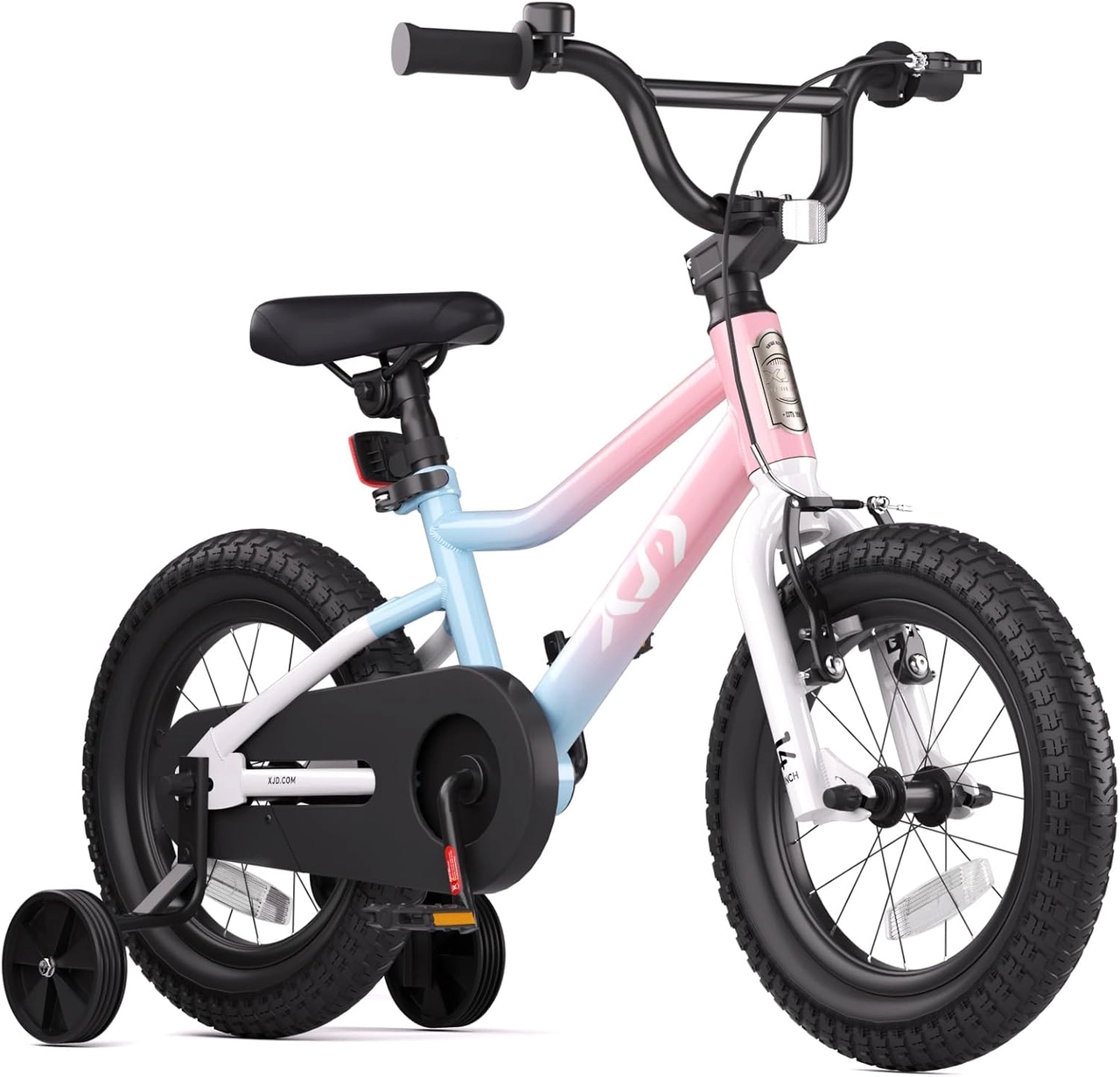 XJD Girls BMX Bike 12/14/16 Inch with Training Wheels – Pink Blue
A kids’ BMX bike with training wheels in 12, 14 and 16 Inch choices. It is relevant only as a later independent-riding option, not as a baby passenger seat or evidence of passenger-seat readiness.
 XJD Boys & Girls BMX Bike with Training Wheels, 12/14/16" – Blue
Available as a kids’ BMX bike with training wheels in 12, 14 and 16 Inch sizes. These choices may suit a later riding stage after measured fit checks, but the product is not a baby bike seat.
The XJD Girls BMX Bike 12/14/16 Inch with Training Wheels – Pink Blue and XJD Boys & Girls BMX Bike with Training Wheels, 12/14/16" – Blue offer the same supplied wheel-size choices: 12 Inch, 14 Inch and 16 Inch. Their titles and training wheels do not establish readiness or fit.
XBikes’ starting points place a 12 Inch bicycle at ages 3–4 and heights 34–40 in / 86–102 cm; a 14 Inch bicycle at ages 3–6 and 37–45 in / 94–114 cm; and a 16 Inch bicycle at ages 4–7 and 40–48 in / 102–122 cm. These ranges are starting points, not permission to size by age. Measure the rider’s height and inseam, then check stand-over clearance, reach, brake control and current confidence. Have the child try the bicycle, and do not buy an oversized bike merely for growth.
Your next decision
Use the passenger seat only when your child can sit unsupported with steady helmeted head control and meets every requirement in the exact seat manual, while the seat is confirmed compatible with the bicycle. If any one of those checks fails, wait. Consider the listed 12, 14 or 16 Inch bicycles only at the later independent-riding stage, using measured fit rather than age alone.
Bikes for your next adventure
-

Flower Pink XJD Girls Bike with Doll Seat & Basket
The XJD Flower Pink girls' bike is made for riders 71–122 cm tall (roughly ages …$69.99
-
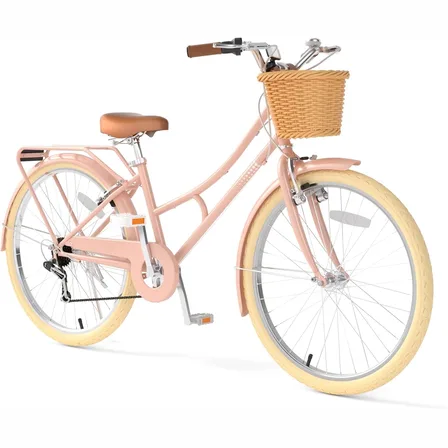
Pink XJD Beach Cruiser Bike, 24"/26", U-Brake
The XJD Pink Beach Cruiser Bike is a single-speed cruiser built for older kids a…$159.99
-
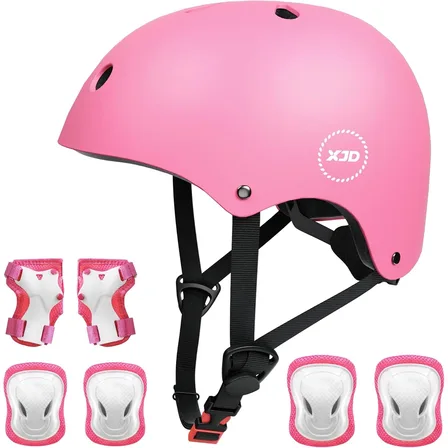
XJD Kids Helmet & Protective Gear Set for Girls, Pink
The XJD Kids Helmet & Protective Gear Set in Pink is a complete safety kit for g…$24.64