

What age can a baby go on a bike
There is no single age when every baby can go on a bike. For riding their own bicycle, XBikes sizing starts at about age 3–4 on a 12-inch bike, subject to a complete individual fit check. For carrying a baby on an adult bicycle, use only a purpose-designed carrier or trailer and follow its exact manual; the children’s bikes below are not baby carriers.
Separate carrying a baby from riding a bicycle
“Go on a bike” can mean two different things. A baby may be a passenger in compatible equipment attached to or used with an adult bicycle, while an older child may ride a correctly fitted bicycle independently. These situations are not interchangeable.
No passenger age, load limit or compatibility information has been supplied here, so do not choose a carrier or trailer from age alone. Check the manufacturer’s minimum requirements, limits, bicycle compatibility and installation instructions for the exact equipment. If anything is unclear, use a qualified bicycle mechanic and ask the child’s healthcare professional about readiness.
A doll seat is not a child passenger seat. Never place a baby in a basket, on a handlebar, on a rack without an approved child-carrying system, or in any accessory intended for toys.
When can a child ride their own bike?
The smallest XBikes starting point is a 12-inch bicycle for ages 3–4 and rider heights of 34–40 inches (86–102 cm). This means the supplied bicycles may be relevant when the child is a preschool-age rider, but they are not evidence that a baby is ready to ride.
| Wheel size | Age starting point | Rider height |
|---|---|---|
| 12 Inch | 3–4 | 34–40 in / 86–102 cm |
| 14 Inch | 3–6 | 37–45 in / 94–114 cm |
| 16 Inch | 4–7 | 40–48 in / 102–122 cm |
These ranges are starting points, not permission to ride based on a birthday. Measure the child and test the actual bicycle before deciding.
What to measure and compare
Begin with the child’s height and inseam. Then compare those measurements with the wheel-size starting points and the fit of the exact bicycle. During an in-person fit check, confirm that the child can:
- Stand over the bicycle with appropriate clearance rather than being pressed against the frame.
- Reach the handlebars without stretching, twisting or losing a balanced posture.
- Operate the brakes comfortably and with enough control for the bicycle.
- Start, steer, stop and put a foot down with confidence.
Do not buy an oversized bicycle solely to allow room for growth. A larger wheel is not equivalent to a properly fitting smaller bicycle, even where age ranges overlap. Current confidence and control matter alongside measurements.
How the supplied XBikes options relate
All three supplied models are available in 12 Inch, 14 Inch and 16 Inch labels, so they provide relevant comparison points for a child who has reached the corresponding height range and can pass an individual fit check. They do not include a size or feature that establishes suitability for carrying a baby.
 Flower Pink XJD Girls Bike with Doll Seat & Basket
A Training Wheel Bike offered in 12 Inch, 14 Inch and 16 Inch sizes. It may suit a measured, independently riding child after a fit check; its doll seat is not baby passenger equipment.
 Purple XJD Girls' Bike with Doll Seat & Basket
Available as a 12 Inch, 14 Inch or 16 Inch Training Wheel Bike. Compare the child’s measurements and control with the XBikes sizing points; the named doll seat is not a child carrier.
 Black XJD Kids' BMX Bicycle with Training Wheels
A Kids' BMX Bike with training wheels, supplied in 12 Inch, 14 Inch and 16 Inch sizes. It is relevant to independent young riders who pass a fit check, not to transporting a baby.
The Flower Pink XJD Girls Bike with Doll Seat & Basket and Purple XJD Girls' Bike with Doll Seat & Basket are categorized as Training Wheel Bikes. Each is offered in 12 Inch, 14 Inch and 16 Inch sizes. Their doll seats are described for dolls and must not be treated as passenger equipment.
The Black XJD Kids' BMX Bicycle with Training Wheels is categorized as a Kids' BMX Bike and is also offered in 12 Inch, 14 Inch and 16 Inch sizes. Its catalog wording and training wheels do not replace checks of height, inseam, reach, braking and control.
Helmet and setup checks
Whether a child is being carried in compatible equipment or riding independently, use a bicycle helmet that fits properly. It should sit level, and its straps must be adjusted according to the helmet manufacturer’s instructions. An adult helmet or a loosely fitted helmet is not an acceptable substitute.
For assembly, maintenance, fastener torque, accessory compatibility and load limits, follow the exact product manual. Those details cannot safely be inferred from a bicycle’s wheel size or product title. Have a qualified bicycle mechanic inspect the setup when the instructions, fit or compatibility are uncertain.
What to do next
- Decide whether the child will be a passenger or will ride independently.
- For a baby passenger, identify purpose-designed equipment and verify every requirement in its exact manual before riding.
- For an independent rider, measure height and inseam, select a starting wheel size, and have the child try that exact bicycle.
- Reject any option the child cannot stand over, reach, brake, steer and stop confidently.
If the child is still a baby, do not choose one of these 12-, 14- or 16-inch children’s bicycles as a transport solution. If the child is ready to ride independently, start with measurements—not age alone—and buy only after the exact bike passes the fit and control checks.
Bikes for your next adventure
-

Flower Pink XJD Girls Bike with Doll Seat & Basket
The XJD Flower Pink girls' bike is made for riders 71–122 cm tall (roughly ages …$69.99
-
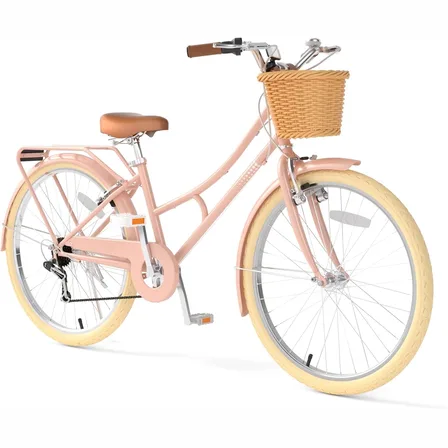
Pink XJD Beach Cruiser Bike, 24"/26", U-Brake
The XJD Pink Beach Cruiser Bike is a single-speed cruiser built for older kids a…$159.99
-
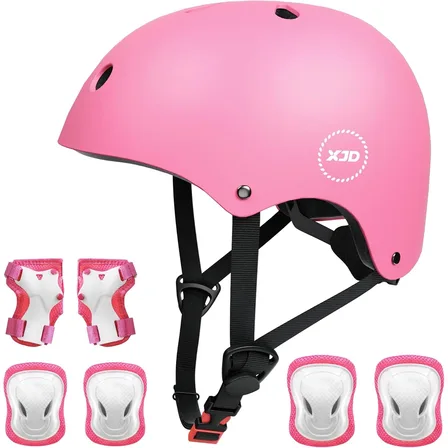
XJD Kids Helmet & Protective Gear Set for Girls, Pink
The XJD Kids Helmet & Protective Gear Set in Pink is a complete safety kit for g…$24.64