

What age can a child sit in a bike seat
A child can sit in a bicycle passenger seat only when they meet that seat’s manual, legal and physical-readiness requirements; age alone is not enough. If you mean riding their own bike, XBikes starts 12-inch bikes at ages 3–4 and 34–40 in (86–102 cm), followed by an individual fit check.
First, identify which “bike seat” you mean
A passenger seat attached to an adult bicycle and the saddle on a child’s own bicycle require different decisions. For a passenger seat, do not choose a starting age from a general bicycle sizing chart. Check the exact seat and bicycle manuals, local rules, compatibility and load limits. Those product-specific details are not supplied here, so a qualified bicycle mechanic should confirm anything the manuals do not make clear.
Before using a passenger seat, the child must have the physical control required by its manufacturer, including any stated sitting or head-control requirement. Their properly fitted bicycle helmet must sit level, with its straps adjusted according to the helmet maker’s instructions. If the child cannot maintain the required position throughout the ride, wait.
When can a child sit on their own bicycle?
For an independent child’s bike, the XBikes age ranges are starting points, not permission to ride a particular size. The first listed size is 12 Inch for ages 3–4 and heights of 34–40 in (86–102 cm). Some children in that age band will not yet have the reach, brake control or confidence for a given bicycle; others may need a different size after being measured.
| Wheel size | Starting age | Rider height |
|---|---|---|
| 12 Inch | 3–4 | 34–40 in / 86–102 cm |
| 14 Inch | 3–6 | 37–45 in / 94–114 cm |
| 16 Inch | 4–7 | 40–48 in / 102–122 cm |
| 18 Inch | 5–9 | 43–52 in / 109–132 cm |
| 20 Inch | 7–12 | 48–60 in / 122–152 cm |
| 24 Inch | 10–14 | 54–64 in / 137–163 cm |
| 26 Inch | Youth and adults | Over 60 in / 153 cm |
Measure before comparing a size
Measure the child’s height without shoes, standing straight against a wall. Measure inseam from the floor to the crotch using a firm, level object to represent the saddle area. Then compare height with the table and have the child try the actual bicycle.
During the fit check, confirm that the child can:
- stand over the bicycle with appropriate clearance rather than being crowded by the frame;
- reach the handlebars without stretching or losing a stable riding position;
- operate the brakes reliably with their hands in a controlled position;
- start, steer, stop and dismount with their current balance and confidence.
Do not buy an oversized bicycle merely to leave room for growth. A wheel-size label cannot establish stand-over clearance, reach or control, and overlapping age and height ranges do not make two sizes equivalent.
How the supplied 12, 14 and 16 Inch options help
The catalog options are relevant when the child is being assessed for their own training-wheel bicycle, not when you need a passenger seat for an adult bike. The Purple XJD Girls' Bike with Doll Seat & Basket and the Pink Girls' 12/14/16" Bike by XJD – Basket & Doll Seat are both Training Wheel Bikes offered in 12 Inch, 14 Inch and 16 Inch labels. Their doll seats are not evidence that either product is a child passenger seat.
These particular options help you compare the three smallest XBikes wheel-size starting points after measuring the rider. They do not replace a hands-on fit check, and the supplied catalog facts do not establish brake type, load limits, assembly details or compatibility.
 Purple XJD Girls' Bike with Doll Seat & Basket
A Training Wheel Bike offered in 12 Inch, 14 Inch and 16 Inch sizes for comparing the smallest XBikes fit ranges. Its doll seat does not establish suitability as a child passenger seat.
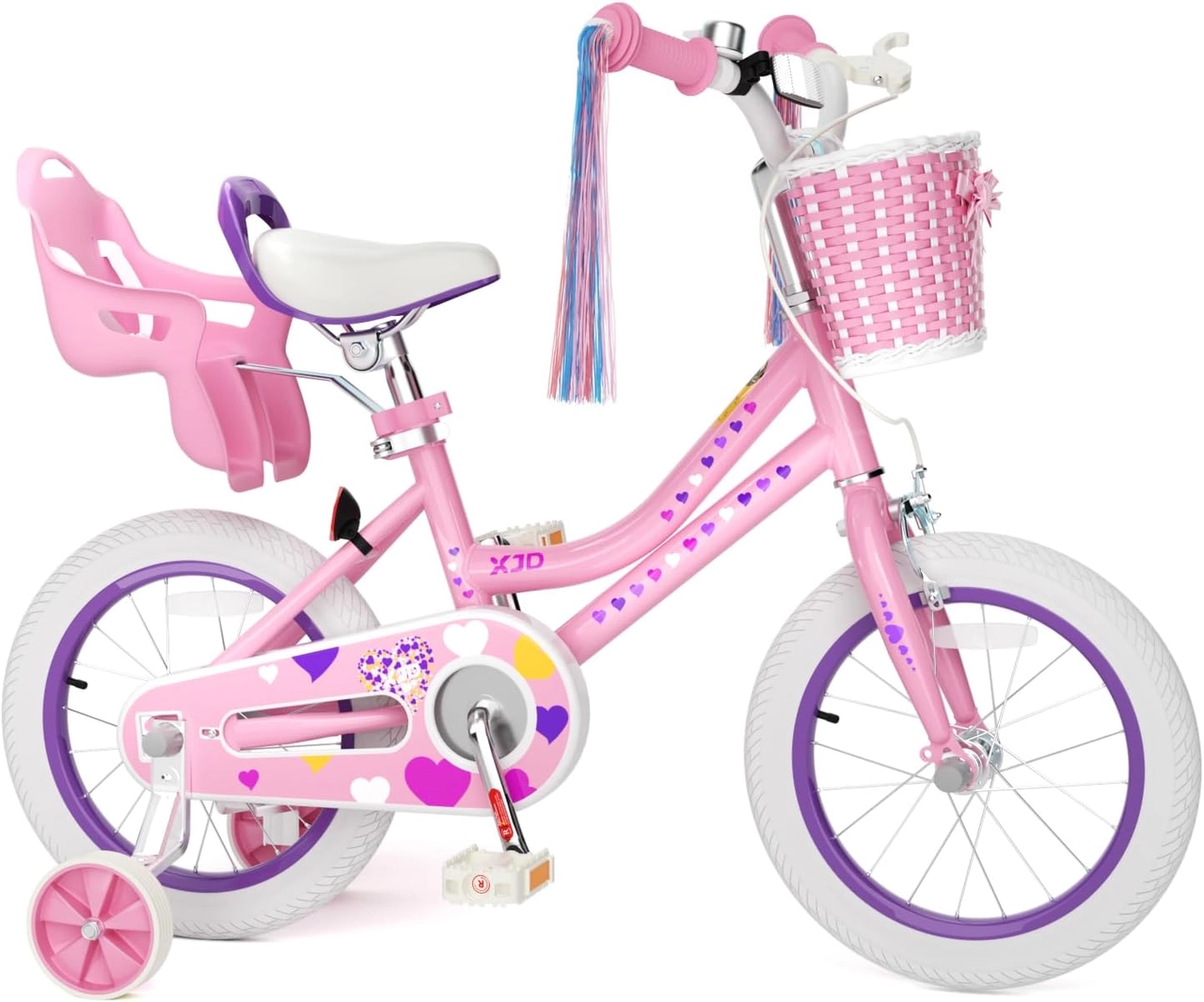 Pink Girls' 12/14/16" Bike by XJD – Basket & Doll Seat
This Training Wheel Bike has 12 Inch, 14 Inch and 16 Inch options, making it relevant after measuring the rider. Its basket and doll seat are catalog features, not passenger-seat fit evidence.
Choose among 12, 14 and 16 Inch carefully
Use measured height to narrow the options: 12 Inch corresponds to 34–40 in (86–102 cm), 14 Inch to 37–45 in (94–114 cm), and 16 Inch to 40–48 in (102–122 cm). Because the ranges overlap, compare stand-over clearance, reach and brake operation on each candidate rather than automatically moving up.
If neither catalog bike fits, do not force the choice. The correct next size may be outside these products’ supplied 12, 14 and 16 Inch variants, or the child may need more time to develop control. Follow the exact product manual for assembly and maintenance, and use a qualified bicycle mechanic where the instructions or fit remain uncertain.
The decision to make now
If you mean a passenger seat, pause until the child satisfies its manual and local requirements and the bicycle-seat combination is confirmed compatible. If you mean the child’s own saddle, measure height and inseam today, shortlist the matching wheel sizes, then let the child try them and choose only the bike they can stand over, reach, brake and control confidently while wearing a properly fitted helmet.
Bikes for your next adventure
-
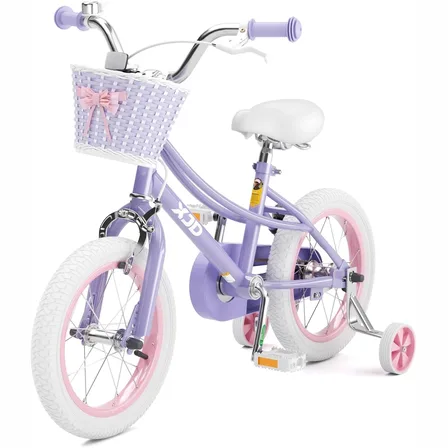
Girls' Training Wheel Bike by XJD with Basket – Purple
If you're shopping for a first bike for a girl roughly 3 to 12 years old (91–152…$75.99
-
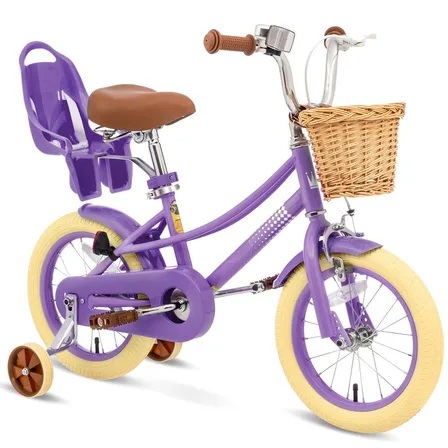
XJD Girls' Bike with Training Wheels, 12/14/16/20 Inch – Purple
The XJD girls' bike with training wheels in Purple is built to grow with your ri…$139
$159 -

Black XJD Toddler Bike Helmet, Adjustable – Kids' Protective Helmet
The XJD Toddler Bike Helmet in black is an adjustable protective helmet for kids…$20.39