

What age can baby go on back of bike
There is no single age when every baby can ride on the back of a bike. Use the child carrier’s minimum requirements, your baby’s development, a properly fitting helmet, and the bicycle’s compatibility and load limits—not age alone.
What decides whether your baby is ready?
Start with the instructions for the exact rear child seat or other carrier you plan to use. Confirm that your child meets every stated age, weight, height and developmental requirement. If the manual requires a particular sitting ability, head control or helmet fit, treat that requirement as mandatory rather than estimating readiness from age.
If your baby does not yet meet all of those conditions, do not carry them on the back of the bike. When development or medical readiness is uncertain, ask the child’s pediatrician before riding. A carrier manufacturer may also prohibit use below a stated threshold even when a child appears comfortable.
What to measure and compare
Write down your baby’s current weight and height, then compare both with the carrier manual. Measure head circumference according to the helmet maker’s sizing instructions and try the helmet on the child. The U.S. Consumer Product Safety Commission advises that a bicycle helmet should fit properly, sit level and have its straps adjusted according to the manufacturer’s instructions.
Next, identify the exact bicycle model and check its manual for rear-carrier compatibility and permitted loads. Compare the combined load of the child, carrier and anything else attached at the rear with every applicable limit. Also check whether the carrier requires a particular rack, frame shape or mounting system. If compatibility, assembly details or torque values are not explicit, contact the manufacturers or use a qualified bicycle mechanic.
Check the bicycle, not only the carrier
A rear child seat changes how a bicycle feels while mounting, stopping, turning and parking. Before carrying a child, the adult rider should be able to control the fully equipped bicycle confidently. Follow the manuals for installation and maintenance, and have a mechanic inspect the setup if there is any movement, interference or uncertainty.
Do not assume that the presence of a rear rack means a child seat can be fitted. A rack may have a load limit or construction that is unsuitable for a particular carrier. Likewise, a wheel size or brake description does not establish passenger compatibility.
How the supplied XBikes option is relevant
The XJD Kids Beach Cruiser Bicycle, Rear Rack & V-Brakes, Mint Green is offered with 20 Inch, 24 Inch and 26 Inch labels. Its rear rack makes it useful for discussing why a visible rack is not, by itself, proof that a baby carrier is compatible. The supplied catalog information gives no carrier compatibility or load limit, so consult the exact bicycle and carrier manuals or a qualified mechanic before considering such a setup.
This catalog option also helps separate two different decisions: transporting a baby as a passenger and fitting an older child to a bicycle they will ride independently. Its wheel sizes are comparison points for independent riders, not evidence that the bicycle can carry a baby.

When those wheel sizes fit an independent child
If the longer-term question is when a child can ride their own bike, XBikes uses these starting points:
| Wheel label | Starting age range | Rider height |
|---|---|---|
| 20 Inch | 7–12 | 48–60 in / 122–152 cm |
| 24 Inch | 10–14 | 54–64 in / 137–163 cm |
| 26 Inch | Youth and adults | Over 60 in / 153 cm |
These ranges apply to fitting the rider, not to carrying a baby. For an independent rider, measure height and inseam, then have the child try the bicycle. Check stand-over clearance, reach, brake control and current confidence. Following American Academy of Pediatrics guidance, do not buy an oversized bicycle merely for growth.
A practical go-or-wait decision
- Confirm that the baby meets every requirement in the exact carrier manual.
- Fit the correct helmet so it sits level and the straps work as instructed.
- Verify the bicycle, rack or frame mount, carrier and combined load are explicitly compatible.
- Complete assembly and maintenance exactly as the manuals specify; use a qualified mechanic when information is missing or unclear.
- Make sure the adult can control the equipped bicycle before adding the child.
If any requirement is unmet, unknown or based only on the baby’s age, wait. The correct time for a baby to go on the back of a bike is when the individual child, helmet, carrier, bicycle and adult rider all satisfy their own checks at the same time.
Bikes for your next adventure
-

Flower Pink XJD Girls Bike with Doll Seat & Basket
The XJD Flower Pink girls' bike is made for riders 71–122 cm tall (roughly ages …$69.99
-
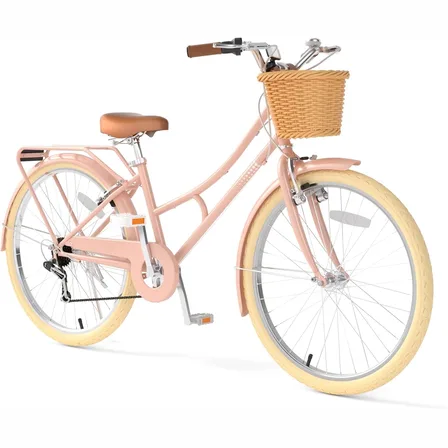
Pink XJD Beach Cruiser Bike, 24"/26", U-Brake
The XJD Pink Beach Cruiser Bike is a single-speed cruiser built for older kids a…$159.99
-
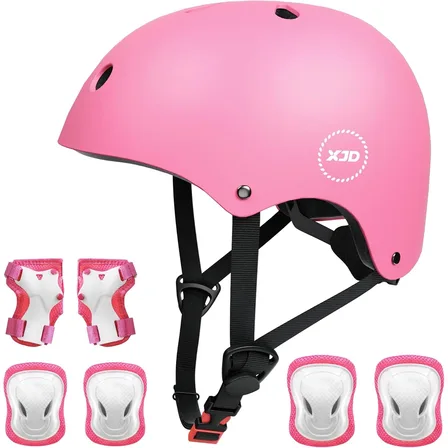
XJD Kids Helmet & Protective Gear Set for Girls, Pink
The XJD Kids Helmet & Protective Gear Set in Pink is a complete safety kit for g…$24.64