

What age can baby use bike trailer
Most babies should not ride in a bike trailer before 12 months. Wait longer unless the child can sit unsupported, control their head, and meet the trailer manual’s rules.
Age is only the first checkpoint
Twelve months is a common minimum starting point, not an automatic clearance. Babies develop at different rates, and trailer designs differ. Before riding, compare your child’s age and development with the exact trailer manufacturer’s minimum age, seating instructions, harness requirements and load limits. If the manual sets a later minimum or your child is not developmentally ready, wait.
Ask your child’s pediatrician before the first ride, especially if the child was premature or has concerns involving neck strength, muscle tone, breathing or development. Do not rely on an infant insert or accessory to override the trailer manufacturer’s stated minimum.
What to measure and observe
Use the following checks with the child awake and alert:
- Unsupported sitting: The child should remain upright without being propped into position.
- Head and neck control: Watch whether the head stays controlled during ordinary movement rather than dropping forward or repeatedly tipping sideways.
- Harness fit: Confirm that the trailer’s supplied restraint fits as its manual describes and that the child cannot slump out of position.
- Helmet fit: Use a properly fitting bicycle helmet if required by the trailer instructions or applicable rules. It should sit level, with straps adjusted according to the helmet manufacturer’s directions.
- Seated space: With the permitted helmet and clothing in place, check that the child has the clearance and posture required by the trailer manual.
Do not invent a workaround if any measurement or fit requirement is unclear. Consult the exact product manual, the manufacturer or a qualified bicycle mechanic.
Compare the child with the trailer, not just a birthday
Check the manual for its permitted passenger age, size, seating configuration and total load. Confirm that your bicycle and hitch are compatible, and follow the specified assembly, inspection and maintenance procedures. No universal attachment method or load number applies to every trailer.
Before carrying a child, inspect the bicycle, hitch, restraint, wheels and any retaining devices exactly as directed. Make the first outing short and calm, on a smooth route away from traffic. Stop if the child slumps, cannot maintain head position, appears distressed or the trailer behaves unexpectedly.
When the supplied kids’ bikes are relevant
The supplied catalog products are not bike trailers and cannot establish whether a baby is ready to ride as a trailer passenger. They become relevant later, when the child is ready to try an independently ridden bicycle. Their 12-, 14- and 16-inch options are useful comparison points for that later transition, but they are not substitutes for a trailer or evidence of trailer readiness.
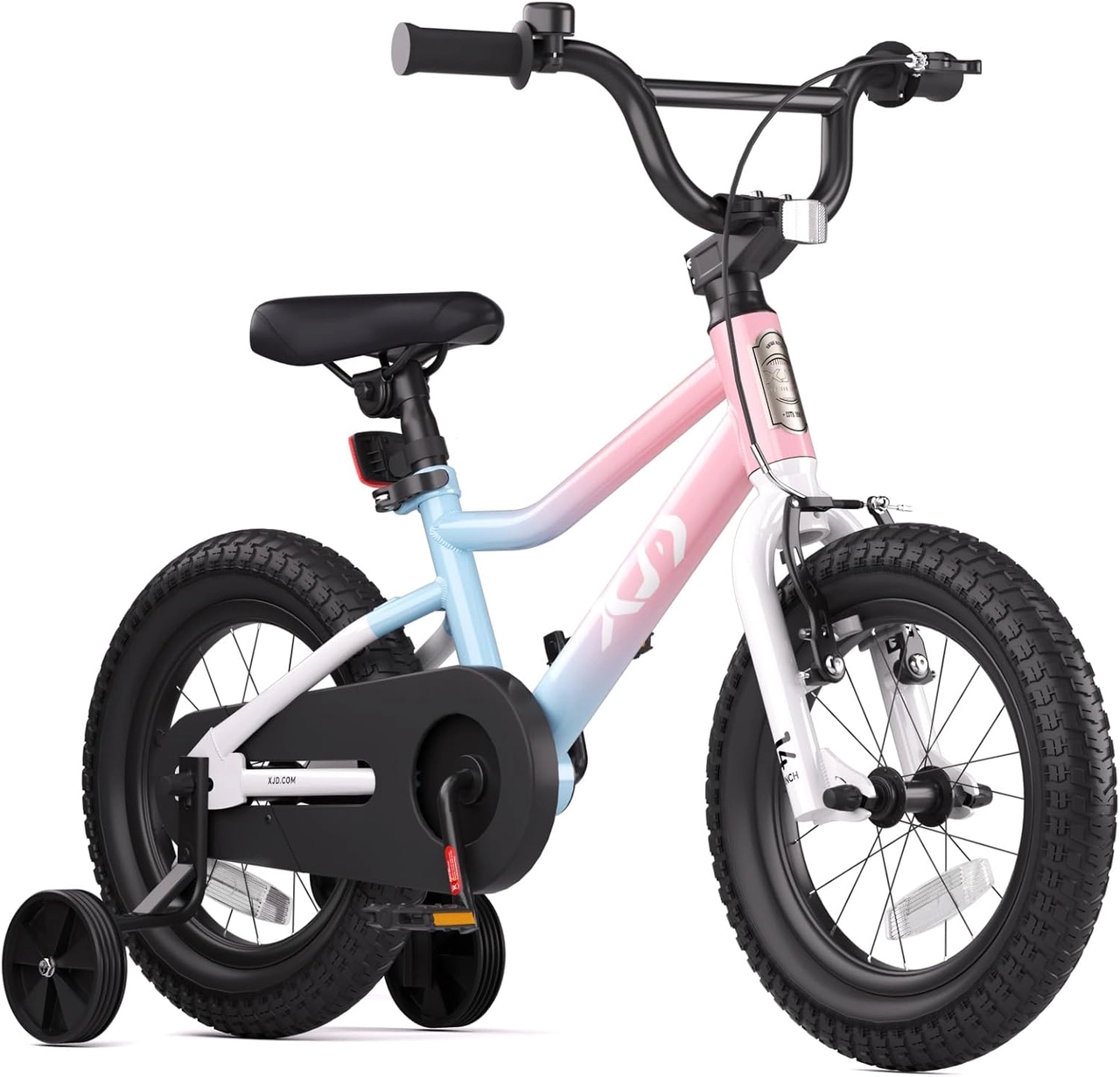 XJD Girls BMX Bike 12/14/16 Inch with Training Wheels – Pink Blue
A later-stage comparison option, not a baby trailer: this kids’ BMX bike is supplied in 12, 14 and 16 Inch sizes with training wheels.
 XJD Boys & Girls BMX Bike with Training Wheels, 12/14/16" – Blue
Relevant only when a child progresses to an independently ridden bike; the supplied catalog lists 12, 14 and 16 Inch options with training wheels.
XJD Girls BMX Bike 12/14/16 Inch with Training Wheels – Pink Blue is listed in 12 Inch, 14 Inch and 16 Inch sizes. XJD Boys & Girls BMX Bike with Training Wheels, 12/14/16" – Blue has the same three supplied wheel-size labels. Those catalog facts allow a size comparison only; they do not provide trailer compatibility, infant seating or passenger-age information.
How to assess those bicycles later
XBikes uses these starting points: 12 Inch for ages 3–4 and heights 34–40 in (86–102 cm); 14 Inch for ages 3–6 and 37–45 in (94–114 cm); and 16 Inch for ages 4–7 and 40–48 in (102–122 cm). These ranges overlap, so age alone cannot select a bicycle.
When that stage arrives, measure the child’s standing height and inseam, then have them try the bicycle. Check stand-over clearance, reach, steering control, brake reach and present confidence. Do not buy an oversized bicycle merely to allow room for growth. For assembly, compatibility, maintenance and torque requirements not stated in the catalog facts, follow the exact manual or use a qualified bicycle mechanic.
What to do next
- Find the exact trailer manual and note every passenger-age, developmental, fit and load requirement.
- Wait until at least 12 months and until the child sits unsupported with reliable head and neck control; use the later threshold whenever the manual or pediatrician requires it.
- Fit the restraint and helmet according to their manufacturers’ instructions, then verify posture and clearance.
- Confirm bicycle-and-hitch compatibility and complete the manual’s pre-ride checks before a short first outing.
If your baby is under 12 months, cannot sit steadily, lacks reliable head control or does not meet every manual requirement, the decision is simple: postpone the bike-trailer ride.
Bikes for your next adventure
-

Kids Bike Helmet by XJD for Girls – Pink
The XJD Kids Bike Helmet in Pink is a lightweight multi-sport helmet for girls r…$59.99
$99 -

Blue XJD Kids Bike Helmet for Boys & Girls
The Blue XJD Kids Bike Helmet is a lightweight, adjustable multi-sport helmet fo…$59.99
$99 -
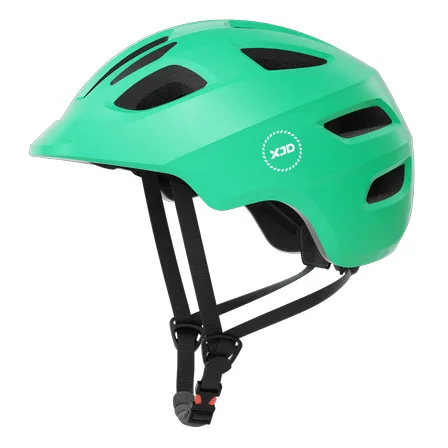
Green XJD Kids Bike Helmet for Boys & Girls
The Green XJD Kids Bike Helmet is a lightweight multi-sport helmet for toddlers …$59.99
$99