

What age can kids pedal a bike
Most children can begin pedaling a bike around ages 3–4, but age alone cannot confirm readiness. Measure height and inseam, then check balance, reach, stand-over clearance and brake control on the actual bike.
When is a child ready to pedal?
A child is ready to try a pedal bike when they can sit securely, steer where they intend to go, stop on request and keep their feet under control. Confidence matters too: a hesitant child may need more practice even when their height falls within a typical wheel-size range.
Some children pedal at three, while others start later. Treat age as a starting point, not a deadline. Previous experience on a balance bike or tricycle may help, but it does not replace checking the fit and controls of the particular bicycle.
Measure before choosing a wheel size
Measure the child’s height without shoes, standing straight against a wall. Also measure inseam from the floor to the crotch with the child standing naturally. Compare those measurements with the bike’s stand-over height and saddle adjustment information in its exact product manual.
These XBikes ranges help narrow the search, but they are not a substitute for trying the bicycle:
| Wheel size | Starting age | Rider height |
|---|---|---|
| 12 Inch | 3–4 | 34–40 in / 86–102 cm |
| 14 Inch | 3–6 | 37–45 in / 94–114 cm |
| 16 Inch | 4–7 | 40–48 in / 102–122 cm |
| 18 Inch | 5–9 | 43–52 in / 109–132 cm |
| 20 Inch | 7–12 | 48–60 in / 122–152 cm |
| 24 Inch | 10–14 | 54–64 in / 137–163 cm |
| 26 Inch | Youth and adults | Over 60 in / 153 cm |
Because the ranges overlap, two wheel sizes may appear plausible. Choose between them by checking the child on each bike rather than automatically selecting the larger option.
What to check on the actual bike
Have the child try the bicycle while an adult steadies it. The American Academy of Pediatrics advises against buying an oversized bike for a child to grow into. Confirm these points before riding:
- Stand-over: The child should be able to straddle the bicycle without the frame preventing a stable stance.
- Starting and stopping: They should be able to get into position, begin pedaling and put a foot down without losing control.
- Reach: Hands should reach the handlebar comfortably without an extreme stretch or cramped posture.
- Steering: The child should turn the handlebar while remaining balanced and looking ahead.
- Brake control: They must be able to reach and operate the supplied braking controls deliberately.
If the child cannot do all of these calmly, try a different size or return to balance practice. Do not compensate for poor fit with an improvised adjustment. Follow the exact product manual or ask a qualified bicycle mechanic about assembly, adjustment, compatibility and maintenance.
How the supplied 24-inch bike relates
The 24-Inch Purple XJD Beach Cruiser Bike with U-Brake is relevant only for older or taller children who have moved well beyond a first small pedal bike. Under the XBikes starting points, 24-inch wheels correspond to ages 10–14 and heights of 54–64 in / 137–163 cm, subject to an individual fit check.
This supplied catalog option helps show the later end of children’s pedal-bike sizing. It is a 24-inch Beach Cruiser Bike and should not be treated as a substitute for the 12-, 14- or 16-inch sizes commonly considered when a young child is first learning to pedal.

The product title’s reference to a U-Brake identifies the catalog item, but it does not establish that a particular child can comfortably reach or operate its braking control. Test that control on the actual bicycle and consult its manual for adjustment instructions.
Prepare for the first pedal attempts
Choose a flat, open area away from traffic and obstacles. Begin with short sessions. An adult can steady the child at the torso while the child practices looking ahead, pressing one pedal to start, steering gently and stopping on request. Avoid pulling the handlebar, which can interfere with steering.
Use a properly fitting bicycle helmet every time. The U.S. Consumer Product Safety Commission advises that the helmet sit level and that its straps be used according to the helmet manufacturer’s instructions. A helmet that is loose, tilted back or incorrectly strapped needs refitting before the child rides.
Make the decision from fit, not the birthday
Start with the age range only to identify likely wheel sizes, then decide from measured height, inseam, stand-over position, reach, brake control and present confidence. If the child can control the correctly fitted bike and stop reliably, they can begin learning to pedal. If they cannot, choose a better-fitting size or continue balance practice and check again later.
Bikes for your next adventure
-
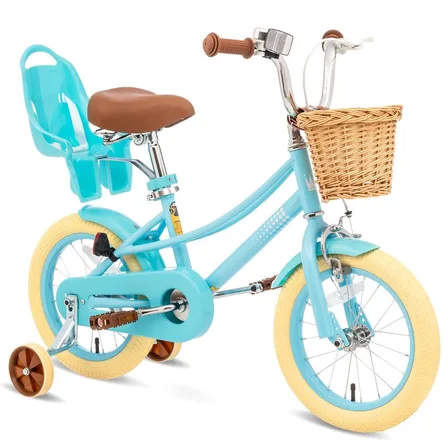
Girls' Training Wheel Bike by XJD, 12–20 Inch Wheels – Blue
This XJD girls' training wheel bike in Blue covers one of the widest fit ranges …$139
$159 -
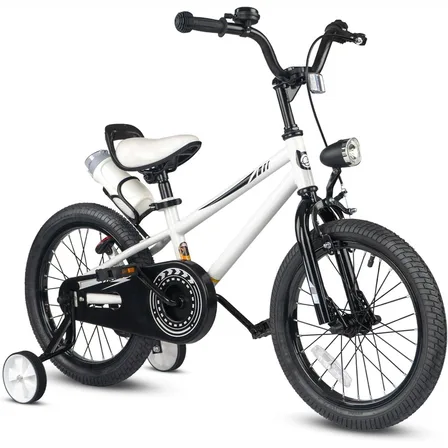
XJD Kids' Training Wheel Bike for Boys & Girls, 12/14/16 Inch – White
The XJD kids' training wheel bike in White is made for riders ages 3–8 (roughly …$169
$199 -

XJD Kids Bike for Girls – Pink, 12/14/16/20 Inch with Training Wheels
The XJD Kids Bike for Girls in Pink is a training-wheel bike built to carry your…$139
$159