

When can a baby go in a bike seat
A baby can go in a bicycle passenger seat only when the child meets that seat’s manual, local rules, and developmental requirements for stable upright head and body control. Confirm readiness with the child’s pediatric clinician; age alone is not enough.
Check the kind of seat first
A bicycle passenger seat carries a child on an adult-operated bicycle. It is different from the saddle on a child’s own bicycle and from a doll seat attached to a toy or children’s bike. Before making any decision, identify the exact passenger-seat model and the bicycle on which it would be installed.
Read the passenger-seat and bicycle manuals together. Compare the stated minimum and maximum child measurements, mounting requirements, bicycle compatibility, and any restrictions. If either manual is missing or the combination is unclear, do not improvise; ask the manufacturer or a qualified bicycle mechanic.
What to measure and observe
Record the baby’s current measurements required by the passenger-seat manual rather than relying on an age label. The relevant manual may ask for weight, height, or other limits. Never estimate these figures or assume that being close to a minimum is sufficient.
Developmental readiness matters as well. The child needs reliable head and body control while sitting upright, including while wearing a correctly fitted bicycle helmet. A baby who slumps, cannot maintain a stable position, or cannot comfortably support the helmet is not ready. Prematurity, low muscle tone, or another medical consideration makes an individual discussion with the child’s pediatric clinician especially important.
Make four comparisons before riding
- Child versus seat limits: Every measurement and readiness requirement in the exact passenger-seat manual must be met.
- Seat versus bicycle: Confirm that the bicycle and mounting location are permitted by both manufacturers. Follow the specified assembly and torque instructions exactly.
- Helmet versus child: Use a bicycle helmet that fits properly, sits level, and has straps adjusted according to its manufacturer’s instructions.
- Plan versus local rules: Check applicable laws or regulations, which may set additional passenger, helmet, or age conditions.
A failed or uncertain comparison means waiting or choosing another compatible setup. Do not add padding, alter hardware, exceed a load limit, or substitute a guessed installation method. A qualified bicycle mechanic can inspect compatibility and installation, but the product manuals remain essential.
Do a stationary check before the first trip
With the bicycle supported by an adult, place the helmeted child in the installed seat and secure the restraint exactly as directed. Check that the child remains upright, the restraint lies correctly, and feet, clothing, and straps cannot reach moving parts. If the child appears uncomfortable or unstable, stop.
The adult rider should also practice mounting, dismounting, starting, braking, and balancing with the changed load in a controlled area before carrying the child. Use only the seat positions and procedures permitted by the manuals. Recheck fasteners and the restraint as directed; obtain mechanic help when inspection or maintenance instructions are uncertain.
Why the supplied children’s bike is not a baby passenger seat
The Flower Pink XJD Girls Bike with Doll Seat & Basket is categorized as a training-wheel bike and is offered in 12 Inch, 14 Inch, and 16 Inch labels. Its title identifies a doll seat, so it should not be treated as equipment for carrying a baby. These options help answer the title by showing the important distinction between a passenger seat for a baby and a child’s own bicycle.

This product becomes relevant later only when selecting a bike for a child who is ready to ride. XBikes lists these starting points: 12 Inch for ages 3–4 and heights 34–40 in / 86–102 cm; 14 Inch for ages 3–6 and heights 37–45 in / 94–114 cm; and 16 Inch for ages 4–7 and heights 40–48 in / 102–122 cm.
Those ranges are starting points, not proof of fit. Measure the rider’s height and inseam, then have the child try the bicycle. Check stand-over clearance, reach, brake control, and present confidence. Do not buy an oversized bicycle merely for growth.
The decision to make today
Use the passenger seat only if the baby meets every manual requirement, shows stable upright head and body control with a properly fitted helmet, the bicycle-seat combination is approved, and local rules are satisfied. Otherwise, wait. The supplied training-wheel bike with a doll seat is not a substitute for a baby passenger seat.
Bikes for your next adventure
-

Flower Pink XJD Girls Bike with Doll Seat & Basket
The XJD Flower Pink girls' bike is made for riders 71–122 cm tall (roughly ages …$69.99
-
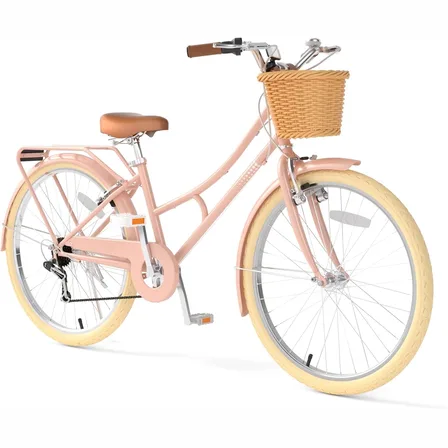
Pink XJD Beach Cruiser Bike, 24"/26", U-Brake
The XJD Pink Beach Cruiser Bike is a single-speed cruiser built for older kids a…$159.99
-
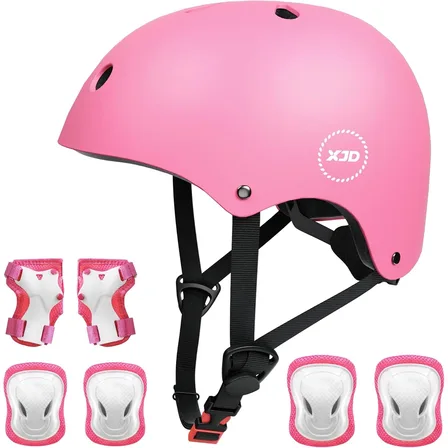
XJD Kids Helmet & Protective Gear Set for Girls, Pink
The XJD Kids Helmet & Protective Gear Set in Pink is a complete safety kit for g…$24.64