

What age do child bike seats go up to
Child bike seats do not have one universal maximum age. Stop using yours when the child reaches any limit in its manual, no longer fits securely, or affects safe bicycle control.
Age is not the deciding limit
A child passenger seat may specify limits for load, child size, developmental readiness, bicycle compatibility, or some combination of these. Those instructions take priority over a general age estimate. Check the label and the exact product manual for your seat; do not transfer limits from a similar-looking model.
Even below the stated limits, stop if the harness cannot be adjusted correctly, the child cannot remain in the intended position, required foot or leg restraints no longer fit, or the rider cannot start, steer, brake and stop confidently with the child aboard. A qualified bicycle mechanic should resolve any uncertainty about installation or compatibility.
What to measure and compare now
- Identify the exact seat: Find its model name or number and obtain the matching manual.
- Measure the child: Record current weight and any height or body-size measurements requested by the manufacturer.
- Compare every limit: A child must remain within all stated requirements, not merely the age wording.
- Inspect the fit: Confirm that the harness, seating position and foot or leg restraints work exactly as the manual describes.
- Check the bicycle and rider: Verify that the seat is approved for that bicycle and mounting position, and that the adult can control the loaded bicycle.
For installation, fastener torque, load limits, maintenance and bicycle compatibility, follow the exact seat and bicycle manuals. If information is missing or the mounting arrangement is uncertain, use a qualified bicycle mechanic rather than improvising.
When to move from a passenger seat to a child’s own bike
Reaching a passenger-seat limit does not automatically mean a child is ready for a particular bicycle. Readiness also depends on measured height, inseam, reach, brake control and current confidence. The American Academy of Pediatrics advises having the child try the bicycle, checking stand-over and control, and avoiding an oversized bike bought only for future growth.
XBikes uses these wheel-size figures only as starting points:
| Wheel size | Starting age | Rider height |
|---|---|---|
| 12 Inch | 3–4 | 34–40 in / 86–102 cm |
| 14 Inch | 3–6 | 37–45 in / 94–114 cm |
| 16 Inch | 4–7 | 40–48 in / 102–122 cm |
| 18 Inch | 5–9 | 43–52 in / 109–132 cm |
| 20 Inch | 7–12 | 48–60 in / 122–152 cm |
| 24 Inch | 10–14 | 54–64 in / 137–163 cm |
| 26 Inch | Youth and adults | Over 60 in / 153 cm |
Always prioritize the individual fit check over age. The child should be able to manage stand-over clearance, reach the controls, operate the brakes and handle the bicycle with their present skill level.
How the supplied XBikes options are relevant
The supplied products are children’s bicycles, not child passenger seats, so they cannot establish or replace a passenger seat’s limits. They are relevant only as 12, 14 and 16 Inch comparison options when a child is ready to try an independently ridden bike.
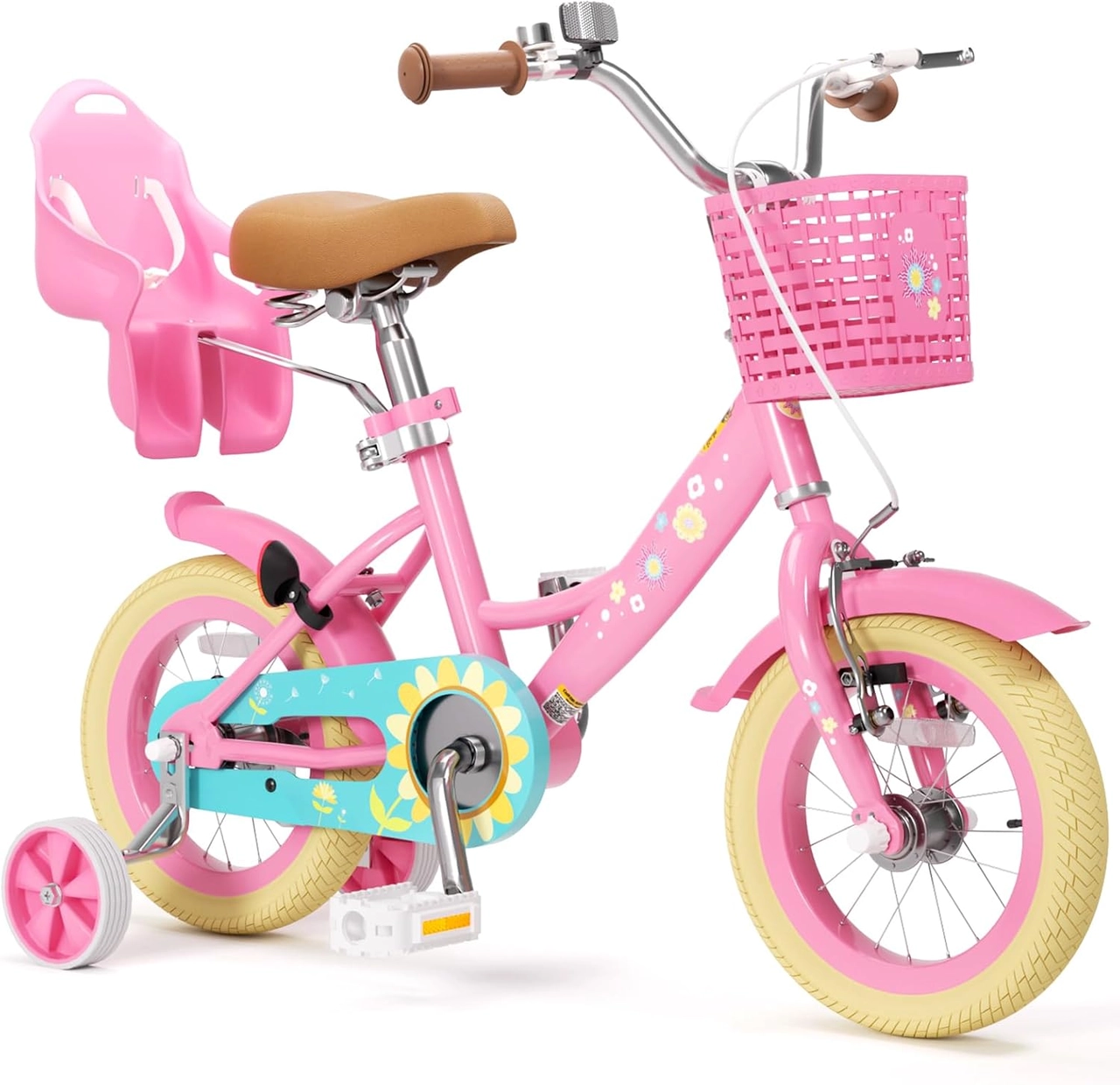 Flower Pink XJD Girls Bike with Doll Seat & Basket
A Training Wheel Bike offered in 12, 14 and 16 Inch labels, relevant only for comparing own-bike sizes after passenger-seat use. Its named doll seat is not evidence of child passenger capacity.
 Purple XJD Girls' Bike with Doll Seat & Basket
This Training Wheel Bike has 12, 14 and 16 Inch SKU labels. It may be considered when a child is ready to try an own bike, subject to measured height and an individual fit check.
 Black XJD Kids' BMX Bicycle with Training Wheels
A Kids' BMX Bike with training wheels offered in 12, 14 and 16 Inch labels. These sizes are transition comparison points, not substitutes for checking a child passenger seat’s manual and limits.
The Flower Pink XJD Girls Bike with Doll Seat & Basket and Purple XJD Girls' Bike with Doll Seat & Basket are Training Wheel Bikes offered in 12, 14 and 16 Inch labels. Their doll seats are features named in the catalog titles; they must not be treated as child passenger seats.
The Black XJD Kids' BMX Bicycle with Training Wheels is categorized as a Kids' BMX Bike and is also offered in 12, 14 and 16 Inch labels. These labels provide wheel-size comparison points only. None proves fit for an individual child, and age wording in a product title would not be fit evidence.
Check the helmet separately
A transition from riding as a passenger to controlling a bicycle changes the task, but it does not remove the need for a properly fitted helmet. The U.S. Consumer Product Safety Commission advises that a bicycle helmet should fit properly, sit level and have its straps used according to the manufacturer’s instructions.
Do not assume that a helmet which once fit still fits now. Check it against its own instructions whenever the child grows or changes riding equipment.
The decision to make today
Keep using the child bike seat only if the exact manual confirms that the child, seat, bicycle and mounting arrangement remain within every requirement and the adult retains confident control. Otherwise, stop using it. If considering an own bike next, measure the child, choose a wheel-size starting point, and have them try that exact bicycle before deciding.
Bikes for your next adventure
-

Flower Pink XJD Girls Bike with Doll Seat & Basket
The XJD Flower Pink girls' bike is made for riders 71–122 cm tall (roughly ages …$69.99
-
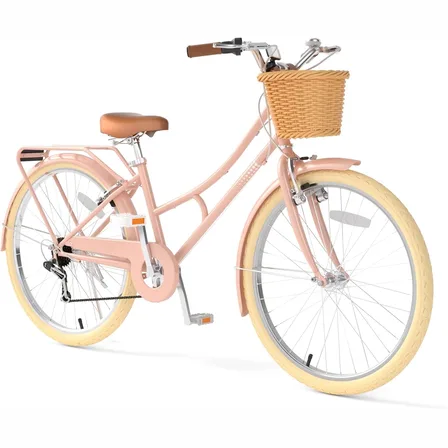
Pink XJD Beach Cruiser Bike, 24"/26", U-Brake
The XJD Pink Beach Cruiser Bike is a single-speed cruiser built for older kids a…$159.99
-
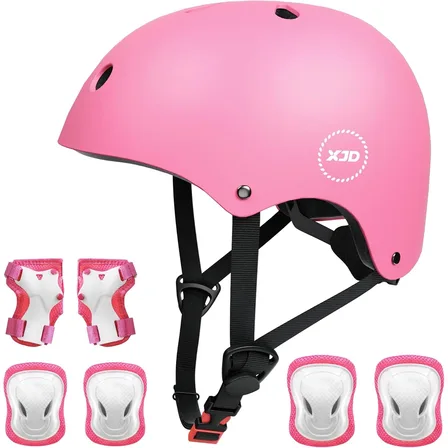
XJD Kids Helmet & Protective Gear Set for Girls, Pink
The XJD Kids Helmet & Protective Gear Set in Pink is a complete safety kit for g…$24.64