

What age do kids learn to pedal a bike
Kids often begin learning to pedal between ages 3 and 6, but readiness matters more than a birthday. Measure height and inseam, then check control and confidence on the actual bike.
When is a child ready to learn?
The XBikes size ranges place 12-inch and 14-inch bikes at the beginning of the pedal-learning years: 12-inch bikes are a starting point for ages 3–4 and heights of 34–40 inches (86–102 cm), while 14-inch bikes cover ages 3–6 and heights of 37–45 inches (94–114 cm). These ranges help narrow the search; they do not establish that every child should pedal at a particular age.
Look for practical signs of readiness. A child should be willing to try, able to listen to simple directions and confident enough to sit on the bike without becoming overwhelmed. Previous practice balancing, steering or using another ride-on toy may help, but it is not a requirement.
Measure before choosing a wheel size
Measure the child’s height without shoes, standing straight against a wall. Measure inseam from the floor to the crotch while the child stands with feet slightly apart. Compare height with the wheel-size starting points below, then use the inseam during an actual stand-over and saddle-height check.
| Wheel size | Age starting point | Rider height |
|---|---|---|
| 12 Inch | 3–4 | 34–40 in / 86–102 cm |
| 14 Inch | 3–6 | 37–45 in / 94–114 cm |
| 16 Inch | 4–7 | 40–48 in / 102–122 cm |
| 18 Inch | 5–9 | 43–52 in / 109–132 cm |
| 20 Inch | 7–12 | 48–60 in / 122–152 cm |
| 24 Inch | 10–14 | 54–64 in / 137–163 cm |
| 26 Inch | Youth and adults | Over 60 in / 153 cm |
If the child falls within overlapping ranges, do not choose by age alone. Compare the actual frames and select according to stand-over clearance, comfortable reach, brake control and present confidence. An oversized bicycle bought for future growth can make learning harder to control.
Perform an individual fit check
Have the child try the bicycle rather than relying only on its wheel label. Check that the child can stand over it comfortably, reach the handlebar without stretching and turn the bar while remaining balanced. They must also be able to reach and operate the available braking controls reliably.
For a new learner, confirm that mounting, starting and stopping do not require a leap or awkward movement. If the child cannot control the bike at walking speed, cannot stop on request or looks tense because the bike feels large, reconsider the fit even when age and height appear to match.
How the supplied bikes help with the decision
The two catalog options provide direct comparison points in 12-inch, 14-inch and 16-inch sizes. The Black XJD Kids' BMX Bicycle with Training Wheels is categorized as a Kids' BMX Bike and is offered in all three sizes. The Pink Girls' 12/14/16" Bike by XJD – Basket & Doll Seat is categorized as a Training Wheel Bike and is also offered in those three sizes.
These particular options are relevant because their available sizes cover XBikes starting points from ages 3–7 and heights from 34–48 inches (86–122 cm), including overlapping choices for many beginning pedalers. Their size labels still require an individual fit check.
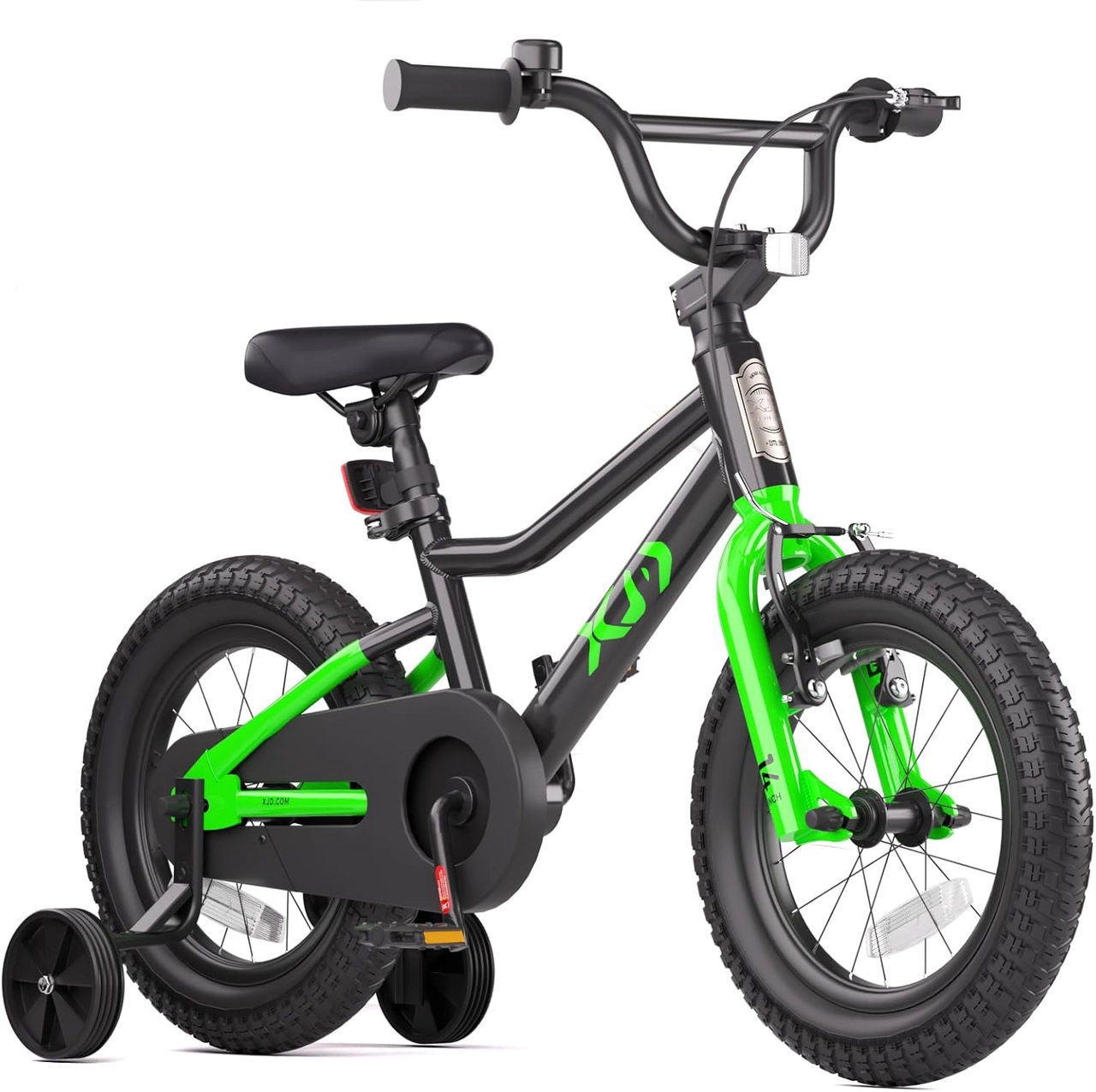 Black XJD Kids' BMX Bicycle with Training Wheels
Available in 12-inch, 14-inch and 16-inch sizes, this Kids' BMX Bike with training wheels is relevant for comparing early pedal-learning size options after measuring the rider and completing an individual fit check.
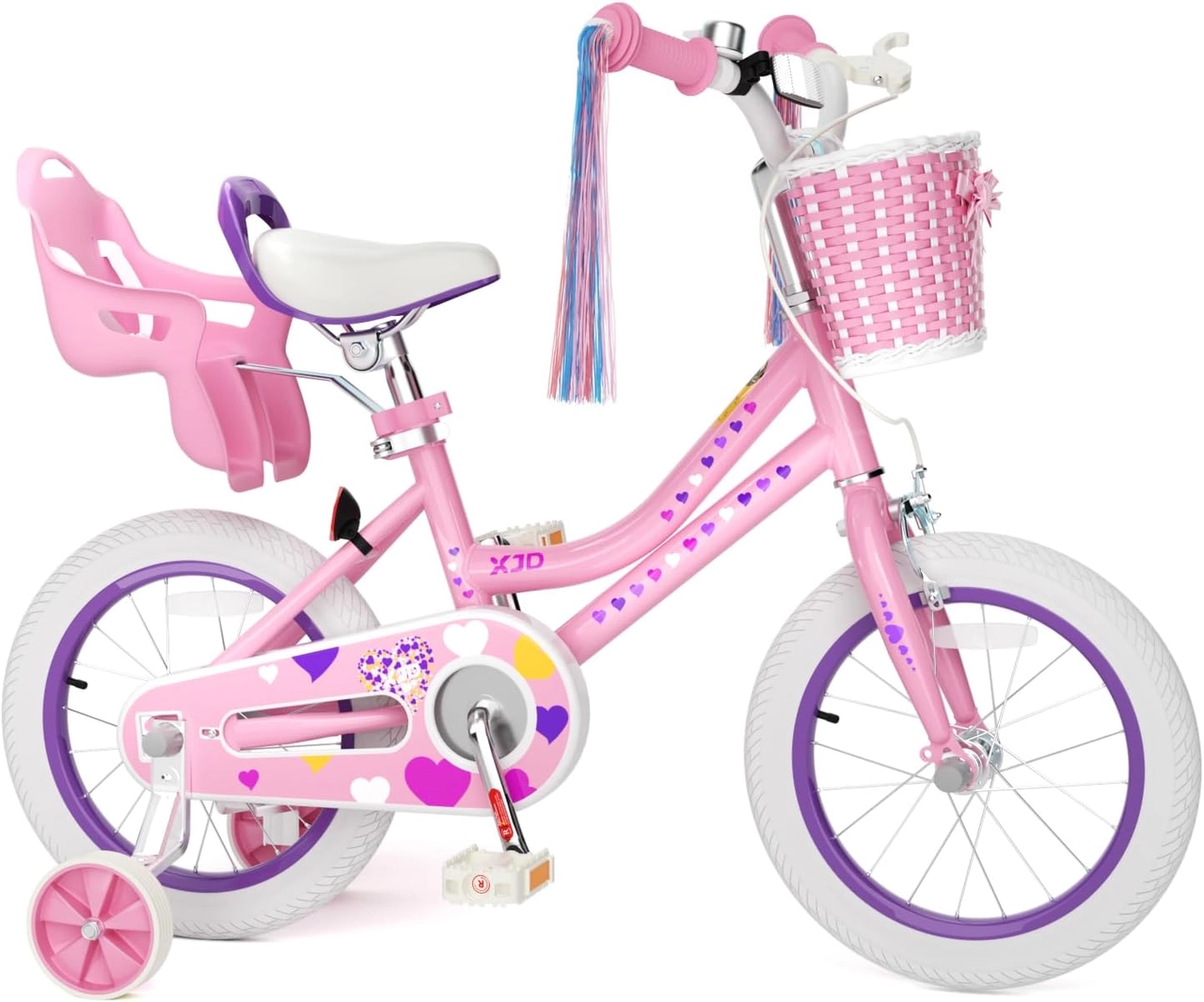 Pink Girls' 12/14/16" Bike by XJD – Basket & Doll Seat
This Training Wheel Bike is available in 12-inch, 14-inch and 16-inch sizes, making it relevant to beginning-pedaler size comparisons; its basket and doll seat come from the exact catalog title, not fit evidence.
Compare the matching wheel size first; the catalog categories and exact titles do not prove that either bicycle fits a particular child. No supplied facts establish brake type, weight, materials, load limits or detailed component compatibility. Consult the exact product manual or a qualified bicycle mechanic for those details, as well as assembly and maintenance instructions.
Make the first practice sessions manageable
- Choose a flat, open area away from traffic and obstacles.
- Let the child become comfortable sitting, holding the handlebar and stopping before focusing on continuous pedaling.
- Practice looking ahead, starting and stopping in short attempts.
- Keep the session brief enough that fatigue does not replace confidence.
Training wheels may provide support while a child learns the pedaling motion, but they do not replace the fit and control checks. Whatever setup is used, follow the product manual for installation, adjustment and removal. If instructions are missing or the setup is uncertain, use a qualified bicycle mechanic.
A properly fitting bicycle helmet is essential whenever the child rides. It should sit level, fit properly and have its straps adjusted according to the helmet manufacturer’s instructions.
What to do next
Measure height and inseam today, identify the corresponding wheel-size range, and have the child try that size. Proceed when they can stand over the bike, reach comfortably, control the brakes and stop with confidence. If those checks fail, change the fit or size rather than waiting for age alone to solve the problem.
Bikes for your next adventure
-

Blue XJD Girls Bike with Training Wheels – 12/14/16 Inch
If you're shopping for a first pedal bike for a daughter roughly 3 to 8 years ol…$149
$169 -
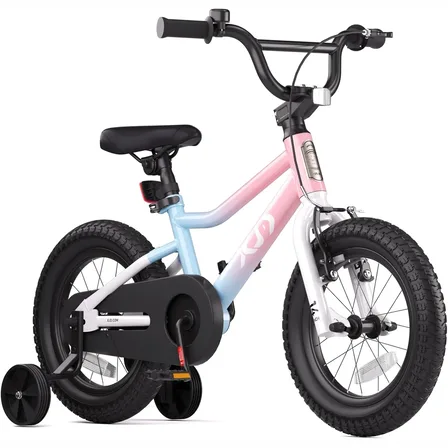
XJD Girls BMX Bike 12/14/16 Inch with Training Wheels – Pink Blue
The XJD Girls BMX Bike in Pink/Blue is built as a first pedal bike for kids roug…$99.99
$119.99 -

26-Inch XJD Beach Cruiser Bike for Girls – Purple, V-Brake
This XJD 26-inch purple beach cruiser is sized for big kids and teens — suggeste…$218.49
$229.99