

What age do kids start riding pedal bikes
Most kids start riding pedal bikes between ages 3 and 6, but readiness and fit matter more than a birthday. Measure height and inseam, then check control on the actual bike.
When is a child ready to start?
A child is ready to try a pedal bike when they can balance, steer, look ahead and follow simple stopping instructions. Confidence matters too: a hesitant child may need more time even when their height falls within a typical range.
Previous balance-bike experience can make the transition easier, but it is not required. Training wheels may help a child become familiar with pedalling and steering, although they do not demonstrate independent two-wheel balance. The practical next step is always a supervised trial on a correctly sized bicycle.
Measure before comparing wheel sizes
Measure the child barefoot against a wall for overall height. For inseam, have the child stand with feet slightly apart and measure from the floor to the crotch. Use these measurements to narrow the choices, then have the child try the bike.
The XBikes ranges below are starting points, not guarantees of fit:
| Wheel size | Starting age | Rider height |
|---|---|---|
| 12 Inch | 3–4 | 34–40 in / 86–102 cm |
| 14 Inch | 3–6 | 37–45 in / 94–114 cm |
| 16 Inch | 4–7 | 40–48 in / 102–122 cm |
| 18 Inch | 5–9 | 43–52 in / 109–132 cm |
| 20 Inch | 7–12 | 48–60 in / 122–152 cm |
| 24 Inch | 10–14 | 54–64 in / 137–163 cm |
| 26 Inch | Youth and adults | Over 60 in / 153 cm |
If the child sits near the overlap between sizes, compare both in person. Do not automatically choose the larger bike for extra growing room. An oversized bicycle can make starting, stopping and steering harder.
What to check on the actual pedal bike
A height range only identifies candidates. With the child wearing their usual riding shoes, check these points on each bicycle:
- Stand-over: the child should be able to straddle the bike without the frame preventing a stable stance.
- Starting and stopping: they should be able to get moving and come to a controlled stop without the bicycle overwhelming them.
- Reach: they should hold the handlebars without stretching excessively or losing comfortable steering control.
- Brake control: they must be able to reach and operate the fitted brakes. Brake arrangements vary, so confirm operation using the exact product manual.
- Confidence: look for calm, repeatable control rather than one successful attempt helped by an adult.
This follows the fit-first principle: let the child try the bicycle, check stand-over, control and brake reach, and avoid buying an oversized bike solely for growth.
How the supplied XBikes models compare
These catalog options help show the difference between common first-bike sizes and larger sizes intended for taller riders. Their wheel labels can narrow the comparison, but the child still needs an individual fit check.
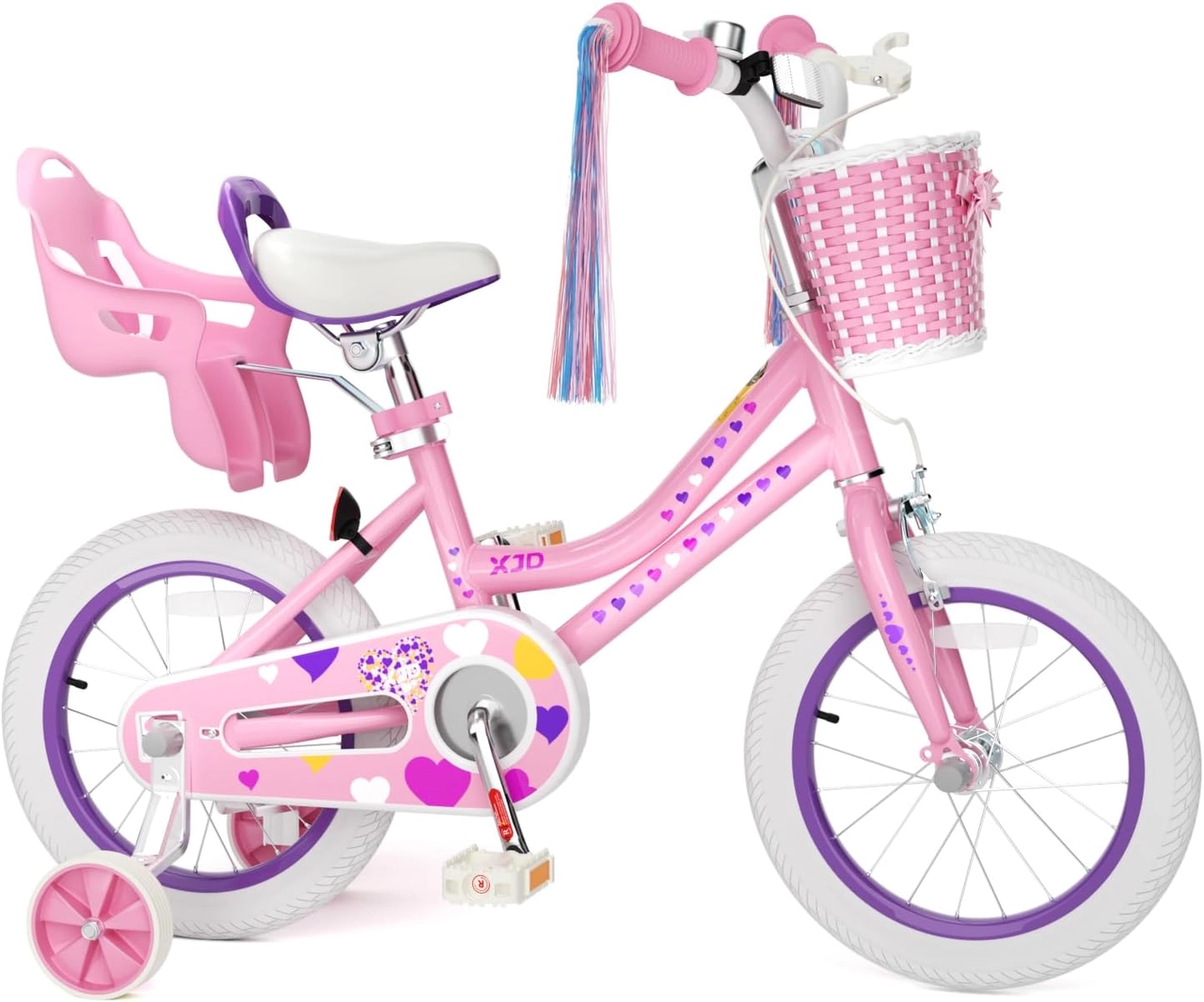 Pink Girls' 12/14/16" Bike by XJD – Basket & Doll Seat
A directly relevant first-bike comparison, offered in 12 Inch, 14 Inch and 16 Inch labels. Match the child’s measured height to the XBikes ranges, then verify stand-over, reach, braking and confidence on the actual bike.
 24-Inch Purple XJD Beach Cruiser Bike with U-Brake
This 24 Inch beach cruiser is a comparison for riders within the 54–64 inch XBikes starting range, generally ages 10–14. It is not a substitute for a smaller, correctly fitted first pedal bike.
 Blue XJD Freestyle BMX Bike, 20-Inch – No Pegs
This 20 Inch kids’ BMX bike is a larger-size comparison point for the XBikes starting range of 48–60 inches, generally ages 7–12. The supplied no-pegs detail does not determine whether it fits an individual rider.
The Pink Girls' 12/14/16" Bike by XJD – Basket & Doll Seat is the directly relevant starting comparison because it is a training-wheel bike offered in 12 Inch, 14 Inch and 16 Inch labels. Those sizes span the XBikes starting points from ages 3–4 and 34–40 inches through ages 4–7 and 40–48 inches. Choose among them by measured height and actual control, not by selecting the largest option available.
The Blue XJD Freestyle BMX Bike, 20-Inch – No Pegs is a larger comparison point. The 20 Inch starting range is ages 7–12 and 48–60 inches, so it will generally not be relevant to a smaller child making an early transition to pedals. Its BMX category and lack of pegs do not establish fit.
The 24-Inch Purple XJD Beach Cruiser Bike with U-Brake is larger again. The 24 Inch starting range is ages 10–14 and 54–64 inches. It is therefore a comparison for an older or taller rider, not a substitute for a correctly fitted 12, 14 or 16 Inch first pedal bike. Its supplied U-brake detail does not replace an in-person brake-reach check.
Make the first practice sessions manageable
Choose a flat, open area away from traffic and obstacles. Begin with mounting, looking forward, steering and controlled stopping before asking the child to ride farther. Keep practice brief enough that fatigue does not turn into frustration, and provide close adult supervision.
Use a bicycle helmet on every ride. It must fit properly, sit level and have its straps adjusted according to the helmet manufacturer's instructions. Before riding, follow the bicycle's exact product manual for assembly, adjustment and maintenance; if anything is uncertain, use a qualified bicycle mechanic.
The decision to make today
Start with the child's measured height and inseam, shortlist the matching wheel sizes, and arrange a real fit check. Buy only when the child can straddle, reach, steer and brake with control. For many beginners that opportunity appears between 3 and 6, but the correct starting age is the point when readiness and fit agree.
Bikes for your next adventure
-

XJD Girls BMX Bike 12/14/16 Inch with Training Wheels – Pink Blue
The XJD Girls BMX Bike in Pink/Blue is built as a first pedal bike for kids roug…$99.99
$119.99 -

XJD Pink Beach Cruiser for Girls – Rear Rack & V-Brake
The XJD Pink Beach Cruiser for girls is the step-up bike for riders who've outgr…$179.99
$209.99 -

Blue XJD Girls Bike with Training Wheels – 12/14/16 Inch
If you're shopping for a first pedal bike for a daughter roughly 3 to 8 years ol…$149
$169