

What age is a 16 inch frame bike for
A 16-inch kids’ bike is generally a starting point for ages 4–7 and heights 40–48 in (102–122 cm)—if “16 inch” means wheel size. Age alone cannot confirm fit, and a true 16-inch frame measurement requires the manufacturer’s own sizing chart.
First, check what “16 inch” describes
Children’s bikes are commonly described by wheel size, so a “16-inch bike” usually means a bike with 16-inch wheels. Frame size is a separate measurement and does not map reliably to one age range across different designs.
If a listing genuinely specifies a 16-inch frame, consult that exact model’s size chart and manual. The XBikes numerical guidance below applies only to wheel sizes; it should not be used to assign an age to a 16-inch frame.
The XBikes starting point for 16-inch wheels
| Wheel size | Starting age | Rider height |
|---|---|---|
| 14 Inch | 3–6 | 37–45 in / 94–114 cm |
| 16 Inch | 4–7 | 40–48 in / 102–122 cm |
| 18 Inch | 5–9 | 43–52 in / 109–132 cm |
These overlapping ranges show why age is only a screening tool. A tall four-year-old and a shorter seven-year-old may need different sizes even though both fall within the stated 16-inch age range. Begin with measured height, then confirm the fit on the actual bicycle.
What to measure before choosing
- Standing height: Measure the child without shoes, upright against a wall. Compare the result with the 40–48 in (102–122 cm) starting range for 16-inch wheels.
- Inseam: Measure from the floor to the crotch while the child stands naturally. Compare that measurement with the bicycle’s stand-over and saddle information from the exact product manual; do not invent clearance from wheel size alone.
- Reach: On the bicycle, the child should be able to hold the handlebar without stretching, locking the elbows or losing a balanced riding position.
- Brake control: Confirm that the child can comfortably reach and operate the fitted braking controls. Follow the product manual for operation and adjustment.
- Current confidence: Consider whether the child starts, stops, steers and balances with control. A size that looks plausible on a chart can still be too demanding.
How to perform the fit check
Have the child try the bicycle rather than ordering by birthday alone. Check that they can stand over it appropriately, get on and off without struggling, steer without overreaching, and control the brakes. The American Academy of Pediatrics’ guidance also cautions against buying an oversized bicycle merely to allow room for growth.
If the child cannot maintain control or comfortably reach the controls, do not assume they will quickly grow into it. Compare the neighboring wheel-size ranges and repeat the hands-on check. When assembly, adjustment or compatibility is uncertain, follow the exact product manual or ask a qualified bicycle mechanic.
How the supplied XBikes options are relevant
The three supplied catalog options are useful because each lists 12 Inch, 14 Inch and 16 Inch size labels, allowing a parent to consider the requested 16-inch wheel option alongside smaller labels within the same product listing. Their titles and size labels do not replace measurement or an individual fit check.
 XJD Boys 12/14/16" Training Wheel Bike – Blue
This Training Wheel Bike lists 12 Inch, 14 Inch and 16 Inch size labels. Its 16 Inch option is relevant for comparison after checking the child’s height, inseam, reach, brake control and confidence.
 Black XJD Kids Bike for Boys – 12, 14 & 16 Inch Sizes
This Training Wheel Bike has catalog labels for 12 Inch, 14 Inch and 16 Inch. Consider its 16 Inch configuration only after confirming the individual rider’s measurements and hands-on control.
 XJD Kids' Training Wheel Bike for Boys & Girls, 12/14/16 Inch – White
This Training Wheel Bike lists 12 Inch, 14 Inch and 16 Inch sizes. The 16 Inch label matches the requested wheel-size starting point, but it does not replace a personal fit check.
XJD Boys 12/14/16" Training Wheel Bike – Blue is categorized as a Training Wheel Bike, with catalog size labels of 12 Inch, 14 Inch and 16 Inch. Its 16 Inch label makes it relevant when the child falls near the 16-inch starting range and passes the fit check.
Black XJD Kids Bike for Boys – 12, 14 & 16 Inch Sizes is also categorized as a Training Wheel Bike and carries the same three size labels. The wording in its title identifies catalog sizes; it does not establish that every child of a particular age will fit.
XJD Kids' Training Wheel Bike for Boys & Girls, 12/14/16 Inch – White likewise belongs to the Training Wheel Bikes category and lists 12 Inch, 14 Inch and 16 Inch labels. Compare its exact 16 Inch configuration with the child’s measurements and the model-specific manual.
No other specifications—such as brake type, weight, materials, load limit or assembly procedure—are established by the supplied catalog facts. Confirm those details in the exact product documentation before deciding.
Make the decision safely
After choosing a size, add a bicycle helmet that fits properly, sits level and has its straps used according to the helmet manufacturer’s instructions, consistent with U.S. Consumer Product Safety Commission guidance.
For the title question, use ages 4–7 and 40–48 in (102–122 cm) only when 16 inches refers to wheel size. Measure height and inseam now, arrange an actual fit check, and choose the 16-inch option only if the child can stand over, reach, steer and brake with comfortable control.
Bikes for your next adventure
-
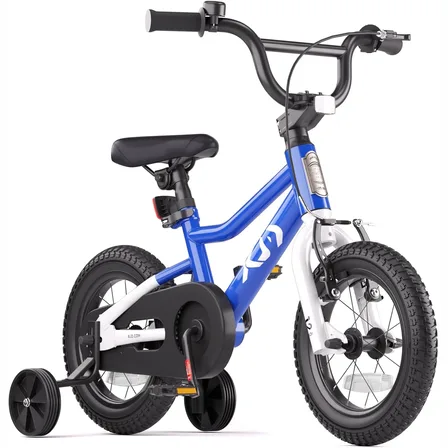
XJD Boys & Girls BMX Bike with Training Wheels, 12/14/16" – Blue
The XJD Boys & Girls BMX Bike in Blue is a first pedal bike for kids roughly age…$99.99
$119.99 -
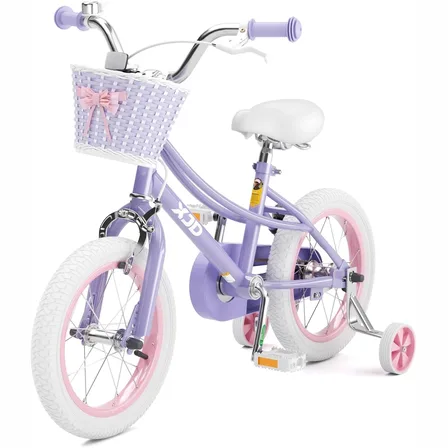
Girls' Training Wheel Bike by XJD with Basket – Purple
If you're shopping for a first bike for a girl roughly 3 to 12 years old (91–152…$75.99
-
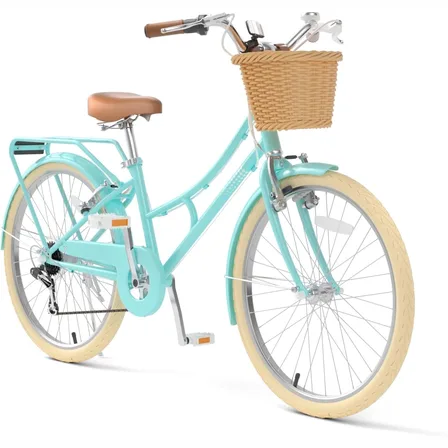
XJD Kids Beach Cruiser Bicycle, Rear Rack & V-Brakes, Mint Green
The XJD Beach Cruiser in Mint Green is a geared, multi-speed cruiser bike for ol…$179.99
$209.99