

What age is a 20 inch bike
A 20 inch bike generally suits children ages 7–12 who are 48–60 inches (122–152 cm) tall, but measured fit and control matter more than age.
Start with height, not the birthday
The age range is a useful starting point, not a guarantee. Children of the same age can differ in height, leg length, reach and riding confidence. Measure the child’s current height without shoes, then compare it with the 20 inch starting range of 48–60 inches (122–152 cm).
If the child falls outside that height range, compare the adjacent wheel sizes instead of choosing by age alone. A rider near a boundary may need to try both sizes:
| Wheel size | Starting age | Rider height |
|---|---|---|
| 18 Inch | 5–9 | 43–52 in / 109–132 cm |
| 20 Inch | 7–12 | 48–60 in / 122–152 cm |
| 24 Inch | 10–14 | 54–64 in / 137–163 cm |
The overlapping ranges are intentional: wheel size alone cannot confirm whether a particular frame will fit a particular child.
Measure the rider and check the bicycle
Record the child’s standing height and inseam. For the inseam, have the child stand upright without shoes and measure from the floor to the crotch. Compare those measurements with the sizing information for the exact bicycle being considered.
Then have the child try that bicycle. Check these points before deciding:
- Stand-over: The child should be able to straddle the bicycle comfortably rather than being pressed against the frame.
- Reach: The handlebars should be reachable without stretching, locking the elbows or losing a balanced riding position.
- Brake control: The child must be able to reach and operate the brake controls reliably with their hands in a normal position.
- Starting and stopping: The rider should be able to mount, set off, steer, slow down and stop with control.
- Confidence: A technically possible fit is not enough if the bicycle feels intimidating or difficult to handle.
Do not size up only for growth
An oversized bicycle can make mounting, steering and stopping harder. Do not move a child to a 20 inch bike simply because it will last longer, and do not move from a suitable 20 inch bike to a 24 inch model solely to leave growing room.
If the rider is within overlapping height ranges, choose after a direct fit comparison. The better option is the bicycle on which the child can stand over, reach the controls, use the brakes and ride confidently now. Recheck fit as the child grows.
How the supplied bicycle helps with comparison
The XJD Kids Beach Cruiser Bicycle, Rear Rack & V-Brakes, Mint Green is offered with 20 Inch, 24 Inch and 26 Inch SKU labels. Its 20 Inch option is directly relevant to this question, while the 24 Inch and 26 Inch options provide distinct larger-size comparison points; they are not equivalent substitutes for a 20 inch fit.
Seeing these particular catalog options together helps a parent compare the requested 20 Inch label against the next listed sizes without assuming that all versions fit the same rider. Select a SKU only after matching the child’s measurements and checking the exact bicycle in person.

For reference, the XBikes starting point for 24 Inch is ages 10–14 and 54–64 inches (137–163 cm). The 26 Inch starting point is youth and adults over 60 inches (153 cm). Those ranges do not make either larger option appropriate for a child who cannot comfortably control it.
Complete the fit and safety check
Use the exact product manual for assembly, adjustment, maintenance, compatibility, load limits and torque requirements. If anything is unclear or the controls cannot be adjusted to suit the rider, use a qualified bicycle mechanic rather than improvising a procedure.
A bicycle helmet also needs an individual fit. It should sit level and be secured with its straps according to the helmet manufacturer’s instructions. A helmet cannot correct a bicycle that is too large or difficult for the child to control.
Make the 20 inch decision
Choose a 20 inch bike when the child is broadly within the 48–60 inch (122–152 cm) starting range and can pass the stand-over, reach, brake-control and confidence checks on that exact bicycle. If any check fails, compare an adjacent size and retest rather than relying on the age label or buying extra growing room.
Bikes for your next adventure
-
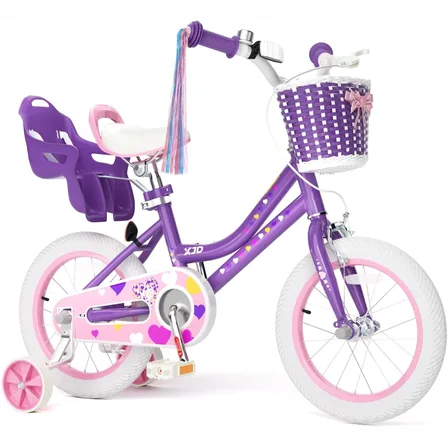
XJD Light Purple Girls Bike with Basket, Training Wheels, 12/14/16/20 Inch
The XJD Girls Bike with Basket in Light Purple is a single-speed training-wheel …$99.99
$119.99 -
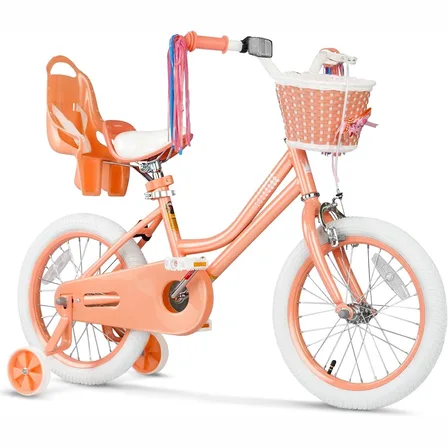
Girls 12/14/16 Inch Kids Bike by XJD with Training Wheels – Peach
The XJD Girls Bike in Peach is a training-wheel bike built for girls roughly 3 t…$149
$169 -
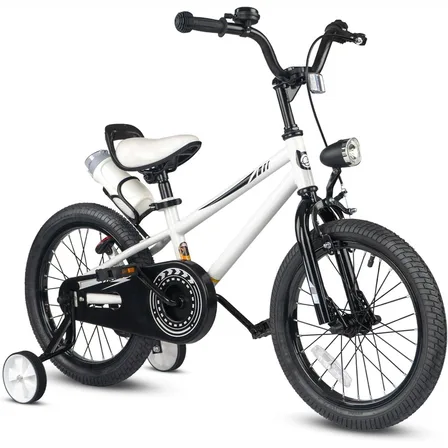
XJD Kids' Training Wheel Bike for Boys & Girls, 12/14/16 Inch – White
The XJD kids' training wheel bike in White is made for riders ages 3–8 (roughly …$169
$199