

What age is a 20 inch wheel bike for
A 20-inch wheel bike is usually for children ages 7–12 who are 48–60 inches (122–152 cm) tall. Height and an individual fit check matter more than age.
Is a 20-inch bike the right starting size?
Use the age range as a quick starting point, then measure the child’s current height without shoes. If the rider is between 48 and 60 inches tall, a 20-inch bike is the XBikes starting point to try.
Children of the same age can have different leg lengths, arm reach, coordination and confidence. A shorter 10-year-old might need a smaller wheel size, while a tall 7-year-old may be ready to try a 20-inch model. Do not choose an oversized bicycle simply to allow room for growth; a bike that is difficult to stand over, steer or stop can undermine control.
What should you measure and compare?
Record the child’s height and inseam before comparing bicycles. For the inseam, have the child stand upright without shoes and measure from the floor to the crotch. Because frame geometry differs between models, inseam should be compared with the stand-over space and adjustment information for the exact bike rather than with a universal number.
These XBikes wheel-size ranges help identify the sizes worth trying:
| Wheel size | Starting age | Rider height |
|---|---|---|
| 18 Inch | 5–9 | 43–52 in / 109–132 cm |
| 20 Inch | 7–12 | 48–60 in / 122–152 cm |
| 24 Inch | 10–14 | 54–64 in / 137–163 cm |
The overlapping ranges are intentional starting points, not proof that two sizes fit equally. A rider near a boundary should try the relevant sizes and choose according to actual control.
How to check a 20-inch bike in person
Have the child try the complete bicycle under close adult supervision. The correct fit should let the rider:
- stand over the frame comfortably rather than being pressed against it;
- reach the handlebars without stretching or locking the arms;
- turn the bars while remaining balanced and in control;
- reach and operate the brake controls confidently;
- start, stop and put a foot down without panic or awkward movement.
Check the fit with the seat and controls adjusted only within the limits given in the exact product manual. If assembly, adjustment, compatibility or maintenance instructions are unclear, use a qualified bicycle mechanic. Do not improvise torque settings or other procedures that are not provided for that model.
Which supplied 20-inch options are relevant?
The three catalog options below all provide a genuine 20-inch comparison: two beach cruisers offer a selectable 20 Inch SKU alongside larger sizes, while the BMX listing is explicitly a 20-inch model. This makes them useful for comparing bike styles after measurements indicate that a 20-inch wheel is appropriate; their category or wheel label does not replace the fit test.
 XJD Kids Beach Cruiser Bicycle, Rear Rack & V-Brakes, Mint Green
This beach cruiser includes a 20 Inch SKU relevant to the requested size, plus distinct 24 Inch and 26 Inch options. Compare the 20 Inch version through an individual fit check.
 XJD Pink Beach Cruiser for Girls – Rear Rack & V-Brake
This beach cruiser is offered with 20 Inch, 24 Inch and 26 Inch SKU labels. Its 20 Inch option is relevant only after checking the rider’s measurements, reach and control.
 Blue XJD Freestyle BMX Bike, 20-Inch – No Pegs
This kids’ BMX listing explicitly identifies a 20-inch wheel and no pegs. It offers a BMX-category comparison with the supplied cruiser options, subject to the same individual fit check.
XJD Kids Beach Cruiser Bicycle, Rear Rack & V-Brakes, Mint Green is a beach cruiser offered in 20 Inch, 24 Inch and 26 Inch SKU labels. For this question, compare only its 20 Inch version with the child’s measurements and control.
XJD Pink Beach Cruiser for Girls – Rear Rack & V-Brake is also a beach cruiser with 20 Inch, 24 Inch and 26 Inch SKU labels. Its 20 Inch option is relevant when the child falls near the supplied range and can operate the bike comfortably.
Blue XJD Freestyle BMX Bike, 20-Inch – No Pegs is cataloged as a kids’ BMX bike and explicitly identifies a 20-inch wheel in its title. It provides a different category comparison from the two beach cruisers, but fit still depends on the individual rider.
The larger 24 Inch and 26 Inch cruiser SKUs should not be treated as equivalent to the requested 20 Inch size. The 24-inch starting range is ages 10–14 and 54–64 inches (137–163 cm); 26 Inch starts with youth and adults over 60 inches (153 cm).
Do not finish the fit check at wheel size
Confidence matters alongside physical dimensions. A child who falls within the 20-inch range but cannot steer smoothly, reach the brakes or stop predictably is not ready for that particular bike setup. Conversely, age alone should not push a child toward a smaller or larger size when measurements and an in-person trial point elsewhere.
A properly fitting bicycle helmet is also essential. It should sit level, fit properly and have its straps used according to the helmet manufacturer’s instructions. A helmet cannot compensate for a bicycle that is too large or hard to control.
Your next decision
Measure height and inseam first. If height is 48–60 inches (122–152 cm), try a 20-inch bike, then verify stand-over room, reach, braking, steering and confident starts and stops. Buy the 20-inch option only when the child can control that exact bicycle now—not because age alone matches or because a larger size promises extra growing room.
Bikes for your next adventure
-
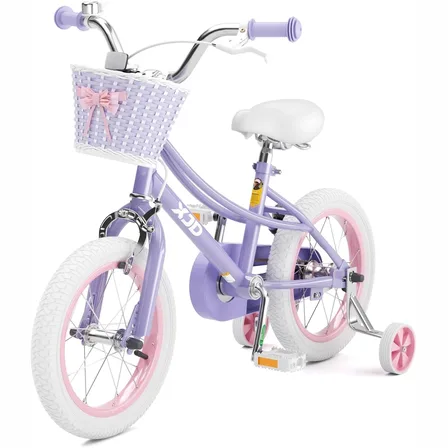
Girls' Training Wheel Bike by XJD with Basket – Purple
If you're shopping for a first bike for a girl roughly 3 to 12 years old (91–152…$75.99
-
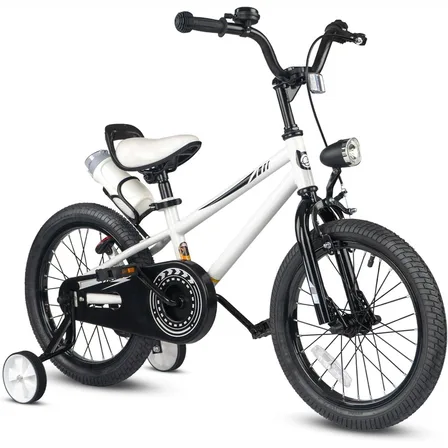
XJD Kids' Training Wheel Bike for Boys & Girls, 12/14/16 Inch – White
The XJD kids' training wheel bike in White is made for riders ages 3–8 (roughly …$169
$199 -
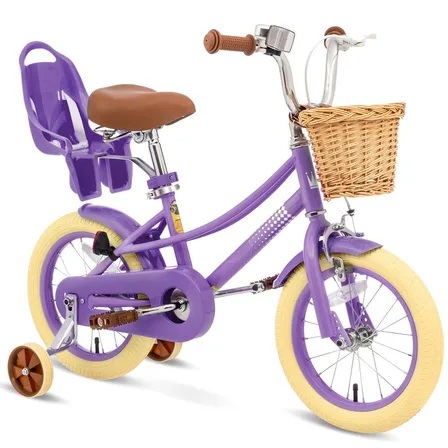
XJD Girls' Bike with Training Wheels, 12/14/16/20 Inch – Purple
The XJD girls' bike with training wheels in Purple is built to grow with your ri…$139
$159