

What age is for a 16 inch bike
A 16-inch bike is usually for a child aged 4–7 and 40–48 inches (102–122 cm) tall, but measured fit and control matter more than age.
Start with height, then measure inseam
Measure the child without shoes, standing straight against a wall, to confirm total height. The XBikes starting range for a 16-inch wheel bike is 40–48 inches (102–122 cm). Being within that range makes a 16-inch bike worth trying; it does not prove that every 16-inch model will fit, because frame shapes and riding positions can differ.
Next, measure inseam. Have the child stand with feet slightly apart and place a firm, thin book between the legs, gently raised to simulate a saddle. Measure from the floor to the top edge of the book. Compare that measurement with the bicycle’s stand-over clearance and adjustment information in its exact product manual. No universal inseam number should replace trying the specific bicycle.
Use age only as a starting point
The age guide overlaps across wheel sizes, so age alone cannot settle the decision. XBikes lists these nearby starting points:
| Wheel size | Age | Rider height |
|---|---|---|
| 14 inch | 3–6 | 37–45 in / 94–114 cm |
| 16 inch | 4–7 | 40–48 in / 102–122 cm |
| 18 inch | 5–9 | 43–52 in / 109–132 cm |
| 20 inch | 7–12 | 48–60 in / 122–152 cm |
A tall four-year-old might be ready to try a 16-inch bike, while a seven-year-old below the height range may need a smaller option. Where ranges overlap, choose according to actual fit, reach, brake control and confidence—not the desire to leave extra room for growth.
Check the bike with the child present
Have the child try the exact bicycle before deciding. The American Academy of Pediatrics advises against buying an oversized bike for a child to grow into. During the fit check, look for all of the following:
- The child can straddle the bicycle with practical clearance rather than being pressed against the frame.
- They can get on and off without struggling or losing balance.
- They can reach the handlebar comfortably without stretching, locking the arms or leaning excessively.
- They can operate the brakes they are expected to use with reliable reach and control.
- They can start, steer, stop and place a foot down with their present confidence level.
If height suggests 16 inches but any of these checks fail, do not assume the child will quickly adapt. Compare another model or wheel size. For assembly, adjustments, compatibility, torque, maintenance and load limits, follow the exact product manual or consult a qualified bicycle mechanic.
How the available 16-inch options relate
Both supplied catalog options include a 16 Inch SKU and are categorized as training wheel bikes, so they provide directly relevant 16-inch choices rather than approximate substitutes. They also offer adjacent sizes that may help when the child falls near a boundary, although each size remains distinct and requires its own fit check.
 XJD Kids' Training Wheel Bike for Boys & Girls, 12/14/16 Inch – White
Available in 12 Inch, 14 Inch and 16 Inch labels. The 16 Inch SKU directly matches the question, while the smaller options provide distinct comparisons if the rider does not pass the individual fit check.
 Girls' Training Wheel Bike by XJD, 12–20 Inch Wheels – Blue
Available in 12 Inch, 14 Inch, 16 Inch and 20 Inch labels. Its 16 Inch SKU is directly relevant; the other wheel sizes are separate alternatives to compare against the child's measurements and control.
XJD Kids' Training Wheel Bike for Boys & Girls, 12/14/16 Inch – White is available in 12 Inch, 14 Inch and 16 Inch labels. Its 16 Inch option matches the wheel size in the question; the smaller labels are comparison choices for riders whose measurements or control indicate that 16 inches is too large.
Girls' Training Wheel Bike by XJD, 12–20 Inch Wheels – Blue is available in 12 Inch, 14 Inch, 16 Inch and 20 Inch labels. Its 16 Inch SKU is relevant to the target range, while the catalog’s 20 Inch option is a separate larger size—not an equivalent choice for growth.
The supplied facts do not establish differences in frame dimensions, brake type, weight, materials or component specifications. Use the exact product details and manual when comparing those points, and have the child repeat the stand-over, reach and control checks on the chosen SKU.
Make the final 16-inch decision
Choose a 16-inch bike only when the child is near the 40–48 inch (102–122 cm) starting range and can comfortably straddle, reach, steer and brake on the exact model. If the child cannot control it now, select a better-fitting size rather than buying large for future growth.
Before every ride, add a properly fitting bicycle helmet. Following U.S. Consumer Product Safety Commission guidance, position it level and secure its straps according to the helmet manufacturer’s instructions. The next step is simple: measure height and inseam, try the 16-inch SKU, and keep it only if the child demonstrates comfortable control today.
Bikes for your next adventure
-
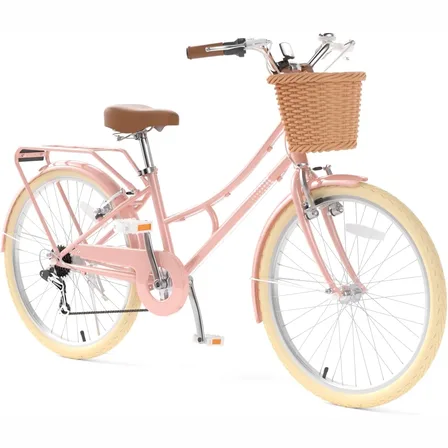
XJD Pink Beach Cruiser for Girls – Rear Rack & V-Brake
The XJD Pink Beach Cruiser for girls is the step-up bike for riders who've outgr…$179.99
$209.99 -
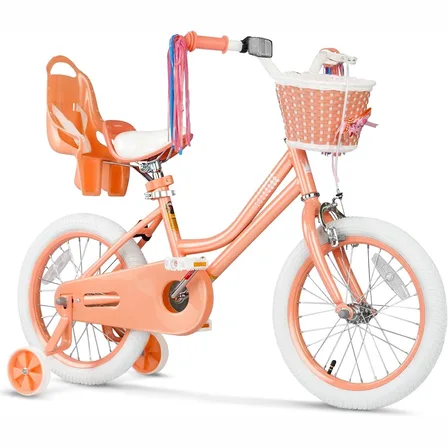
Girls 12/14/16 Inch Kids Bike by XJD with Training Wheels – Peach
The XJD Girls Bike in Peach is a training-wheel bike built for girls roughly 3 t…$149
$169 -
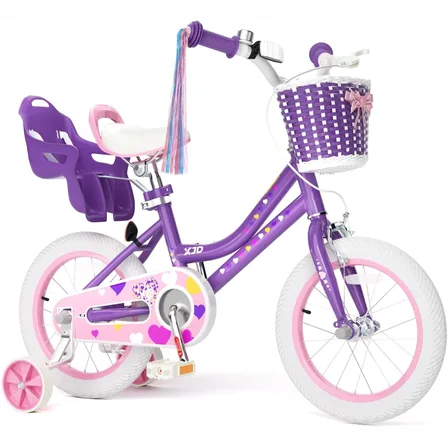
XJD Light Purple Girls Bike with Basket, Training Wheels, 12/14/16/20 Inch
The XJD Girls Bike with Basket in Light Purple is a single-speed training-wheel …$99.99
$119.99