

What does a 16 inch bike frame mean
A 16 inch kids’ bike usually means a bike with 16-inch wheels, not a frame measuring 16 inches. Confirm the label, then check the child’s height, inseam, reach, brake control and confidence on the actual bike.
Wheel size or frame size?
For children’s bikes, “16 inch” most often identifies the wheel size. It helps families compare broad size classes, but it does not describe every dimension that determines fit. Frames, saddles and handlebars can differ even when two bikes carry the same wheel-size label.
If a listing specifically says “16-inch frame,” the number may instead be a nominal frame measurement, commonly associated with the seat-tube area. That is a different measurement from wheel diameter. Ask the seller or consult the exact product specification to establish what was measured and between which points. Do not treat a 16-inch frame and a 16-inch wheel bike as equivalent.
Who is the 16-inch wheel starting point for?
XBikes uses a 16-inch bike as a starting point for ages 4–7 and rider heights of 40–48 in (102–122 cm). Height is more useful than age because children of the same age can have different proportions, strength and riding confidence.
Use the size bands to decide which bikes are worth trying, especially near an overlap:
| Wheel label | Age starting point | Rider-height starting point |
|---|---|---|
| 14 Inch | 3–6 | 37–45 in / 94–114 cm |
| 16 Inch | 4–7 | 40–48 in / 102–122 cm |
| 18 Inch | 5–9 | 43–52 in / 109–132 cm |
These overlapping ranges are comparison points, not instructions to choose by age or height alone. A child near a boundary may control one model better than another because the complete bike geometry and adjustment range matter.
What to measure before comparing bikes
- Standing height: Measure the child without shoes, upright against a wall. Compare the result with the 40–48 in (102–122 cm) starting range.
- Inseam: With feet slightly apart, measure from the floor to the crotch. Compare this measurement with the bike’s published stand-over and saddle information, if supplied.
- Reach: On the bike, check whether the child can hold the grips without stretching, locking the elbows or leaning excessively.
- Brake control: The child must be able to reach and operate the fitted controls confidently. Check the exact manual for permitted adjustments.
- Current confidence: Consider starting, steering, stopping and putting a foot down. A size that looks suitable on a chart can still be too demanding in practice.
Have the child try the bicycle whenever possible. Check that they can straddle it appropriately, mount and dismount, steer, and stop under control. Do not buy an oversized bicycle merely to leave room for growth.
How the supplied 16-inch options are relevant
The catalog choices below are relevant because both explicitly offer a “16 Inch” SKU label, alongside 12 Inch and 14 Inch choices. The XJD Light Purple Girls Bike with Basket, Training Wheels, 12/14/16/20 Inch is categorized as a Training Wheel Bike; its supplied available labels are 12 Inch, 14 Inch and 16 Inch. The XJD Girls BMX Bike 12/14/16 Inch with Training Wheels – Pink Blue is categorized as a Kids’ BMX Bike and has the same three supplied labels.
 XJD Light Purple Girls Bike with Basket, Training Wheels, 12/14/16/20 Inch
A Training Wheel Bike with supplied 12 Inch, 14 Inch and 16 Inch SKU labels. Its 16 Inch option is relevant for a direct size-label comparison, but individual fit still requires height, inseam, reach and control checks.
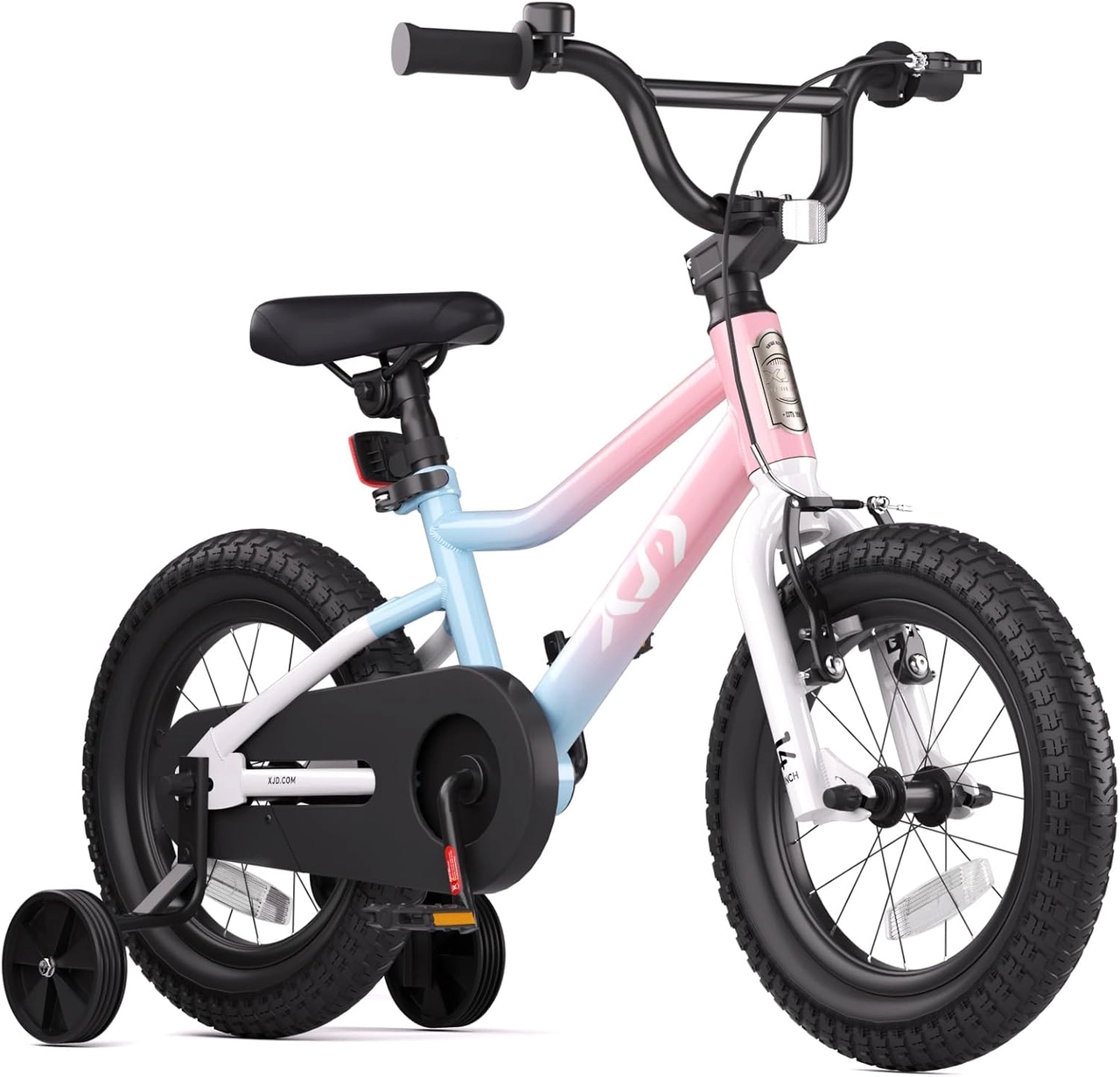 XJD Girls BMX Bike 12/14/16 Inch with Training Wheels – Pink Blue
A Kids’ BMX Bike with supplied 12 Inch, 14 Inch and 16 Inch SKU labels. The 16 Inch choice matches the wheel-size question, while its actual suitability depends on the child’s measurements and ability to control the bike.
These facts let you compare category and selected size label, but they do not establish frame geometry, saddle range, brake type, weight, materials or compatibility. Confirm that “16 Inch” is selected rather than relying on words elsewhere in the title. For assembly, maintenance, adjustments, load limits and torque, follow the exact product manual or use a qualified bicycle mechanic.
Make the final fit decision
A 16-inch label is relevant when the child’s measured height falls around the XBikes starting range, but it is not enough to approve the fit. Compare the child’s inseam with the specific bike, then test stand-over, reach and access to the controls. The child should demonstrate controlled starting, steering and stopping rather than merely being able to sit on the saddle.
Add a properly fitting bicycle helmet: it should sit level and its straps should be used according to the helmet manufacturer’s instructions. Before choosing, settle the title’s key question on the exact listing—does “16 inch” mean wheel size or an actual frame measurement? If it means wheel size, use 40–48 in (102–122 cm) only to shortlist the bike, and approve it only after the individual fit-and-control check.
Bikes for your next adventure
-
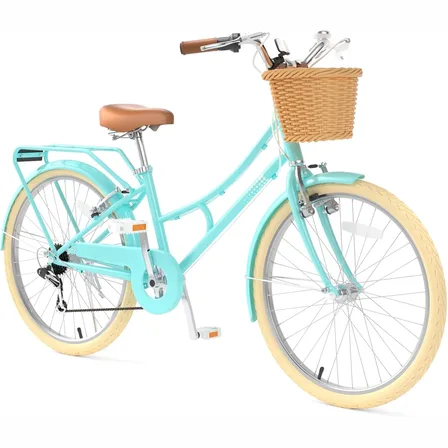
XJD 24-Inch Green Beach Cruiser Bike with U-Brake
This XJD 24-inch beach cruiser in green is made for riders about 4'8" to 5'4" ta…$159.99
$199.99 -

Kids Bike Helmet by XJD for Girls – Pink
The XJD Kids Bike Helmet in Pink is a lightweight multi-sport helmet for girls r…$59.99
$99 -
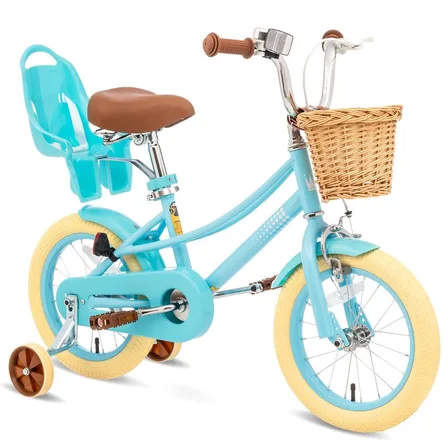
Girls' Training Wheel Bike by XJD, 12–20 Inch Wheels – Blue
This XJD girls' training wheel bike in Blue covers one of the widest fit ranges …$139
$159