

What does a 20 inch bicycle mean
A 20 inch bicycle has wheels with a nominal 20-inch diameter; it does not mean the frame or seat is 20 inches tall. For children, wheel size is only a starting point: measure the rider and check the fit on the actual bicycle.
What “20 inch” tells you
The label identifies the bicycle’s wheel-size class. It helps narrow the search, but it cannot establish whether a particular model fits because frame shape, saddle position, handlebar reach and component placement can differ among bicycles with the same wheel size.
Under the XBikes starting points, a 20 Inch bicycle generally corresponds to ages 7–12 and rider heights of 48–60 in / 122–152 cm. Treat age as a rough reference. The child’s measured height, inseam, reach, brake control and present confidence matter more.
Measure the child before comparing bicycles
- Measure standing height: Have the child stand without shoes, upright against a wall, and measure from the floor to the top of the head.
- Measure inseam: With feet slightly apart, measure from the floor to the crotch. This helps assess clearance over the bicycle rather than relying on wheel size alone.
- Note current ability: Consider whether the child starts, stops, steers and balances confidently. A hesitant rider may need easier handling even when the height range appears suitable.
Use the measurements to choose a likely wheel-size class, then compare them with the geometry and adjustment information in the exact product manual. Do not infer stand-over clearance from the wheel diameter.
Compare the nearby XBikes size ranges
| Wheel size | Age starting point | Rider-height starting point |
|---|---|---|
| 18 Inch | 5–9 | 43–52 in / 109–132 cm |
| 20 Inch | 7–12 | 48–60 in / 122–152 cm |
| 24 Inch | 10–14 | 54–64 in / 137–163 cm |
The overlapping ranges are intentional starting points, not proof that two sizes are interchangeable. A rider near a boundary should try the relevant sizes. Do not choose a larger bicycle simply to allow room for growth; an oversized bicycle can make mounting, steering, stopping and reaching the brakes harder.
Perform an individual fit check
Have the child try the fully assembled bicycle with ordinary riding shoes. Check these points before deciding:
- Stand-over: The child can straddle the bicycle with usable clearance and without leaning it sharply to one side.
- Starting and stopping: The rider can get on, begin moving and stop in a controlled way.
- Reach: The child can hold the handlebars and steer without stretching, locking the elbows or losing a stable posture.
- Brake control: The rider can reach and operate the brake controls confidently while maintaining grip and direction.
- Overall confidence: The bicycle feels manageable during turns and low-speed riding, rather than merely possible to sit on.
If any check fails, compare another size or model. Adjust only within the limits and procedure in the exact product manual; use a qualified bicycle mechanic when setup or compatibility is uncertain.
When the supplied XBikes products are relevant
The XJD Kids Beach Cruiser Bicycle, Rear Rack & V-Brakes, Mint Green and XJD Pink Beach Cruiser for Girls – Rear Rack & V-Brake are relevant because both are Beach Cruiser Bikes offered with 20 Inch, 24 Inch and 26 Inch SKU labels. Their 20 Inch variants match the wheel-size term in the title, while the larger variants provide distinct size choices for comparison; they are not equivalent substitutes for a 20 Inch bicycle.
 XJD Kids Beach Cruiser Bicycle, Rear Rack & V-Brakes, Mint Green
Offered in 20 Inch, 24 Inch and 26 Inch labels, this mint green Beach Cruiser Bike is relevant through its 20 Inch variant; verify the selected SKU and the child’s individual fit.
 XJD Pink Beach Cruiser for Girls – Rear Rack & V-Brake
This pink Beach Cruiser Bike has 20 Inch, 24 Inch and 26 Inch options. Its 20 Inch variant matches the requested wheel class, but height, stand-over, reach and brake control still require checking.
These listings can help you compare color choice and the supplied size labels. Their titles also identify rear racks and V-brakes. The catalog facts do not provide frame measurements, saddle range, weight, load limits or detailed assembly information, so none of those should be assumed. Confirm the selected SKU says 20 Inch, then use the actual bicycle and its exact manual for the fit and setup checks.
Make the final 20-inch decision
A 20 Inch label is appropriate as a starting point when the rider measures 48–60 in / 122–152 cm, but purchase only after the child demonstrates adequate stand-over clearance, comfortable reach, usable brake control and confident handling. If the child cannot do all four, do not size up for future growth; try another size or model instead.
Before riding, provide a bicycle helmet that fits properly, sits level and has its straps adjusted according to the helmet manufacturer’s instructions. For assembly, maintenance, torque, compatibility and rack load limits, follow the exact bicycle manual or consult a qualified bicycle mechanic.
Bikes for your next adventure
-
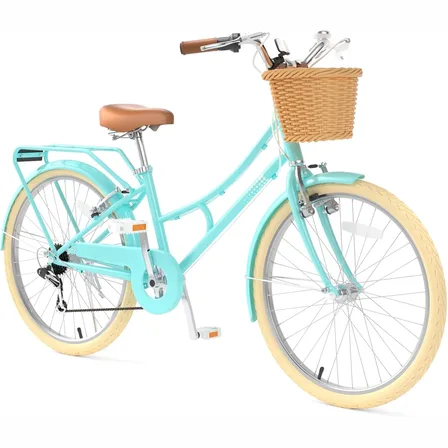
XJD 24-Inch Green Beach Cruiser Bike with U-Brake
This XJD 24-inch beach cruiser in green is made for riders about 4'8" to 5'4" ta…$159.99
$199.99 -

Kids Bike Helmet by XJD for Girls – Pink
The XJD Kids Bike Helmet in Pink is a lightweight multi-sport helmet for girls r…$59.99
$99 -
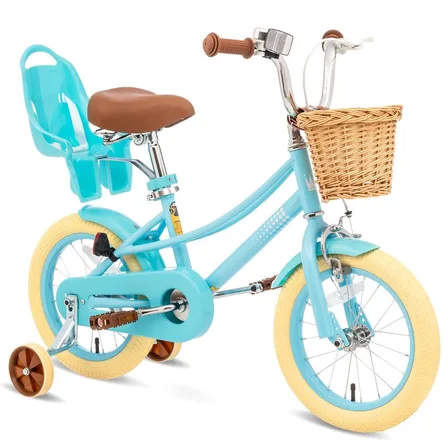
Girls' Training Wheel Bike by XJD, 12–20 Inch Wheels – Blue
This XJD girls' training wheel bike in Blue covers one of the widest fit ranges …$139
$159