

What height can ride a 24 inch bike
A 24-inch bike generally suits a rider 54–64 inches (137–163 cm) tall, often ages 10–14, but only an individual fit check confirms it.
Start with the rider’s measured height
Measure the child without shoes, standing straight against a wall. Mark the top of the head and measure from the floor. Compare that result with the XBikes starting range for a 24-inch bike: 54–64 inches (137–163 cm).
Age is only a rough reference. Although the starting age range is 10–14, height, leg length, reach, brake control and current riding confidence matter more. Two children of the same age can need different bicycle sizes.
| Measured height | What to consider |
|---|---|
| Below 54 in / 137 cm | A 24-inch bike is outside the starting range. Compare a smaller wheel size and perform a fit check. |
| 54–64 in / 137–163 cm | A 24-inch bike is a reasonable size to try, subject to all fit checks below. |
| Over 64 in / 163 cm | Compare a larger size. The XBikes starting point for 26-inch bikes is over 60 in / 153 cm, but overlap still requires an individual check. |
Measure inseam before choosing
Height narrows the search, while inseam helps reveal whether the frame is comfortable to stand over. Have the rider wear the shoes they will use for cycling. Ask them to stand with feet slightly apart, place a firm book upright between the legs, and measure from the floor to the top edge of the book.
Compare that measurement with the stand-over information for the exact bicycle and configuration in its product manual. No frame dimensions are supplied here, so wheel diameter alone cannot establish clearance. If the rider cannot comfortably straddle the bike and control it while stopped, do not choose it.
Perform a hands-on fit check
The American Academy of Pediatrics, through HealthyChildren, advises having a child try the bicycle rather than buying an oversized bike for future growth. During the trial, check that the rider can:
- Stand over the bicycle comfortably and remain balanced.
- Get on and off without struggling or tipping the bike.
- Reach the handlebar without stretching, locking the elbows or losing a stable posture.
- Turn the handlebar while maintaining control.
- Reach and operate the brakes confidently with the hands in their normal riding position.
- Start, stop and place a foot down in a controlled way.
A child who falls within the height range may still need another size if the frame shape, reach or controls do not suit them. Likewise, do not move up to 24 inches simply because the smaller bike looks youthful.
How the supplied 24-inch options are relevant
The supplied catalog includes two beach cruiser bikes with 24-inch configurations, so they are relevant bicycles to compare once the rider’s measurements indicate that a 24-inch bike is appropriate. Their listed size choices also help a taller rider compare 24-inch and 26-inch options without treating those sizes as equivalent.
 XJD 24-Inch Green Beach Cruiser Bike with U-Brake
A beach cruiser option listed in Green / 24 Inch and Pink / 24 Inch, with a Pink / 26 Inch configuration for a separate size comparison; the catalog specifies a U-brake.
 Pink XJD Beach Cruiser Bike, 24"/26", U-Brake
This beach cruiser is offered in 24 Inch and 26 Inch configurations and lists a U-brake, making it relevant after the rider qualifies for an individual 24-inch fit check.
The XJD 24-Inch Green Beach Cruiser Bike with U-Brake is listed in Green / 24 Inch and Pink / 24 Inch configurations, plus Pink / 26 Inch. The Pink XJD Beach Cruiser Bike, 24"/26", U-Brake is listed with 24 Inch and 26 Inch configurations. Both are categorized as beach cruiser bikes and list a U-brake.
Those catalog facts do not provide frame dimensions, minimum inseam, component adjustability or load limits. Consult the exact product manual for those details, and use a qualified bicycle mechanic when assembly, adjustment or compatibility is uncertain.
When a 24-inch bike is not the right choice
Choose another size to try if the rider is outside the starting height range or cannot pass the practical checks. A 20-inch bike starts at 48–60 inches (122–152 cm), while a 26-inch bike starts above 60 inches (153 cm). These overlapping ranges are comparison points, not proof that either adjacent size will fit.
Do not select the 26-inch configuration merely because the rider is near 60 inches tall. It is a distinct wheel size and must be checked separately for stand-over room, reach, brake access and confident control. The same applies when considering a 20-inch bike for a shorter or less confident rider.
Complete the decision safely
Once the bicycle fits, add a properly fitting bicycle helmet. The U.S. Consumer Product Safety Commission says the helmet should sit level and its straps should be used according to the helmet manufacturer’s instructions.
The next step is simple: measure the rider’s standing height and inseam, try a 24-inch bike only if 54–64 inches is the appropriate starting range, then approve it only when the rider can straddle, reach, brake, start and stop with confidence.
Bikes for your next adventure
-

XJD 24-Inch Green Beach Cruiser Bike with U-Brake
This XJD 24-inch beach cruiser in green is made for riders about 4'8" to 5'4" ta…$159.99
$199.99 -
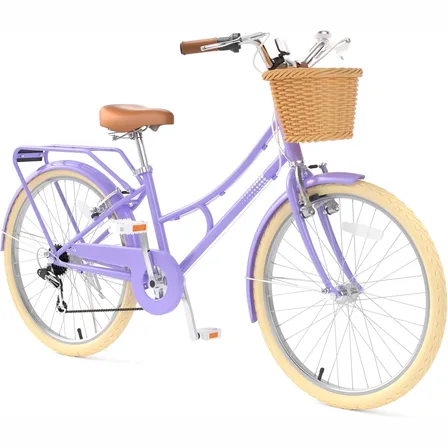
24-Inch Purple XJD Beach Cruiser Bike with U-Brake
The XJD 24-Inch Purple Beach Cruiser is built for girls and young women roughly …$159.99
-
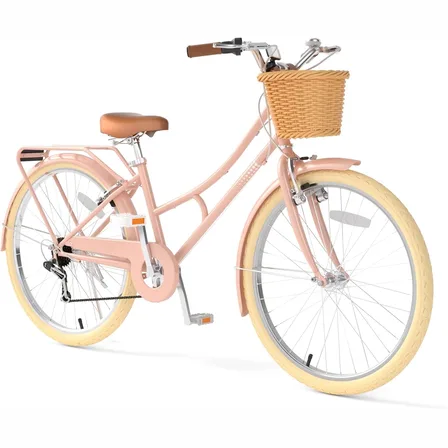
Pink XJD Beach Cruiser Bike, 24"/26", U-Brake
The XJD Pink Beach Cruiser Bike is a single-speed cruiser built for older kids a…$159.99