

What height for 24 inch bike
A 24-inch bike is a starting match for a rider 54–64 inches (137–163 cm) tall. Measure the child first, then confirm stand-over room, reach, brake control and confidence on the actual bicycle.
Measure height before choosing the wheel size
Have the rider stand without shoes against a wall, looking straight ahead. Keep the heels on the floor and mark the top of the head. Measure vertically from the floor to the mark. Compare that result with the XBikes 24-inch starting range of 54–64 inches (137–163 cm).
The corresponding age starting point is 10–14 years, but age is not the deciding measurement. Children of the same age can differ substantially in height, limb length, coordination and riding experience. Use the measured height first and treat age only as a rough cross-check.
If the child is below 54 inches (137 cm), do not assume a 24-inch bike will become manageable with practice. The XBikes starting point for a 20-inch bike is 48–60 inches (122–152 cm). If the rider is above 60 inches (153 cm), a 26-inch model may also enter the comparison, but neither overlap automatically determines the right fit.
Measure inseam and check stand-over
Measure inseam with the child standing straight in the shoes normally worn for riding. Place a firm, thin object between the legs to represent the saddle and measure from the floor to its top edge. Record the result for comparison with the bicycle maker’s fit information; wheel diameter alone does not reveal frame clearance.
On the actual bike, ask the child to straddle the frame with both feet planted securely on the ground. There should be clear stand-over room rather than pressure or contact that makes the rider tilt the bike. Frame shapes differ, so two bicycles with 24-inch wheels can fit differently.
If the exact model’s stand-over dimensions or adjustment instructions are not supplied, consult its product manual or ask a qualified bicycle mechanic. Do not improvise limits or alter components beyond the manufacturer’s directions.
Confirm reach, brakes and basic control
A height-range match is only the first screen. With the rider seated and holding the bars, look for a comfortable, controlled posture. The child should not have to stretch, lock the elbows or shift forward simply to steer. Check that turning the handlebar does not pull the rider off balance.
Next, have the child demonstrate that they can reach and operate each brake control while maintaining a secure grip. Brake type does not remove the need for this check. Also confirm that the rider can start, steer, stop and put a foot down without hesitation in a quiet, traffic-free area.
Current confidence matters. A hesitant beginner near the bottom of the height range may control a smaller option more comfortably, while another rider of identical height may fit the 24-inch bike well. Do not buy an oversized bicycle merely to allow room for growth; the child should be able to control it now.
How the supplied bicycle helps with comparison
The XJD Kids Beach Cruiser Bicycle, Rear Rack & V-Brakes, Mint Green is relevant because its available SKU labels include 20 Inch, 24 Inch and 26 Inch. Those three labeled options let a parent compare the requested 24-inch size with the adjacent XBikes starting points without treating wheel sizes as interchangeable. Its catalog category is Beach Cruiser Bikes, so also confirm that this bicycle style suits the intended riding.

For the 24 Inch SKU label, begin with the 54–64 inch (137–163 cm) rider-height range, then perform the individual fit checks above. The 20 Inch label is a comparison point for 48–60 inches (122–152 cm), and the 26 Inch label is a comparison point for youth and adults over 60 inches (153 cm). Overlapping height ranges mean “try both,” not “either one will fit.”
The supplied facts do not provide frame geometry, saddle-adjustment range, load limits, assembly details or torque settings. Check the exact product manual for those matters or use a qualified bicycle mechanic. Do not infer them from the wheel-size label, bicycle category, rear rack, V-brakes or color.
Make the final 24-inch decision
- Measure: Confirm that the rider’s standing height is within, or meaningfully near, 54–64 inches (137–163 cm), and record the inseam.
- Compare: Use the manufacturer’s geometry and adjustment guidance to evaluate inseam clearance and riding position.
- Try: Check stand-over room, handlebar reach, brake access, starting, steering, stopping and putting a foot down.
- Decide for today: Choose 24 inches only if the child is comfortable and in control now. If control is strained, compare the appropriate neighboring size instead of sizing up for future growth.
Before the first ride, add a properly fitting bicycle helmet. It should sit level and its straps should be adjusted according to the helmet manufacturer’s instructions. The practical answer is simple: use 54–64 inches as the 24-inch starting range, but make the purchase only after the individual rider passes the complete fit and control check.
Bikes for your next adventure
-

26-Inch XJD Beach Cruiser Bike for Girls – Purple, V-Brake
This XJD 26-inch purple beach cruiser is sized for big kids and teens — suggeste…$218.49
$229.99 -
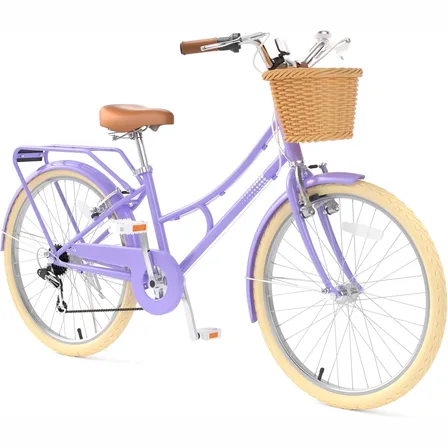
24-Inch Purple XJD Beach Cruiser Bike with U-Brake
The XJD 24-Inch Purple Beach Cruiser is built for girls and young women roughly …$159.99
-
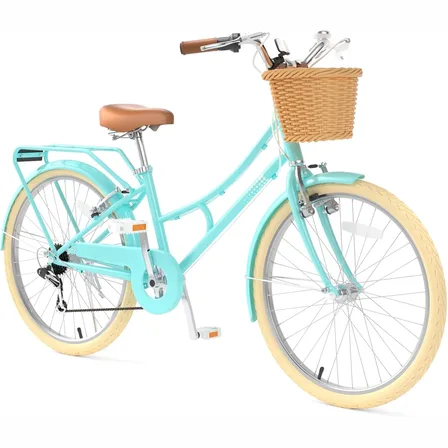
XJD 24-Inch Green Beach Cruiser Bike with U-Brake
This XJD 24-inch beach cruiser in green is made for riders about 4'8" to 5'4" ta…$159.99
$199.99