

What height range would a 26 inch bike fit
A 26-inch bike is a starting fit for youth and adults over 60 inches (153 cm) tall. Confirm inseam clearance, reach, braking and control before choosing it.
What the 26-inch measurement means
The 26-inch label describes the approximate wheel size, not the frame dimensions or the rider’s height. Two 26-inch bicycles can have different stand-over heights, saddle ranges and handlebar positions. That is why height provides a useful first screen but cannot prove that a particular bicycle fits.
Under the XBikes wheel-size starting points, a 24-inch bike corresponds to riders 54–64 inches (137–163 cm) tall, while a 26-inch bike is for youth and adults over 60 inches (153 cm). These ranges overlap around the transition, so a rider slightly above 60 inches should compare the actual fit of both sizes rather than assuming the larger wheels are automatically right.
Measure height and inseam first
Measure the rider without shoes, standing straight against a wall. Record total height from the floor to the top of the head. Then measure inseam from the floor to the crotch while the rider stands with feet slightly apart. Use the height to identify 26 inches as a possible wheel size and the inseam to check clearance on the exact frame.
At a fitting, have the rider straddle the bicycle with both feet flat on the ground. There should be comfortable clearance between the rider and the top tube. Because frame shapes differ, use the manufacturer’s instructions for the exact model rather than applying an invented universal clearance number.
Check whether the rider can control it
A correctly sized bicycle should feel manageable before the rider starts moving. Check all of the following:
- The rider can mount, start and stop without the bicycle tipping beyond their control.
- The seated position allows a comfortable reach to the handlebar without excessive stretching or crowding.
- The rider can turn the handlebar smoothly while maintaining balance.
- Both brake controls are easy to reach and operate confidently from the normal riding position.
- The rider can place a foot down promptly when stopping.
Current confidence matters as much as the measurements. A hesitant rider who cannot control a 26-inch bicycle should not be moved up merely because their height clears 60 inches. The American Academy of Pediatrics advises trying the bicycle and avoiding an oversized bike bought for future growth.
How the supplied bicycles help with comparison
The three catalog options below each include a supplied 26-inch SKU, and each also offers at least one smaller wheel-size SKU. That makes them relevant when comparing a 26-inch option with a smaller alternative, although wheel labels alone do not establish fit.
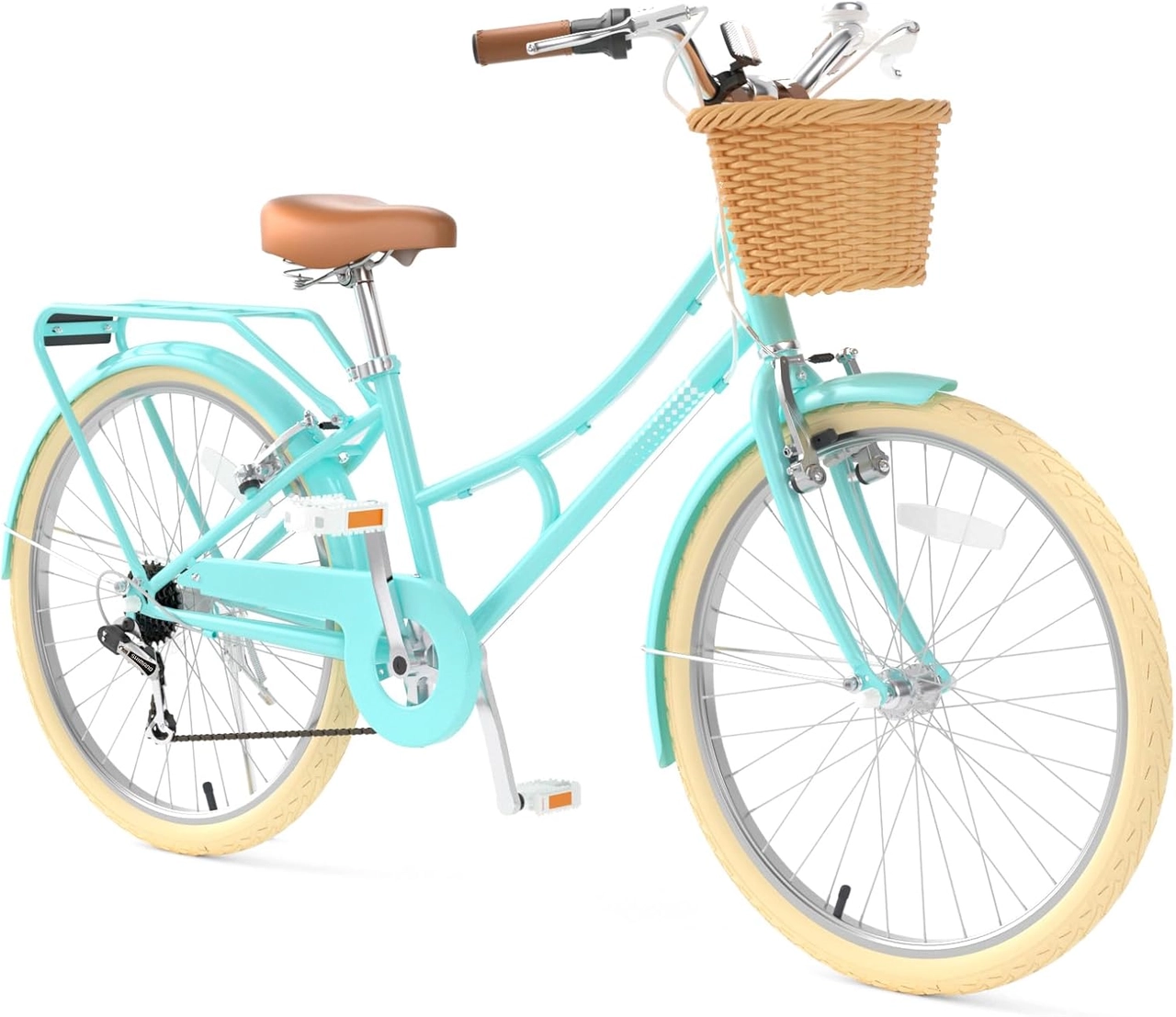 XJD 24-Inch Green Beach Cruiser Bike with U-Brake
Includes a Pink / 26 Inch SKU alongside two 24-inch color options, making it relevant for checking the requested size against a smaller wheel option. Confirm the chosen SKU label because the exact product title begins with 24-Inch.
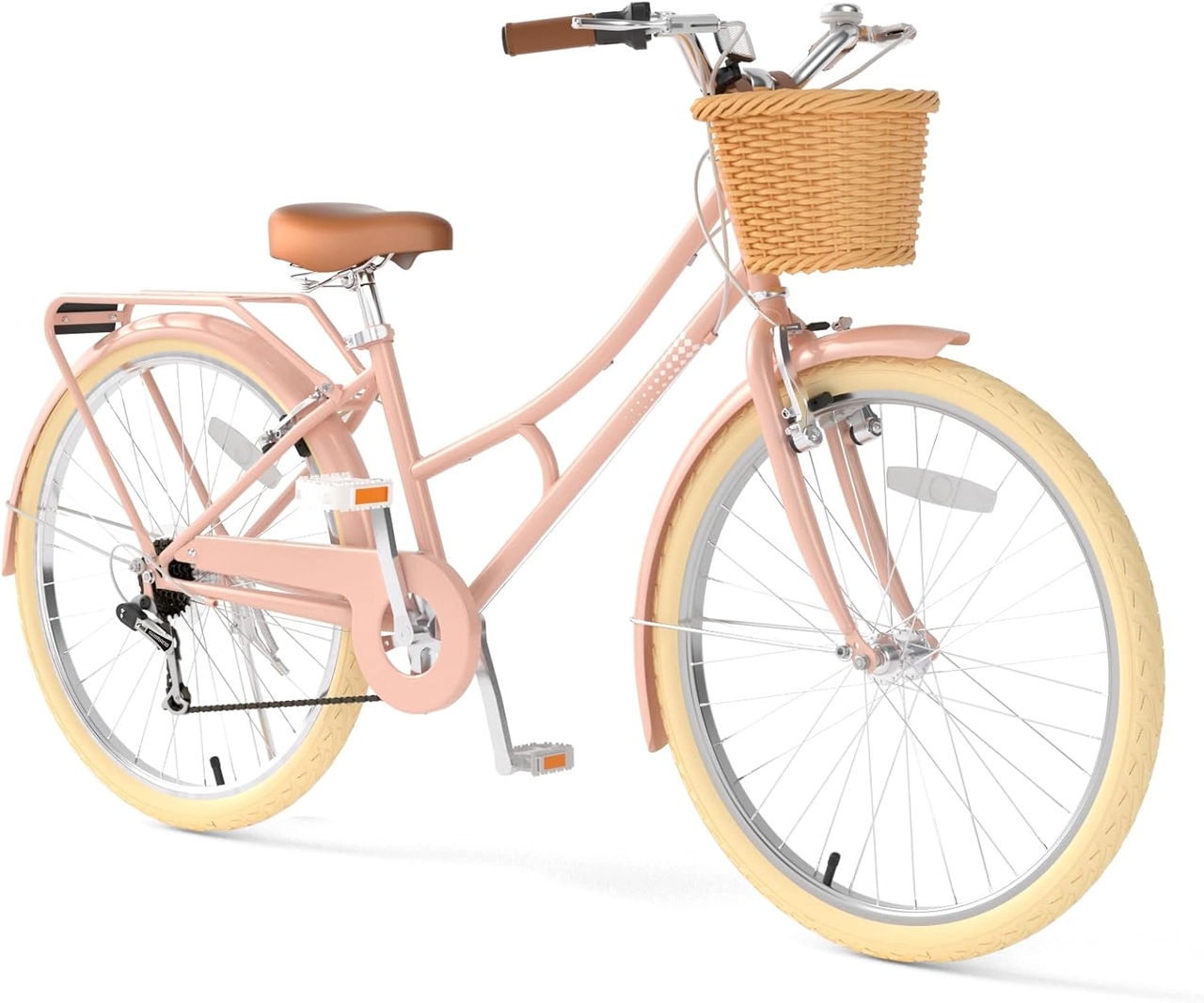 Pink XJD Beach Cruiser Bike, 24"/26", U-Brake
Offers both 24 Inch and 26 Inch SKU labels, so it is relevant for a rider comparing sizes near the height transition. The wheel choice still requires checks of stand-over clearance, reach, brake access and control.
 XJD Kids Beach Cruiser Bicycle, Rear Rack & V-Brakes, Mint Green
Includes 20 Inch, 24 Inch and 26 Inch SKU labels, providing three wheel-size comparison points. Its Kids label does not determine fit; use measured height and an individual control check.
XJD 24-Inch Green Beach Cruiser Bike with U-Brake has Green / 24 Inch, Pink / 24 Inch and Pink / 26 Inch SKU labels. Despite “24-Inch” appearing in the product title, the supplied catalog includes one 26-inch configuration; verify the selected color and wheel-size label carefully.
Pink XJD Beach Cruiser Bike, 24"/26", U-Brake is offered with 24 Inch and 26 Inch SKU labels. It provides a direct size comparison for a rider near the transition, but the individual frame fit and brake reach still need to be checked.
XJD Kids Beach Cruiser Bicycle, Rear Rack & V-Brakes, Mint Green has 20 Inch, 24 Inch and 26 Inch SKU labels. Its range can help distinguish a 26-inch configuration from smaller choices, but the word “Kids” is a catalog label, not evidence that every child will fit it.
Make the final size decision
Choose a 26-inch option only when the rider is over 60 inches (153 cm) and the exact bicycle passes the stand-over, reach, braking and handling checks. If the rider is 60 inches or shorter, use the XBikes starting ranges to consider a smaller wheel size and perform the same individual check. Do not choose 26 inches solely to leave growing room.
Before riding, adjust and assemble the bicycle according to its exact product manual; use a qualified bicycle mechanic when the instructions or fit are uncertain. The rider should also wear a properly fitting bicycle helmet that sits level and has straps secured according to the helmet manufacturer’s directions.
The practical next step is simple: record the rider’s height and inseam, try the exact 26-inch configuration, and select it only if the rider can stand over, reach, brake and steer with confidence.
Bikes for your next adventure
-
XJD 24-Inch Green Beach Cruiser Bike with U-Brake
This XJD 24-inch beach cruiser in green is made for riders about 4'8" to 5'4" ta…$159.99
$199.99 -
Purple XJD Girls' Bike with Doll Seat & Basket
For girls 71–122 cm tall (about ages 3–7), this XJD girls' bike in Purple pairs …$75.99
$99.99 -

Kids Bike Helmet by XJD for Boys & Girls – Black, Blue, Green, Pink, Purple
The XJD Kids Bike Helmet covers a wide 2-to-8-year age range thanks to two head-…$59.99