

What inch bike for a 9 year old
Most 9-year-olds start with a 20-inch bike, but height and fit decide: measure your child, then check stand-over, reach and brake control in person.
The short answer: usually 20 inches
XBikes lists a 20-inch bike as a starting point for ages 7–12 and rider heights of 48–60 inches (122–152 cm). That makes 20 inches the usual first size to try for a 9-year-old. Age is only a screening tool, however—not proof that a bicycle fits.
A shorter 9-year-old may still need an 18-inch bike, whose starting range is ages 5–9 and 43–52 inches (109–132 cm). A particularly tall child may be ready to compare a 24-inch bike, listed for ages 10–14 and heights of 54–64 inches (137–163 cm). Do not move up merely to leave room for growth; an oversized bicycle can make starting, stopping and steering harder to control.
Measure before choosing
Measure the child barefoot, standing straight against a wall. Record total height from the floor to the top of the head. Then measure inseam from the floor to the crotch. Height identifies the sensible wheel sizes to try; inseam helps you judge whether the child can stand over a particular frame comfortably.
| Wheel size to compare | XBikes starting range | What it means at age 9 |
|---|---|---|
| 18 Inch | Ages 5–9; 43–52 in / 109–132 cm | Worth trying for a shorter rider |
| 20 Inch | Ages 7–12; 48–60 in / 122–152 cm | The normal first comparison |
| 24 Inch | Ages 10–14; 54–64 in / 137–163 cm | A comparison for a tall rider, only if control is comfortable |
These ranges overlap because wheel diameter does not reveal every frame dimension. Two bicycles with the same wheel size can feel different, so the numbers narrow the search rather than completing the decision.
Confirm the fit on the actual bicycle
Have your child try the exact bicycle instead of relying on its label. With the child standing over the frame, there should be comfortable clearance rather than pressure from the top tube. Seated in a normal riding position, the child should reach the handlebars without stretching, locking the elbows or leaning awkwardly.
Ask the child to demonstrate the controls. They should be able to grasp and operate the brakes confidently while maintaining a secure hold on the handlebars. Also watch a start, a controlled stop and a gentle turn in a traffic-free area. If the rider cannot manage these actions calmly, compare a smaller or differently proportioned bicycle even when the age and height chart suggests the larger one.
How the supplied 20-inch option helps
The catalog includes one relevant 20-inch comparison: XJD Girls' Bike with Training Wheels, 12/14/16/20 Inch – Purple. Its available size labels are 12 Inch, 14 Inch, 16 Inch and 20 Inch. For this question, only its 20 Inch option matches the usual starting size for a 9-year-old; the smaller labels are not equivalent substitutes.
This particular catalog option helps you compare an available 20-inch configuration while applying the height and hands-on checks above. Its title identifies it as a training-wheel bike, so consider whether that format suits the child’s current confidence and riding stage; the catalog facts do not establish individual fit.

When this product is—and is not—relevant
The 20 Inch option is relevant when the child measures within the 48–60 inch (122–152 cm) starting range and can stand over, reach, steer and brake on the actual bicycle comfortably. It may also be useful when training wheels match the rider’s present needs.
It is not the right conclusion merely because the rider is nine. If measurements and a trial point toward 18 inches, the supplied product has no 18 Inch label and should not be treated as a substitute. If a tall, capable rider needs a 24-inch comparison, this product also has no 24 Inch label. Its 12-, 14- and 16-inch options correspond to smaller XBikes starting ranges and should not be chosen just because they share the same product title.
Make the final decision
- Measure height and inseam.
- Start with 20 inches if height is 48–60 inches (122–152 cm); also compare 18 or 24 inches when the measured height and control checks justify it.
- Have the child try the exact frame and verify stand-over clearance, relaxed reach, steering control and usable brake reach.
- Reject any bicycle the child cannot start, stop and turn confidently, and never buy oversized solely for future growth.
Before riding, fit a bicycle helmet so it sits level and adjust its straps according to the helmet manufacturer’s instructions. Follow the exact bicycle manual or consult a qualified bicycle mechanic for assembly, maintenance, compatibility, load limits and torque information.
For a 9-year-old, measure first and try a 20-inch bike first; choose 18 or 24 inches only when the child’s height and real-world control clearly support that different size.
Bikes for your next adventure
-

Pink Girls' 12/14/16" Bike by XJD – Basket & Doll Seat
The XJD Pink Girls' Bike with Basket & Doll Seat is made for riders 71–122 cm ta…$75.99
$99.99 -

XJD Girls Bike for Kids Ages 3-8, 12/14/16 Inch with Training Wheels – Purple
The XJD Girls Bike in Purple is a training-wheel bicycle for kids ages 3 to 8, f…$149
$169 -
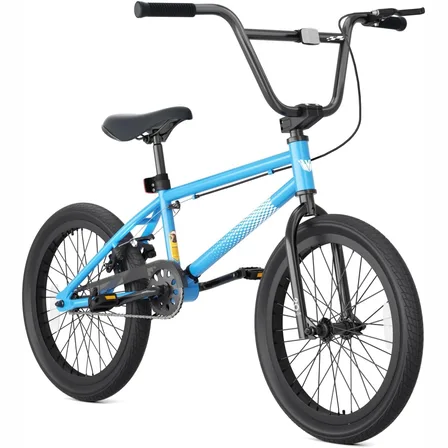
Blue XJD Freestyle BMX Bike, 20-Inch – No Pegs
The XJD 20-Inch Blue Freestyle BMX is an entry-level BMX bike for boys and girls…$189.99