

What is a 16 inch bike
A 16 inch bike is a bicycle with a nominal 16-inch wheel size. It is generally a starting point for riders 40–48 inches (102–122 cm) tall, often ages 4–7, but the child must still try it for fit and control.
What “16 inch” actually measures
The label refers to the bicycle’s wheel-size category, not the frame height, seat height, or child’s inseam. It also does not mean the complete wheel will measure exactly 16 inches by every measuring method. Tire shape and industry sizing conventions can affect a physical measurement.
Use the size printed on the tire or the bicycle’s stated SKU size when identifying a bike. If that marking is missing or unclear, check the exact product manual or ask a qualified bicycle mechanic rather than selecting a replacement tire or part from a rough tape-measure reading.
Measure the rider before comparing bikes
Measure the child without shoes, standing straight against a wall. Record total height from the floor to the top of the head. Then measure inseam from the floor to the crotch, using a firm book held level to represent the position of a saddle.
Height places the rider in a useful wheel-size range; inseam helps with the individual stand-over and starting position. Because frame shapes and adjustment ranges differ, inseam alone cannot confirm that every 16-inch bike will fit.
Compare the 16-inch starting point
| Wheel size | Starting age | Rider height |
|---|---|---|
| 14 Inch | 3–6 | 37–45 in / 94–114 cm |
| 16 Inch | 4–7 | 40–48 in / 102–122 cm |
| 18 Inch | 5–9 | 43–52 in / 109–132 cm |
| 20 Inch | 7–12 | 48–60 in / 122–152 cm |
These ranges overlap deliberately because age and height do not determine fit by themselves. Prioritize measured height, inseam, reach, brake control, and current riding confidence. A child near a boundary should compare the neighboring sizes in person rather than automatically moving up.
Confirm the fit on the actual bicycle
Have the child try the bike while an adult keeps it steady. Do not buy an oversized bicycle solely to leave room for growth. Check these points:
- Stand-over: The child should be able to straddle the bicycle with stable footing and appropriate clearance from the frame.
- Starting and stopping: The rider should be able to get on, start, stop, and put a foot down without struggling against the bicycle’s size.
- Reach: Hands should reach the controls without an extreme stretch, locked arms, or loss of steering control.
- Brake control: If the bicycle has hand-operated brakes, the child must be able to reach and operate them reliably. Confirm the actual controls on the exact model.
- Confidence: The child should be able to steer and look ahead without appearing overwhelmed by the bike.
If these checks fail, do not treat the age range as permission to proceed. Compare another size or frame design. Follow the exact product manual for assembly, adjustment, maintenance, load limits, compatibility, and torque; use a qualified bicycle mechanic when anything is uncertain.
How the supplied XBikes options relate
The catalog includes two Training Wheel Bikes with selectable 16 Inch SKUs: Pink 12/14/16/20" XJD Girls Bike with Training Wheels & Basket and Light Pink XJD Girls' Bicycle with Basket & Training Wheels. Each also lists 12 Inch, 14 Inch, and 20 Inch SKU labels, so these particular options help show that the model name alone is insufficient: the selected size must specifically say 16 Inch.
 Pink 12/14/16/20" XJD Girls Bike with Training Wheels & Basket
This Training Wheel Bikes model offers a 16 Inch SKU, as well as 12 Inch, 14 Inch, and 20 Inch choices. Select the 16 Inch variant only after checking the rider’s measurements and control.
 Light Pink XJD Girls' Bicycle with Basket & Training Wheels
This bicycle is categorized as a Training Wheel Bike and lists 12 Inch, 14 Inch, 16 Inch, and 20 Inch SKUs. Its 16 Inch option is relevant only when an individual fit check supports that size.
Both products are relevant when a training-wheel bicycle with a basket is being considered and the individual fit check supports 16 inches. Their supplied catalog facts do not establish frame dimensions, brake type, weight, materials, load limit, or whether training wheels suit a particular rider. They also do not make the listed sizes interchangeable. Choose the exact SKU only after confirming the child’s measurements and control on that bicycle.
What to do next
- Record the child’s current height and inseam.
- Use 40–48 inches (102–122 cm) as the 16-inch starting range, not a guarantee.
- Confirm that the selected product variant is explicitly labeled 16 Inch.
- Have the child perform the stand-over, reach, braking, starting, and stopping checks.
- Fit a bicycle helmet so it sits level and secure, with its straps adjusted according to the helmet manufacturer’s instructions.
If the child can comfortably control the actual 16-inch bicycle, it is a reasonable size to consider. If reach, stand-over, braking, or confidence is poor, compare a neighboring wheel size instead of buying the 16-inch bike for age or future growth alone.
Bikes for your next adventure
-
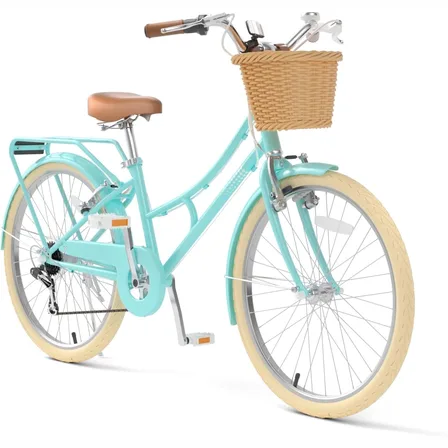
XJD Kids Beach Cruiser Bicycle, Rear Rack & V-Brakes, Mint Green
The XJD Beach Cruiser in Mint Green is a geared, multi-speed cruiser bike for ol…$179.99
$209.99 -
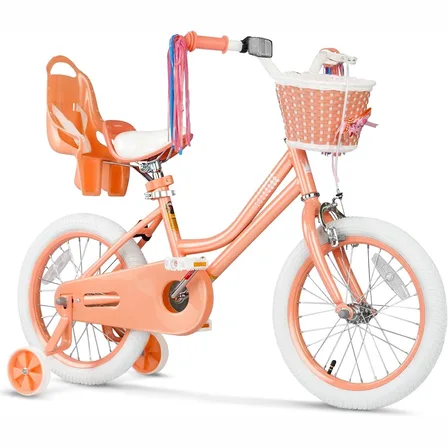
Girls 12/14/16 Inch Kids Bike by XJD with Training Wheels – Peach
The XJD Girls Bike in Peach is a training-wheel bike built for girls roughly 3 t…$149
$169 -
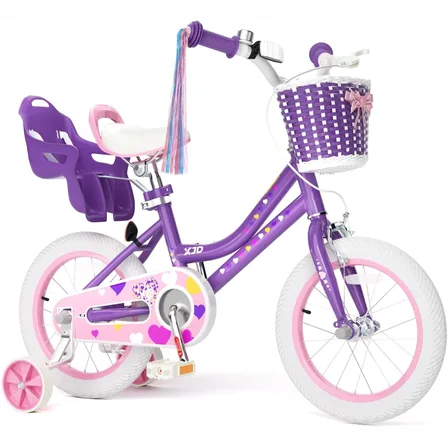
XJD Light Purple Girls Bike with Basket, Training Wheels, 12/14/16/20 Inch
The XJD Girls Bike with Basket in Light Purple is a single-speed training-wheel …$99.99
$119.99