

What is a 16 inch bike frame
A “16 inch bike frame” usually means a children’s bike with 16-inch wheels, not a frame measuring 16 inches. Confirm the listing, then fit the child in person.
What the 16-inch label usually describes
On a kids’ bike, “16 inch” normally identifies the nominal wheel size. It is a size category rather than a complete description of how the bicycle will fit. Frame shape, saddle position and handlebar reach can differ even when two bikes share the same wheel-size label.
A literal frame measurement is different: it is commonly taken along the seat tube, although the exact endpoints and conventions can vary by manufacturer. If a specification actually says “16-inch frame,” consult that bicycle’s size diagram or manual before comparing it with another model. Do not treat a 16-inch frame and a 16-inch wheel as equivalent measurements.
Measure the rider before choosing
Measure the child without relying on an estimated age. Record standing height, then measure inseam from the floor to the crotch while the child stands upright. Use these measurements to select a likely wheel-size category, but finish with a real fit check.
| XBikes starting point | Age | Rider height |
|---|---|---|
| 14 Inch | 3–6 | 37–45 in / 94–114 cm |
| 16 Inch | 4–7 | 40–48 in / 102–122 cm |
| 18 Inch | 5–9 | 43–52 in / 109–132 cm |
These ranges are starting points, not guarantees. For a 16-inch-wheel bike, the XBikes starting range is ages 4–7 and 40–48 inches (102–122 cm) tall. Prioritize measured height, inseam, reach, brake control and current confidence over age alone.
Check the actual bicycle
Have the child try the exact bike. The American Academy of Pediatrics advises against buying an oversized bicycle merely to allow room for growth. During the check, look for the following:
- Stand-over: The child should be able to straddle the bicycle with appropriate clearance rather than being pressed against the frame.
- Start and stop control: The child should be able to get on, set off and stop without the bicycle feeling unmanageable.
- Reach: The handlebars should be reachable without excessive stretching or a cramped posture.
- Brake access: If hand brakes are present, the child must be able to reach and operate them effectively. Check the exact bicycle rather than assuming all 16-inch models are alike.
- Confidence: A child who is hesitant or still learning may need a different setup even when height falls within the starting range.
If the child cannot stand over, steer or stop confidently, the bike is not a suitable fit today. Compare the next relevant wheel-size category and repeat the hands-on check; do not resolve poor fit by making unsupported modifications.
How the supplied 16-inch options help
The supplied catalog choices are relevant because each is categorized as a training-wheel bike and includes a 16 Inch SKU label. Their neighboring size labels also help a parent compare catalog categories when the fit check places the rider near a boundary. The labels identify available size variants; they do not prove individual fit.
 Light Pink XJD Girls' Bicycle with Basket & Training Wheels
A training-wheel bicycle offered with 12 Inch, 14 Inch, 16 Inch and 20 Inch SKU labels, making its 16 Inch variant directly relevant while allowing category comparisons.
 Blue XJD Girls Bike with Training Wheels – 12/14/16 Inch
This training-wheel bike includes 12 Inch, 14 Inch and 16 Inch SKU labels. Its 16 Inch variant matches the requested wheel-size category, subject to an individual fit check.
 XJD Boys 12/14/16" Training Wheel Bike – Blue
This training-wheel bike is offered with 12 Inch, 14 Inch and 16 Inch SKU labels. Consider the 16 Inch variant only after checking the rider’s measurements and control.
Light Pink XJD Girls' Bicycle with Basket & Training Wheels is listed in 12 Inch, 14 Inch, 16 Inch and 20 Inch variants. Blue XJD Girls Bike with Training Wheels – 12/14/16 Inch is listed in 12 Inch, 14 Inch and 16 Inch variants. XJD Boys 12/14/16" Training Wheel Bike – Blue likewise has 12 Inch, 14 Inch and 16 Inch SKU labels.
All three therefore include the requested 16-inch wheel-size label. Compare the exact selected SKU, because a product family containing several sizes does not mean those sizes fit interchangeably. The supplied facts do not establish frame dimensions, brake type, weight, materials, load limits or assembly details.
What to verify before riding
Confirm that the chosen SKU is labeled 16 Inch, then consult its exact product manual for assembly, adjustments, maintenance, compatibility, load limits and torque requirements. If anything is unclear or the bicycle cannot be adjusted to provide sound control, use a qualified bicycle mechanic.
A properly fitting bicycle helmet is also necessary. It should sit level and use its straps according to the helmet manufacturer’s instructions, consistent with U.S. Consumer Product Safety Commission guidance.
The practical decision is simple: treat “16 inch” here as a wheel-size starting point, measure the child, select the actual 16 Inch SKU, and proceed only if that exact bicycle passes the stand-over, reach, braking and confidence checks.
Bikes for your next adventure
-
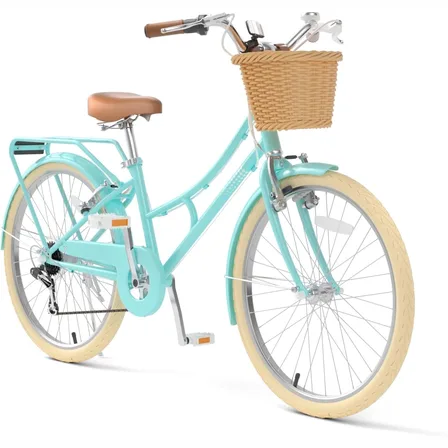
XJD Kids Beach Cruiser Bicycle, Rear Rack & V-Brakes, Mint Green
The XJD Beach Cruiser in Mint Green is a geared, multi-speed cruiser bike for ol…$179.99
$209.99 -
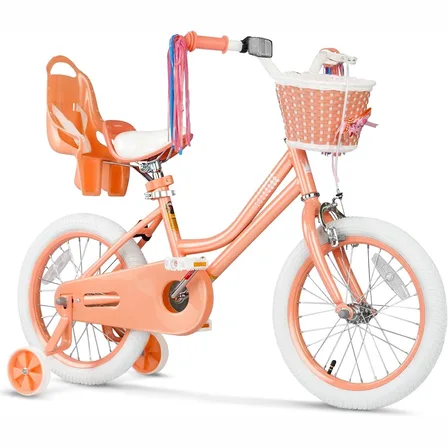
Girls 12/14/16 Inch Kids Bike by XJD with Training Wheels – Peach
The XJD Girls Bike in Peach is a training-wheel bike built for girls roughly 3 t…$149
$169 -
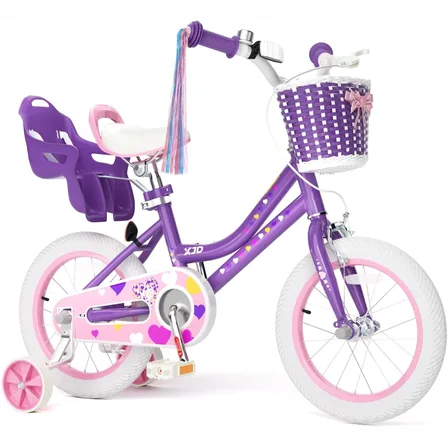
XJD Light Purple Girls Bike with Basket, Training Wheels, 12/14/16/20 Inch
The XJD Girls Bike with Basket in Light Purple is a single-speed training-wheel …$99.99
$119.99