

What is a 26 inch bike
A 26 inch bike is a bicycle identified by its 26-inch wheel-size category. It may suit youth and adults over 60 in (153 cm), but only a hands-on fit check can show whether a particular bike is right.
What “26 inch” actually describes
The 26-inch label refers to the bicycle’s wheel-size category, not the frame height and not the rider’s inseam. It is therefore possible for two 26-inch bicycles to feel quite different because their frame shape, saddle position, handlebar reach and controls may differ.
Do not rely on a ruler across the outside of an inflated tire. Bicycle wheel labels are nominal size categories, and the measured outside diameter can vary with the tire. Instead, check the size printed or molded on the tire sidewall, the bicycle’s label, or its exact product documentation. Confirm that the selected SKU says 26 Inch; a 24-inch or 20-inch option is a different size, not an equivalent.
Who should consider a 26 inch bike?
The XBikes starting point places 26-inch bikes with youth and adults over 60 in (153 cm). Age alone does not decide the fit. A rider’s measured height, inseam, reach, ability to operate the brakes and present confidence matter more.
For comparison, the XBikes starting points place 24-inch bikes at ages 10–14 and heights of 54–64 in (137–163 cm), while 20-inch bikes are placed at ages 7–12 and heights of 48–60 in (122–152 cm). These ranges overlap near transitions because bodies and bicycle frames differ. They are prompts for comparison, not permission to skip a test ride.
What to measure and compare
- Measure standing height. Have the rider stand straight without shoes, then compare the result with the XBikes starting point. Over 60 in (153 cm) makes a 26-inch option reasonable to try; it does not guarantee a fit.
- Measure inseam. Measure from the floor to the crotch while the rider stands naturally. Use that measurement when checking clearance over the particular frame rather than trying to convert it into a wheel size by itself.
- Check stand-over clearance. With both feet flat on the ground and the bike upright, the rider should be able to stand over the frame without being forced onto tiptoes or pressed against the top tube.
- Compare reach and posture. While seated in a normal riding position, the rider should reach the handlebar without an uncomfortable stretch, locked arms or loss of steering control.
- Check brake operation. The rider should reach and operate the brake controls confidently while maintaining a secure grip and steering position.
Have the rider try the actual bicycle whenever possible. Consistent with pediatric fit guidance, do not buy an oversized bicycle simply to leave room for growth. A bike that the rider cannot comfortably stand over, steer or stop is not made suitable by a future growth estimate.
How the supplied catalog option helps
The XJD Kids Beach Cruiser Bicycle, Rear Rack & V-Brakes, Mint Green is offered with 20 Inch, 24 Inch and 26 Inch SKU labels. That makes its listed variants useful for comparing the requested 26-inch category with two smaller wheel-size categories while keeping attention on the exact SKU selected.

This product is relevant only if its individual 26 Inch variant passes the rider’s fit check. Its 20 Inch and 24 Inch variants are comparison options for riders who fit those XBikes starting points; they are not substitutes for a requested 26-inch bike. The supplied catalog facts identify rear rack and V-brakes, but they do not establish frame dimensions, adjustment limits, load limits or compatibility.
Fit checks before deciding
- Confirm that the SKU label is exactly 26 Inch.
- Verify the rider is over the 60 in (153 cm) starting point, then assess inseam and stand-over on that exact frame.
- Ask the rider to mount, dismount, steer and stop in a controlled setting.
- Make sure the brake controls are within comfortable reach and can be operated without shifting the hands into an insecure position.
- Reject the size if the rider appears stretched, unstable, intimidated or unable to control the bike consistently.
For assembly, adjustments, maintenance, torque settings, rack limits and component compatibility, follow the exact product manual or use a qualified bicycle mechanic. Do not assume instructions for one wheel-size variant apply unchanged to another.
Helmet and next step
A bicycle helmet must fit properly, sit level on the head and have its straps used according to the helmet manufacturer’s instructions. A helmet does not correct a poor bicycle fit, so check both independently.
The practical decision is simple: consider a 26-inch bike when the rider is over 60 in (153 cm), confirm the exact 26 Inch SKU, and choose it only after the rider can stand over, reach, steer and brake confidently on that particular bicycle.
Bikes for your next adventure
-

26-Inch XJD Beach Cruiser Bike for Girls – Purple, V-Brake
This XJD 26-inch purple beach cruiser is sized for big kids and teens — suggeste…$218.49
$229.99 -
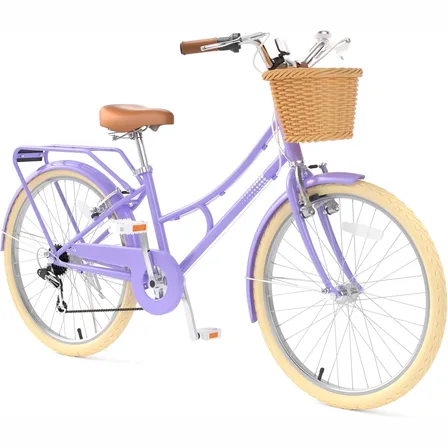
24-Inch Purple XJD Beach Cruiser Bike with U-Brake
The XJD 24-Inch Purple Beach Cruiser is built for girls and young women roughly …$159.99
-
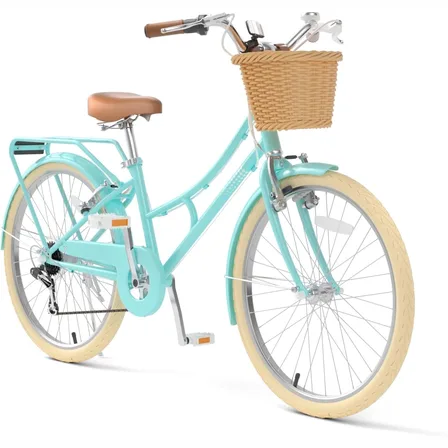
XJD Kids Beach Cruiser Bicycle, Rear Rack & V-Brakes, Mint Green
The XJD Beach Cruiser in Mint Green is a geared, multi-speed cruiser bike for ol…$179.99
$209.99