

What Is a Good Trail Bike for Kids?
What is a good trail bike for kids? First define the trail. A smooth park path, loose gravel loop and technical mountain-bike route place very different demands on tires, brakes, gearing and rider skill. A bicycle that looks rugged is not automatically approved for jumps or rough terrain, and a capable bike cannot replace route judgment or supervision.
Classify the real route
Walk or review the route before choosing. Note surface, slope, tight turns, drop-offs, road crossings and whether the child can stop safely before every hazard. Begin on a flat, predictable section. If the route requires skills the rider has not shown on easier ground, change the route rather than relying on equipment.
Fit comes before trail features
Measure height and inseam and use the exact manufacturer range. The child should mount without tipping the bike sharply, keep relaxed elbows, turn without knee interference and reach each brake from a secure grip. Oversizing for larger wheels can make low-speed corrections harder.

Match tires without guessing
Tire width and tread influence grip and comfort, but more tread is not always better on every surface. Read the approved pressure from the fitted tire and stay within the manufacturer's intended use. Check for clearance, damage and correct seating before every trail session.
Choose manageable controls
Gears can help on changing slopes when the rider knows how to shift while looking ahead. A single-speed bike keeps the lesson simpler. In either case, reliable braking and calm speed choice are essential. Introduce one new control or surface at a time.
Respect the bicycle's intended use
Read the product page and manual for riding category and restrictions. Do not infer jump, stunt or mountain-trail approval from BMX styling, suspension appearance or wide tires. After any impact, stop and inspect the frame, fork, wheels, steering and brakes.
How current product examples clarify the choice
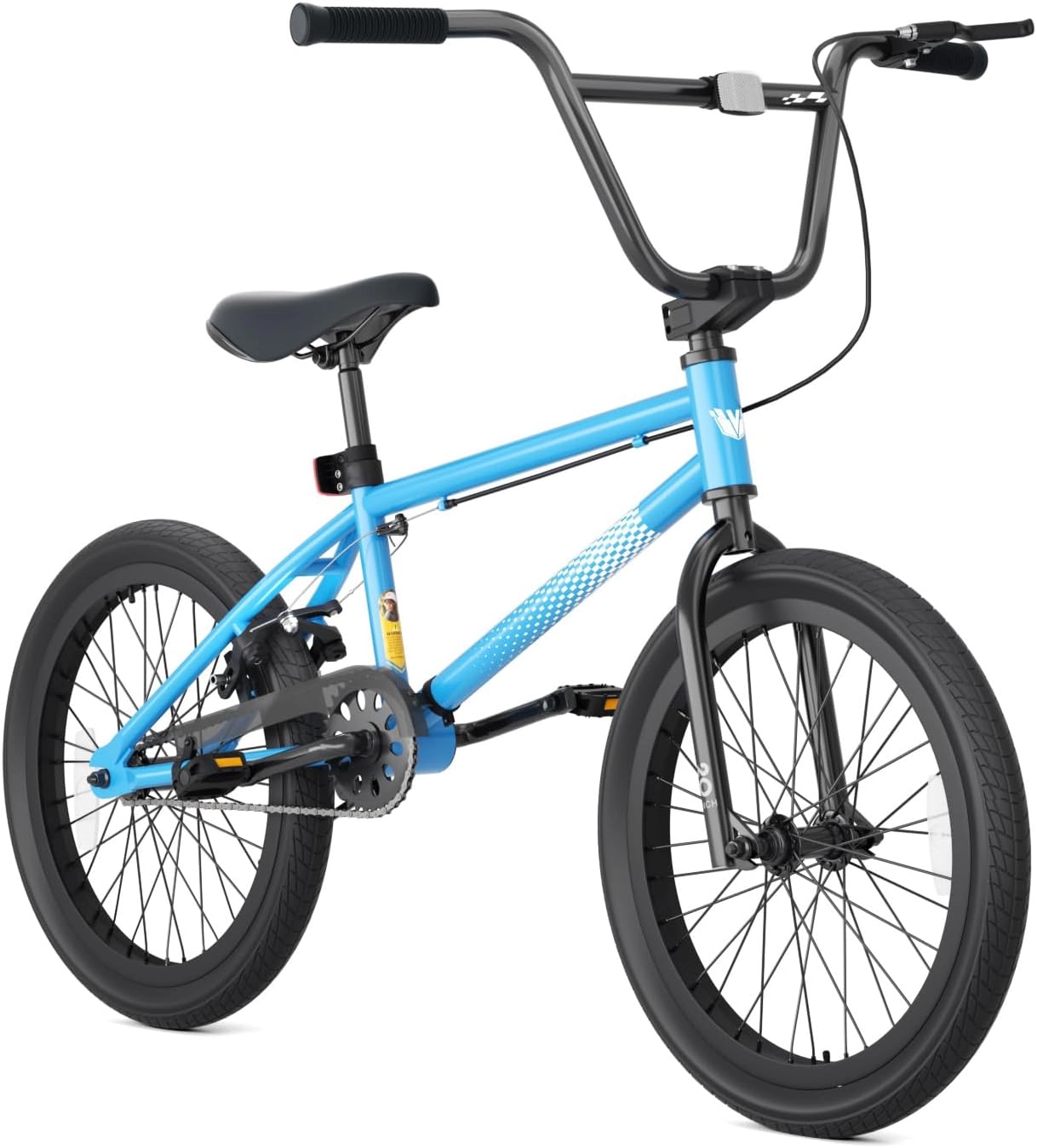
The current 20-inch freestyle BMX has wide tires and a single-speed drivetrain, while the mint cruiser offers gears in larger options for paved and urban riding. Neither page should be treated as a universal trail recommendation; they are comparison points for understanding how configuration and intended use differ.
Practical checklist
- Define surface and difficulty before shopping.
- Verify current fit and brake reach.
- Match controls to demonstrated skill.
- Follow the exact intended-use limits.
Frequently asked questions
Does a suspension-looking bike make a good trail bike?
Not by itself. Fit, component function and the manufacturer's approved use all matter.
Are gears required for kids trails?
No. They help on some routes, but only when the rider can shift without losing steering or braking control.
Before making the final choice, revisit the exact route or driving area at the time it will normally be used. A setup that works during a quiet test may need more room, visibility or adult support when other people and everyday obstacles are present.
Bottom line
Use the answer to what is a good trail bike for kids as a decision process, not a shortcut. Confirm the live product data and manual, match the rider to the controls and setting, and favor repeatable control over a larger size or higher performance label.
Bikes for your next adventure
-

Blue XJD Kids Bike Helmet for Boys & Girls
The Blue XJD Kids Bike Helmet is a lightweight, adjustable multi-sport helmet fo…$59.99
$99 -

Kids Bike Helmet by XJD for Girls – Pink
The XJD Kids Bike Helmet in Pink is a lightweight multi-sport helmet for girls r…$59.99
$99 -

Light Pink XJD Girls' Bicycle with Basket & Training Wheels
The Light Pink XJD Girls' Bicycle with Basket & Training Wheels is a retro-style…$109.99
$129.99