

What is safer child bike seat or trailer
A child bike trailer is generally the safer choice than a child bike seat because it is lower to the ground and less likely to tip with the adult bicycle. Neither option is safe unless the child, carrier and bicycle meet every requirement in the exact product manuals.
Why a trailer usually has the safety advantage
A bike-mounted child seat raises the bicycle’s centre of gravity. The added weight can affect balance while starting, stopping, turning, parking and loading the child. If the bicycle falls, the seated child falls from a greater height.
A trailer stays low and normally remains separate from an adult bicycle tipping over. Its structure may also provide some separation from the ground. However, its wider track can catch a kerb or obstacle, and its low position can make it less obvious to drivers. A trailer is not automatically safer in every route or collision.
A seat may be easier to keep within the rider’s awareness and occupies less road width, but those conveniences do not remove its balance and fall risks. The practical answer is to choose a compatible carrier, then use a route where its particular risks can be controlled.
What to measure and compare
Before buying either carrier, identify the child’s current measurements and the adult bicycle’s exact make, model and size. Compare them with the carrier and bicycle manuals rather than relying on a general age label.
- Child: measure current height and weight, and confirm that the child meets every developmental, size and helmet-clearance requirement stated by the carrier manufacturer.
- Bicycle: verify the permitted mounting location, frame or rack compatibility, wheel clearance and any restrictions stated in both manuals.
- Adult rider: check whether you can hold the loaded bicycle upright, mount, start, steer, brake and dismount without struggling.
- Route: compare traffic exposure, surface condition, kerbs, narrow passages, turning space and trailer visibility.
Do not estimate an attachment method, load limit or fastener setting. Follow the exact manuals for assembly, maintenance, compatibility and torque, or ask a qualified bicycle mechanic to inspect the setup.
When each option is unsuitable
Do not use a child seat if the adult bicycle is not expressly compatible, the mount moves, the rider cannot balance the loaded bicycle confidently, or the child fails any manual requirement. Never leave a child in a seat on an unsupported bicycle.
Do not use a trailer if its hitch is incompatible, its width cannot safely clear the planned route, its visibility cannot be managed, or the child fails its manual requirements. Stop using either option after damage, unusual movement or missing restraints until it has been checked according to the manual.
Helmet and pre-ride checks
Use a bicycle helmet that fits the child properly, sits level and has straps adjusted according to its manufacturer’s instructions. Confirm that the helmet works with the carrier without being pushed forward by the seat or enclosure.
- Inspect the carrier, mount or hitch, restraints, wheels and bicycle before each ride.
- Secure the child exactly as the carrier manual directs, with clothing and limbs clear of moving parts.
- Test balance, steering and braking away from traffic before entering the route.
- Choose calm, low-complexity conditions and ride conservatively; the extra load changes handling and stopping.
Where the supplied kids’ bikes fit
The supplied catalog products are independent children’s bicycles, not child seats or trailers, so they do not resolve the carrier-safety comparison. They are relevant only when a child is ready to ride separately: the XJD Kids Bike for Girls – Pink, 12/14/16/20 Inch with Training Wheels offers 12, 14, 16 and 20 Inch labels, while the XJD Pink Girls' Bike – Kids 12/14/16 Inch Training Wheel Bicycle offers 12, 14 and 16 Inch labels.
 XJD Kids Bike for Girls – Pink, 12/14/16/20 Inch with Training Wheels
An independent-riding comparison option with 12, 14, 16 and 20 Inch labels. It is not a child seat or trailer, so select it only after measuring the rider and completing an individual bicycle fit check.
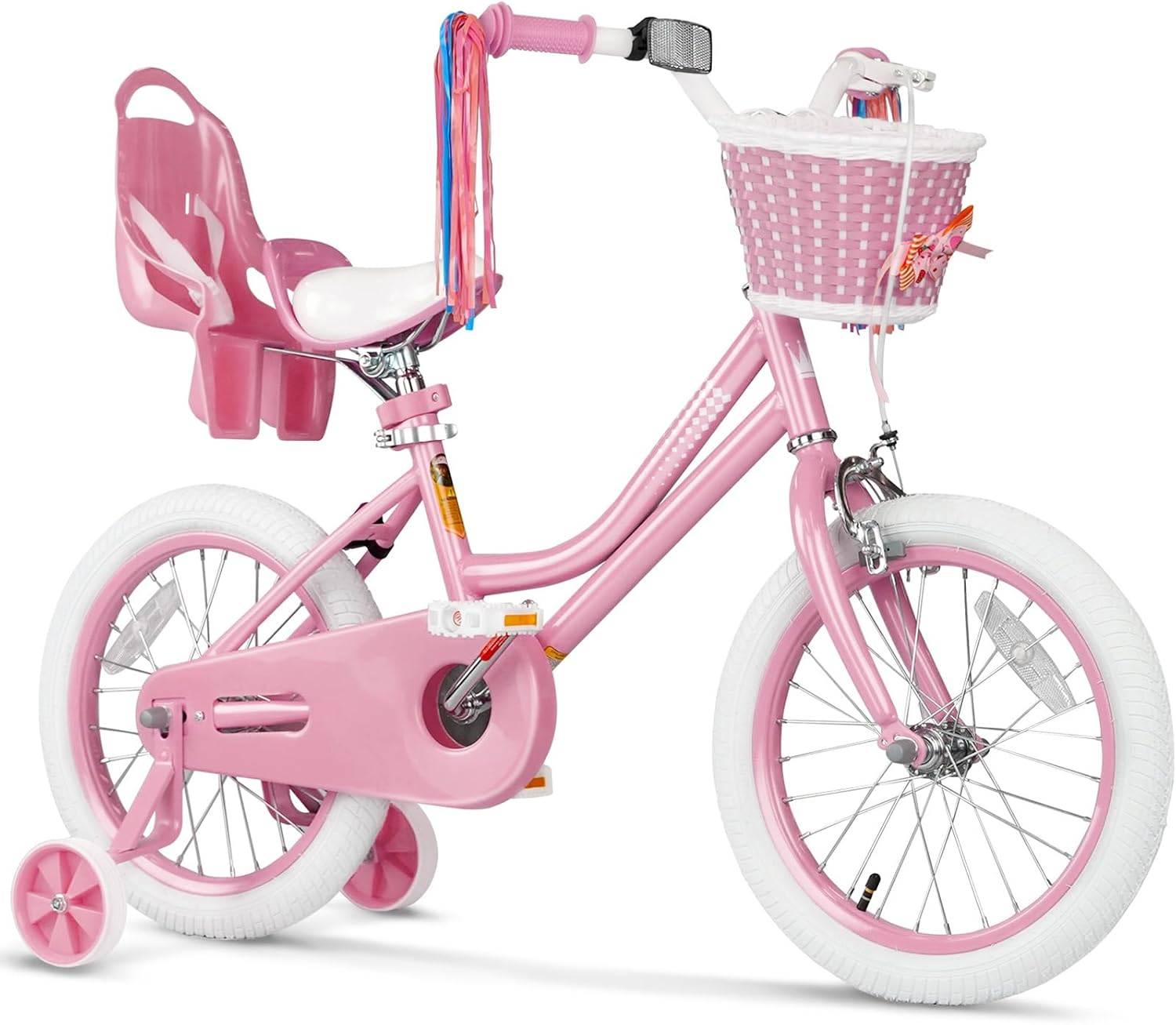 XJD Pink Girls' Bike – Kids 12/14/16 Inch Training Wheel Bicycle
This training-wheel bicycle has 12, 14 and 16 Inch labels and is relevant to independent riding, not child transport. Compare measured height with XBikes starting ranges, then verify stand-over, reach, brake control and confidence.
For those bicycles, use measured height as the starting filter: 12 Inch corresponds to 34–40 in (86–102 cm), 14 Inch to 37–45 in (94–114 cm), 16 Inch to 40–48 in (102–122 cm), and 20 Inch to 48–60 in (122–152 cm). Overlapping ranges are comparison points, not proof of fit.
Have the child try the bicycle. Check stand-over clearance, reach, brake control and current confidence, and never buy an oversized bicycle merely for growth. Any age wording in a product title is a catalog label rather than fit evidence.
Your decision
Choose a compatible trailer when both formats suit the child, bicycle and route and you want the lower, more stable carrying position. Choose a seat only when its manual confirms compatibility and you can confidently control the loaded bicycle. If either setup fails a child, bicycle, rider or route check, do not ride; use another transport option or obtain a qualified mechanic’s assessment.
Bikes for your next adventure
-

Kids Bike Helmet by XJD for Girls – Pink
The XJD Kids Bike Helmet in Pink is a lightweight multi-sport helmet for girls r…$59.99
$99 -

Blue XJD Kids Bike Helmet for Boys & Girls
The Blue XJD Kids Bike Helmet is a lightweight, adjustable multi-sport helmet fo…$59.99
$99 -
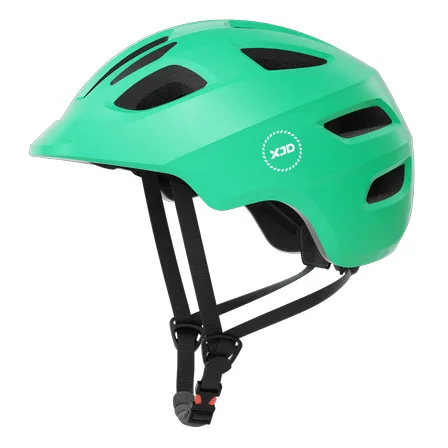
Green XJD Kids Bike Helmet for Boys & Girls
The Green XJD Kids Bike Helmet is a lightweight multi-sport helmet for toddlers …$59.99
$99