

What is the best bicycle with baby
The best bicycle with a baby is a correctly fitted adult bicycle paired with a baby-carrying system that its manuals explicitly approve. The child-bike products below are relevant only when the child is ready to ride independently.
First decide who will ride
If “with baby” means an adult carrying or towing a baby, begin with the adult rider’s fit and control. Then choose a child seat, trailer or other carrying system only after confirming that both its manufacturer and the bicycle manufacturer permit the exact combination. Check attachment requirements, load limits, assembly and maintenance in the manuals. If any information is missing or the fit is uncertain, ask a qualified bicycle mechanic.
Do not assume that a rear rack automatically accepts a child seat, or that any bicycle can tow any trailer. Catalog names and visible mounting points are not compatibility evidence. The adult should also be able to start, stop, turn and balance confidently with the approved system installed.
If the intended rider is a young child rather than an adult carrying a passenger, measure the child and perform the individual fit checks below. A child should try the bicycle; buying an oversized model “to grow into” can make mounting, steering and braking harder.
Measure before comparing bicycles
Measure the child’s standing height and inseam while wearing the shoes used for riding. Height identifies a starting wheel size; inseam helps assess stand-over clearance and the ability to put feet down. At the fit check, also confirm a comfortable reach to the handlebar, easy steering control and the ability to operate the brakes without stretching or changing grip.
| Wheel size | XBikes starting point |
|---|---|
| 12 Inch | Ages 3–4; height 34–40 in / 86–102 cm |
| 14 Inch | Ages 3–6; height 37–45 in / 94–114 cm |
| 16 Inch | Ages 4–7; height 40–48 in / 102–122 cm |
| 18 Inch | Ages 5–9; height 43–52 in / 109–132 cm |
| 20 Inch | Ages 7–12; height 48–60 in / 122–152 cm |
| 24 Inch | Ages 10–14; height 54–64 in / 137–163 cm |
| 26 Inch | Youth and adults over 60 in / 153 cm |
These ranges are starting points, not guarantees. Prioritize measured height, inseam, reach, brake control and current confidence over age alone. Where height ranges overlap, trying both candidate sizes is more useful than choosing from age.
How the supplied XBikes options help
The three catalog options provide practical comparison points for independent young riders: two training-wheel choices in 12, 14 and 16 Inch sizes, plus a beach cruiser offered in larger sizes. They do not establish a solution for carrying a baby, but they help separate that need from selecting a bicycle for a child who will pedal.
 XJD Light Purple Girls Bike with Basket, Training Wheels, 12/14/16/20 Inch
A Training Wheel Bike offered in 12 Inch, 14 Inch and 16 Inch SKU labels. It is relevant for an independently riding child who fits one of those sizes, not as a baby-carrying solution.
 XJD Kids Beach Cruiser Bicycle, Rear Rack & V-Brakes, Mint Green
A Beach Cruiser Bike offered in 20 Inch, 24 Inch and 26 Inch labels. Its title lists a rear rack and V-brakes, but these facts do not establish compatibility with a baby seat or carrier.
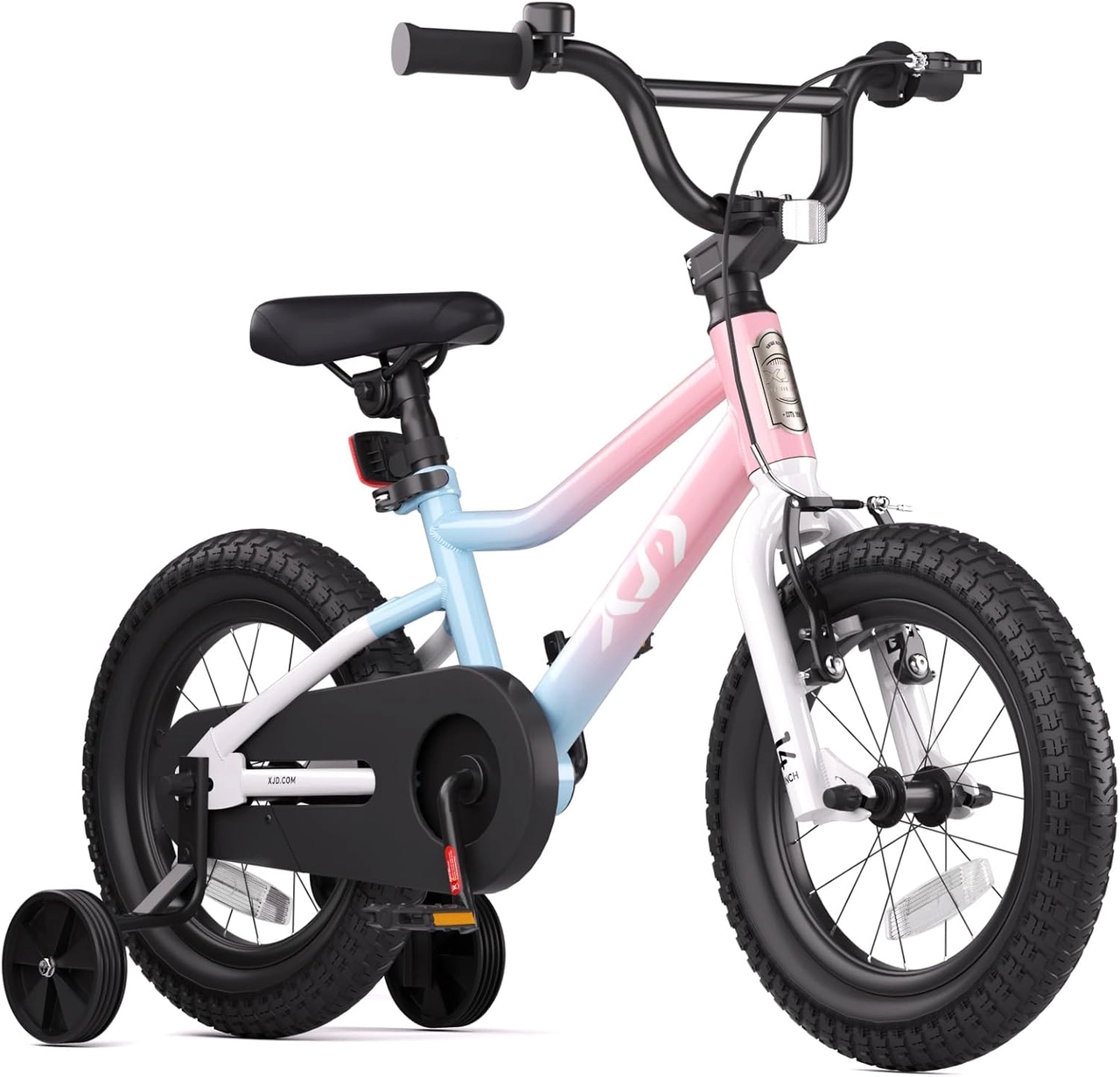 XJD Girls BMX Bike 12/14/16 Inch with Training Wheels – Pink Blue
A Kids’ BMX Bike with training wheels and available 12 Inch, 14 Inch and 16 Inch labels. Compare it for an independent child only after checking measured height, inseam, reach and brake control.
Compare the three catalog choices
XJD Light Purple Girls Bike with Basket, Training Wheels, 12/14/16/20 Inch is categorized as a Training Wheel Bike. Its supplied available SKU labels are 12 Inch, 14 Inch and 16 Inch. Despite the broader sizing in its title, compare only those listed available labels here. It is relevant when a child fits one of those sizes and training wheels suit the child’s present confidence.
XJD Girls BMX Bike 12/14/16 Inch with Training Wheels – Pink Blue is categorized as a Kids’ BMX Bike and has available 12 Inch, 14 Inch and 16 Inch labels. It offers the same supplied size steps as the other training-wheel option, so individual fit and the preferred bicycle category should guide comparison rather than the title alone.
XJD Kids Beach Cruiser Bicycle, Rear Rack & V-Brakes, Mint Green is categorized as a Beach Cruiser Bike and is available in 20 Inch, 24 Inch and 26 Inch labels. The rear rack and V-brakes are catalog facts, but neither proves compatibility with a child seat or another baby carrier. Confirm any proposed attachment in the exact bicycle and carrier manuals.
Perform an in-person control check
For an independently riding child, use this sequence:
- Confirm that the measured height falls within the wheel-size starting range.
- Have the child straddle the bicycle and check usable stand-over clearance.
- Check that the child reaches the handlebar without overextending or crowding.
- Confirm controlled steering and comfortable mounting and stopping.
- Verify that the child can reach and operate the brakes securely.
Reject a size if the child cannot manage these checks, even when the age range appears suitable. Follow the exact product manual for assembly, adjustments and maintenance; use a qualified bicycle mechanic when those tasks or compatibility decisions are unclear.
Helmet and final decision
Use a bicycle helmet that fits properly, sits level and has straps adjusted according to its manufacturer’s instructions. A helmet cannot correct a poorly fitted bicycle or an unapproved passenger setup.
For riding with a baby, choose only a properly fitted adult bicycle and a carrying system explicitly approved by both manufacturers. For an independent child, record height and inseam, shortlist the matching supplied wheel sizes, and buy only after the child passes the stand-over, reach, braking and confidence checks.
Bikes for your next adventure
-
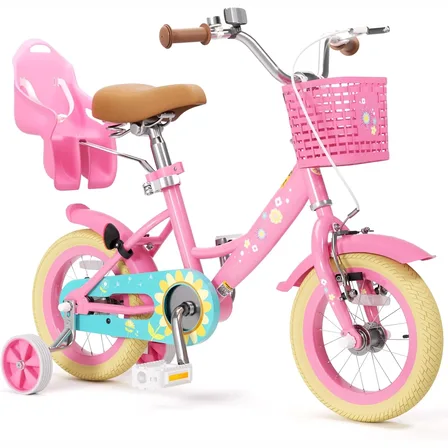
Flower Pink XJD Girls Bike with Doll Seat & Basket
The XJD Flower Pink girls' bike is made for riders 71–122 cm tall (roughly ages …$69.99
-

Kids Bike Helmet by XJD for Girls – Pink
The XJD Kids Bike Helmet in Pink is a lightweight multi-sport helmet for girls r…$59.99
$99 -

Light Purple XJD Toddler Bike Helmet, Adjustable, Size XS (46–51 cm)
This Light Purple XJD toddler bike helmet is made for the smallest riders — the …$20.39