

What is the best bike trailer for a child
The best bike trailer for a child is one that fits the child and towing bicycle, stays within its manual’s limits, and suits your route. Compare fit, attachment, protection, handling and condition before buying.
Start with the child, not the brand
Measure the child’s seated height and shoulder width, then check whether there is comfortable headroom and space around the shoulders inside the trailer. If the child will wear a helmet in the cabin, perform the fit check with that helmet on. The child should sit naturally rather than leaning forward, crouching or being pressed against the sides.
Confirm the trailer manufacturer’s minimum passenger requirements and maximum passenger size and load in the exact manual. Do not estimate these limits or assume that two seats mean any two children will fit. Include children and everything carried in the trailer when evaluating its permitted load.
Compare the features that decide suitability
- Restraint fit: Check that the supplied harness can be adjusted as its manual directs and remains correctly positioned while the child is seated.
- Cabin coverage: Compare protection from wheel spray, loose debris, sun and changing weather, while ensuring the cabin has suitable ventilation.
- Entry and comfort: Make sure loading does not require awkward twisting and that the child has adequate leg, head and shoulder room.
- Visibility: Look for the visibility equipment specified by the trailer maker, and follow the manual for using it.
- Route suitability: Consider pavement quality, curb transitions, path width, turns and hills. A trailer that feels manageable on a smooth path may be unsuitable for a narrow or rough route.
No single feature makes a trailer universally best. The right choice is the model whose complete instructions, passenger limits and intended use match your child, bicycle and usual journeys.
Verify the towing-bike connection
Identify the towing bicycle’s exact frame, wheel and axle arrangement before comparing trailers. Then verify attachment compatibility in both the trailer and bicycle documentation. A coupler that appears close enough is not evidence of compatibility, and a rear rack does not by itself establish that a bicycle can tow a particular trailer.
Check whether the trailer maker requires an approved adapter or prohibits any bicycle, axle or brake configuration. For missing compatibility, assembly or torque information, use the exact product manual or ask a qualified bicycle mechanic. After connection, inspect the hitch and any secondary retention exactly as directed, and confirm that nothing interferes with the wheel, braking or steering.
Where the supplied XBikes option fits
The supplied catalog item is a bicycle rather than a child trailer. XJD Kids Beach Cruiser Bicycle, Rear Rack & V-Brakes, Mint Green is offered with 20 Inch, 24 Inch and 26 Inch SKU labels. It can help compare a separate child-rider bicycle within a broader family cycling decision, but it does not answer trailer capacity, attachment or compatibility. It is not a substitute for a trailer, and its rear rack alone does not prove towing suitability.

Do not confuse trailer choice with bicycle fit
If the child will also ride independently, choose that bicycle separately. XBikes uses these starting points: 20 Inch for ages 7–12 and heights 48–60 in / 122–152 cm; 24 Inch for ages 10–14 and heights 54–64 in / 137–163 cm; and 26 Inch for youth and adults over 60 in / 153 cm.
Those ranges cover the supplied bicycle’s available size labels, but they are only starting points. Measure the rider’s height and inseam, then check stand-over clearance, reach, brake control and current confidence. Have the child try the bicycle, and do not buy an oversized size merely to allow growth. The bicycle must be manageable now.
Inspect before every trip
- Read the exact trailer and bicycle manuals, including passenger, cargo, attachment and route restrictions.
- Check the child’s seating position and restraint adjustment according to the trailer instructions.
- Inspect the hitch, retention system, tires, wheels and moving parts as the manufacturer directs.
- Confirm that carried items cannot shift toward the child or interfere with the trailer.
- Test braking, turning and low-speed handling without the child first, in a controlled area.
A bicycle helmet must fit properly, sit level and have its straps used according to the helmet manufacturer’s instructions. A helmet does not correct a poor trailer fit or an incompatible connection.
Make the final decision
Choose only after you have measured the child, identified the towing bicycle and checked the exact manual for passenger limits, intended use and hitch compatibility. If any limit or connection remains uncertain, pause and have a qualified bicycle mechanic verify it. For this title’s decision, the best child bike trailer is the compatible, correctly fitted option you can load, attach and control exactly as its maker specifies.
Bikes for your next adventure
-

Kids Bike Helmet by XJD for Girls – Pink
The XJD Kids Bike Helmet in Pink is a lightweight multi-sport helmet for girls r…$59.99
$99 -

Blue XJD Kids Bike Helmet for Boys & Girls
The Blue XJD Kids Bike Helmet is a lightweight, adjustable multi-sport helmet fo…$59.99
$99 -
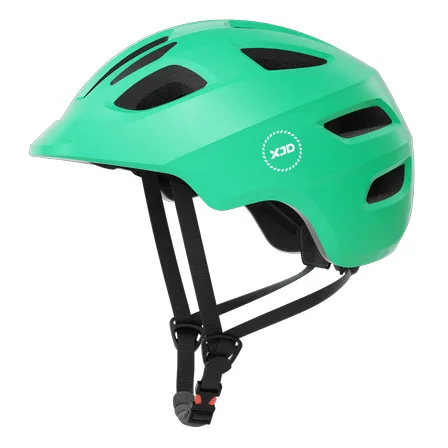
Green XJD Kids Bike Helmet for Boys & Girls
The Green XJD Kids Bike Helmet is a lightweight multi-sport helmet for toddlers …$59.99
$99