

What is the best child bike carrier
The best child bike carrier is the one that fits your child now, is explicitly compatible with the adult bicycle, and lets the adult rider control the loaded bike confidently.
Choose the carrier type around the trip
Start with how and where you will ride. A bicycle-mounted child seat keeps the setup compact, but the mounting position changes balance and handling. A trailer adds length and width and needs suitable storage and route clearance. A cargo bicycle can carry a child within a purpose-built system, but it is a larger bicycle choice rather than a detachable accessory.
Do not select by appearance alone. Compare the exact manufacturer instructions for permitted child size, load limits, mounting requirements and bicycle compatibility. Those facts are specific to each carrier and are not interchangeable between models.
Measure before comparing products
Record the child’s current height and weight, then check any other measurements required by the carrier manual. Confirm that the child falls within every stated limit rather than relying on age wording alone. Allow for normal clothing and a correctly fitted helmet, but never improvise extra padding or alter a restraint system.
Measure and inspect the adult bicycle too. Identify its exact model, frame size and wheel size, then check the proposed mounting area for available clearance. Racks, cables, suspension, unusual frame shapes and other accessories may affect compatibility. If the manual does not clearly approve the combination, ask the carrier manufacturer or a qualified bicycle mechanic before buying or installing it.
Compare fit, compatibility and control
- Child fit: Confirm the manual’s current size limits, required posture and restraint adjustment.
- Bicycle fit: Verify the approved mounting method and every compatibility requirement in the exact manual.
- Adult control: Consider starting, stopping, turning, parking and loading without losing balance.
- Route fit: Account for traffic, surface conditions, hills, corners and the setup’s overall width or length.
- Daily practicality: Compare storage, weather protection and how often the carrier must be attached or removed.
No carrier should be described as suitable merely because it can be physically attached. Use only the supplied hardware and follow the manufacturer’s assembly, maintenance and torque instructions. Where instructions are missing or unclear, use a qualified bicycle mechanic rather than inventing a procedure.
Where the supplied XBikes products fit
The supplied catalog items are children’s BMX bicycles, not child bike carriers. They help answer the question only when the real decision is whether a child should ride independently instead of being carried. Both provide 12-, 14- and 16-inch comparison points and include training wheels; neither should be treated as a carrier or carrier substitute.
 XJD Girls BMX Bike 12/14/16 Inch with Training Wheels – Pink Blue
A kids’ BMX bicycle rather than a carrier, offered in 12 Inch, 14 Inch and 16 Inch options with training wheels. Relevant only when comparing independent riding with carrying a child.
 XJD Boys & Girls BMX Bike with Training Wheels, 12/14/16" – Blue
A children’s BMX bicycle with training wheels, available in 12 Inch, 14 Inch and 16 Inch labels. It is an independent-riding comparison option, not a child bike carrier.
XJD Girls BMX Bike 12/14/16 Inch with Training Wheels – Pink Blue is listed in 12 Inch, 14 Inch and 16 Inch options. XJD Boys & Girls BMX Bike with Training Wheels, 12/14/16" – Blue is available in the same three wheel-size labels. Based on the supplied facts, their relevant differences are their exact catalog titles and listed color wording; no carrier compatibility, load limit or other carrier specification is provided.
If independent riding is the alternative
Use wheel size only as a starting point, then have the child try the bicycle. The available XBikes sizes correspond to these initial ranges:
| Wheel size | Starting age | Rider height |
|---|---|---|
| 12 Inch | 3–4 | 34–40 in / 86–102 cm |
| 14 Inch | 3–6 | 37–45 in / 94–114 cm |
| 16 Inch | 4–7 | 40–48 in / 102–122 cm |
Age alone does not establish fit. Prioritize measured height, inseam, stand-over clearance, reach, brake control and current confidence. The child should be able to control the bicycle comfortably; do not choose an oversized bike merely to allow room for growth. These checks follow the verified pediatric guidance provided for this article.
Complete a safety check before riding
Fit the child’s bicycle helmet so it sits level and secure, with its straps adjusted according to the helmet manufacturer’s instructions. The U.S. Consumer Product Safety Commission emphasizes proper helmet fit; owning the right size label is not enough.
After installation, inspect the carrier exactly as its manual directs. Before carrying the child in normal riding conditions, the adult should assess the bicycle’s changed balance and handling in an appropriate low-risk setting. Stop if the carrier shifts, interferes with controls, or makes confident control impossible, and have the setup checked by a qualified bicycle mechanic.
Your next decision is simple: shortlist only carriers whose manuals approve both the measured child and the exact adult bicycle. If the child is ready to ride independently, fit-check the two listed BMX options in their available 12-, 14- or 16-inch sizes instead of treating them as carriers.
Bikes for your next adventure
-
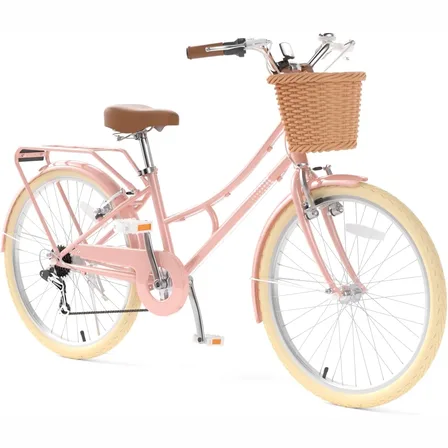
XJD Pink Beach Cruiser for Girls – Rear Rack & V-Brake
The XJD Pink Beach Cruiser for girls is the step-up bike for riders who've outgr…$179.99
$209.99 -
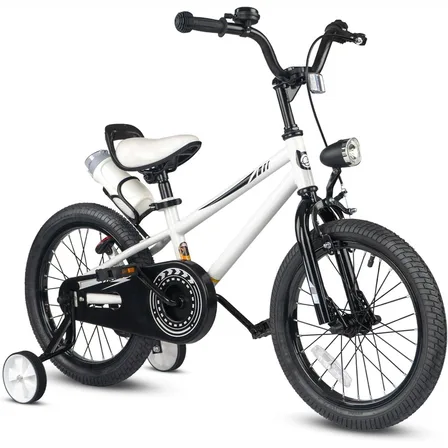
XJD Kids' Training Wheel Bike for Boys & Girls, 12/14/16 Inch – White
The XJD kids' training wheel bike in White is made for riders ages 3–8 (roughly …$169
$199 -

Kids Bike Helmet by XJD for Boys & Girls – Black, Blue, Green, Pink, Purple
The XJD Kids Bike Helmet covers a wide 2-to-8-year age range thanks to two head-…$59.99