

What is the safest child bike seat
The safest child bike seat is one that fits the child now, is explicitly compatible with the bicycle, and is installed exactly as its manual requires.
First decide which kind of seat you mean
If you mean a passenger seat carried on an adult bicycle, safety begins with confirmed compatibility. The seat manufacturer must approve the child’s size and the mounting method, while the bicycle manufacturer must permit that load and attachment location. A rack’s presence alone does not prove that it can carry a child seat.
If you mean the saddle on a bicycle the child rides, the safest choice is part of a correctly sized bike. The child needs stable stand-over clearance, a comfortable reach to the handlebar, and reliable access to the brake controls. Do not buy an oversized bicycle merely to leave room for growth.
What to measure before choosing
- For a passenger seat: record the child’s current measurements required by the seat manual, then compare them with every stated limit. Confirm the bicycle, rack or frame mounting requirements in both manuals.
- For a child’s own bicycle: measure standing height and inseam. During an in-person fit check, assess stand-over clearance, handlebar reach, brake reach, balance and the rider’s current confidence.
- For either use: choose a properly fitting bicycle helmet. It should sit level and its straps should be adjusted according to the helmet manufacturer’s instructions.
Age is only a starting point for bicycle sizing. A measured child may need a different wheel size than an age label suggests, and two children of the same age can have different reach and control needs.
Wheel-size starting points for a child rider
| Wheel size | Starting age | Rider height |
|---|---|---|
| 12 Inch | 3–4 | 34–40 in / 86–102 cm |
| 14 Inch | 3–6 | 37–45 in / 94–114 cm |
| 16 Inch | 4–7 | 40–48 in / 102–122 cm |
| 18 Inch | 5–9 | 43–52 in / 109–132 cm |
| 20 Inch | 7–12 | 48–60 in / 122–152 cm |
| 24 Inch | 10–14 | 54–64 in / 137–163 cm |
| 26 Inch | Youth and adults | Over 60 in / 153 cm |
These ranges narrow the search; they do not replace trying the bicycle. Prioritize measured height, inseam, reach, brake control and confidence over age alone.
How to compare passenger seats safely
Compare only models whose manuals clearly match the intended bicycle and mounting position. Check the exact permitted child measurements, bicycle requirements, attachment parts and operating instructions. If any limit or compatibility statement is missing, contact the manufacturer or ask a qualified bicycle mechanic instead of estimating.
After installation, verify every attachment and adjustment using the manual. Make sure straps and restraints are routed and secured as directed, nothing can contact a wheel or moving component, and the bicycle remains controllable with the child aboard. Use the manual for inspection intervals, maintenance, load limits and torque values; those details are model-specific and should never be guessed.
What the supplied XBikes option can tell you
The XJD Pink Beach Cruiser for Girls – Rear Rack & V-Brake is offered in 20 Inch, 24 Inch and 26 Inch labels. It helps compare complete-bike wheel-size starting points and shows a model whose catalog title identifies a rear rack and V-brake. It does not establish passenger-seat compatibility, rack load capacity or an approved mounting method. Those points require the exact bicycle and seat manuals or a qualified mechanic.
This catalog option is therefore relevant when the child will ride their own bicycle, or when a parent wants to understand why visible equipment alone cannot confirm passenger-seat safety. It is a bicycle comparison point, not a child passenger seat and not evidence that a passenger seat may be attached.

Fit and control checks before riding
For a child riding independently, have the child try the bicycle. Confirm that mounting and stopping feel controlled, the handlebar can be reached without an extreme stretch, and the brakes can be operated confidently. Recheck fit as the child grows or confidence changes.
For a passenger seat, first practice mounting, balancing and stopping the loaded bicycle in a controlled area, following the seat and bicycle instructions. A child passenger changes handling. If the bicycle feels unstable, any attachment moves, or the manuals conflict, do not ride; have the setup assessed by a qualified bicycle mechanic.
The safest decision to make next
Measure the child, identify whether you need a passenger seat or a child-sized bicycle, and compare those measurements with the relevant manuals. Choose only a setup that passes compatibility, fit, restraint, helmet and control checks today. If compatibility or a limit cannot be verified, the safest child bike seat decision is to reject that setup rather than assume it will work.
Bikes for your next adventure
-
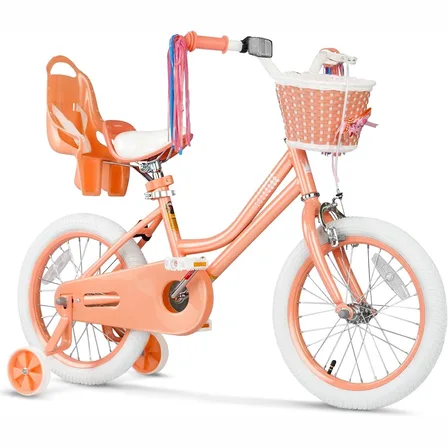
Girls 12/14/16 Inch Kids Bike by XJD with Training Wheels – Peach
The XJD Girls Bike in Peach is a training-wheel bike built for girls roughly 3 t…$149
$169 -
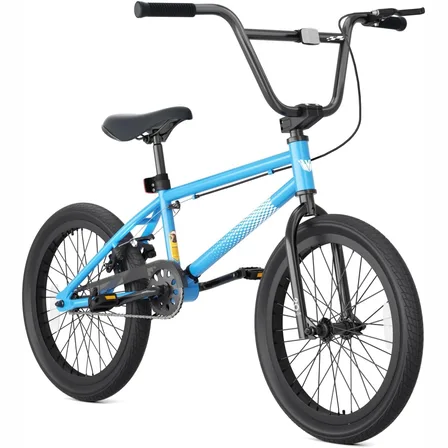
Blue XJD Freestyle BMX Bike, 20-Inch – No Pegs
The XJD 20-Inch Blue Freestyle BMX is an entry-level BMX bike for boys and girls…$189.99
-
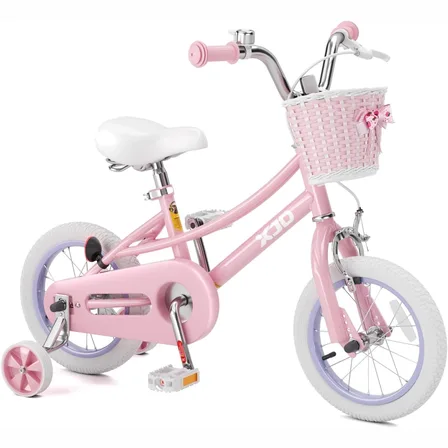
Pink 12/14/16/20" XJD Girls Bike with Training Wheels & Basket
The Pink XJD Girls Bike with Training Wheels & Basket is a first-bike pick f…$65.99
$75.99