

What kind of bike for 7 year old
For most 7-year-olds, start by comparing a 16-, 18-, and 20-inch bike. Measure the child first: height narrows the wheel size, while inseam, reach, brake control, and confidence decide the actual fit.
Choose the starting size from measured height
Do not select a bike from age alone. Have the child stand straight without shoes against a wall, then measure from the floor to the top of the head. For inseam, have the child stand with feet slightly apart and measure from the floor to the crotch. Record both measurements before comparing bicycles.
| Wheel size | XBikes age starting point | Rider-height starting point |
|---|---|---|
| 16 Inch | Ages 4–7 | 40–48 in / 102–122 cm |
| 18 Inch | Ages 5–9 | 43–52 in / 109–132 cm |
| 20 Inch | Ages 7–12 | 48–60 in / 122–152 cm |
A 7-year-old under 48 inches may begin with a 16- or 18-inch comparison; one who is at least 48 inches may begin with a 20-inch comparison. The ranges overlap deliberately. They identify bikes worth trying, not a guaranteed fit.
Confirm fit on the actual bicycle
Have the child try the exact bike rather than ordering a larger one solely to leave growing room. With the child straddling the frame and both feet on the ground, check that there is clear space between the body and the bicycle. An oversized frame can make starting, stopping, and stepping off harder to control.
Next, watch the child sit in a normal riding position. They should reach the handlebar without stretching, locking their arms, or leaning awkwardly. Ask them to turn the handlebar both ways while remaining balanced. They must also be able to reach and operate the bicycle's brakes confidently. Because dimensions and adjustment methods vary, follow the exact product manual or ask a qualified bicycle mechanic to set up and assess the bike.
Let current riding ability break a close tie
If two wheel sizes appear plausible from height, choose through a supervised trial. Ask the child to start, ride a straight line, steer around a simple obstacle, slow down, stop, and dismount. Look for calm, repeatable control rather than whether the child can merely remain on the bike for a moment.
- If the smaller option permits a comfortable posture and noticeably easier starts and stops, it may be the more suitable current fit.
- If the larger option passes every fit check and the child controls it without strain or hesitation, it may be appropriate.
- If neither option allows reliable stand-over, reach, braking, and stopping, continue trying other bicycles instead of compromising.
When the supplied training-wheel bikes are relevant
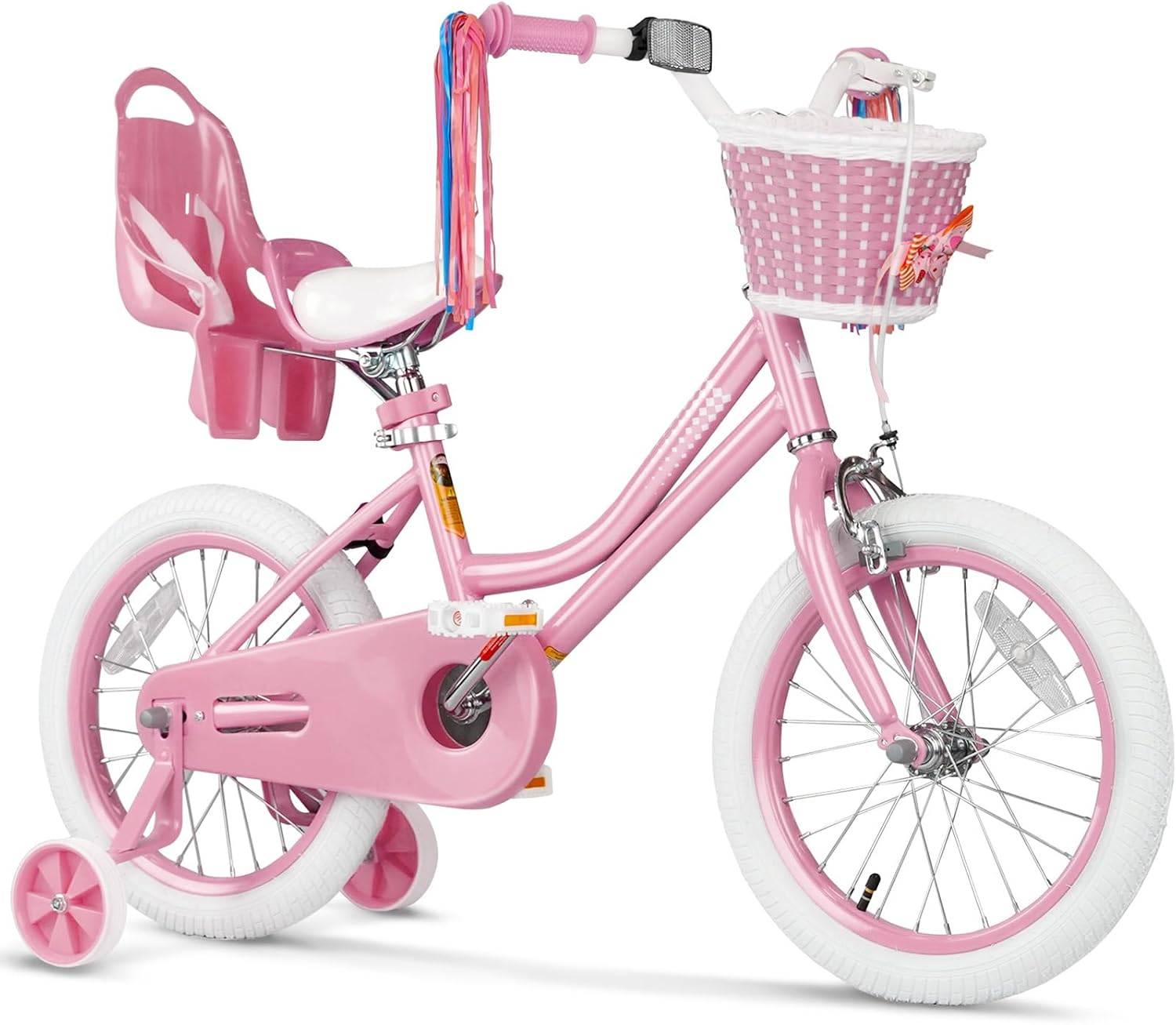
The two supplied catalog choices are training-wheel bikes, so they are most relevant when a 7-year-old still needs that style of support and fits one of their offered wheel sizes. They help answer the sizing question because both offer 16-inch versions, while only one also offers a 20-inch version.
 XJD Kids Bike for Girls – Pink, 12/14/16/20 Inch with Training Wheels
Relevant when a child needs a training-wheel bike and fits its 16- or 20-inch option after an individual fit check; 12- and 14-inch labels are also offered.
 XJD Pink Girls' Bike – Kids 12/14/16 Inch Training Wheel Bicycle
Relevant for a child who still needs a training-wheel bicycle and fits the offered 16-inch option; this product does not provide an 18- or 20-inch label.
XJD Kids Bike for Girls – Pink, 12/14/16/20 Inch with Training Wheels is offered in 12-, 14-, 16-, and 20-inch labels. For a typical size comparison at age seven, its 16- and 20-inch versions are the pertinent starting points, depending on measured height and the individual fit check.
XJD Pink Girls' Bike – Kids 12/14/16 Inch Training Wheel Bicycle is offered in 12-, 14-, and 16-inch labels. Its 16-inch option may be relevant when the rider measures within the 40–48 in / 102–122 cm starting range and can control the exact bicycle comfortably.
The 12- and 14-inch labels on these products usually correspond to shorter XBikes height ranges: 34–40 in / 86–102 cm for 12 inch and 37–45 in / 94–114 cm for 14 inch. Do not dismiss or select them from age assumptions, but verify measured height and real fit. Neither supplied product has an 18-inch label, and the second has no 20-inch label. If an 18-inch trial fits better, or if the child no longer needs training wheels, these particular catalog choices may not be relevant.
Finish the decision with safety and setup checks
Before riding, inspect the assembled bicycle and follow its exact manual for setup, adjustments, maintenance, compatibility, load limits, and torque requirements. If anything is uncertain, use a qualified bicycle mechanic rather than guessing.
Add a properly fitting bicycle helmet. It should sit level and use its straps according to the helmet manufacturer's instructions. Recheck the fit whenever the helmet is adjusted or replaced.
What to do next
- Measure the child's height and inseam.
- Use height to shortlist 16, 18, or 20 inches.
- Try the exact bikes and compare stand-over space, reach, brake operation, starting, steering, stopping, and confidence.
- Choose only the size the child controls now; do not buy an oversized bicycle for future growth.
For a 7-year-old, the right answer is therefore not one automatic wheel size: shortlist by measured height, then select the bicycle that passes every hands-on control check today.
Bikes for your next adventure
-

Flower Pink XJD Girls Bike with Doll Seat & Basket
The XJD Flower Pink girls' bike is made for riders 71–122 cm tall (roughly ages …$69.99
-
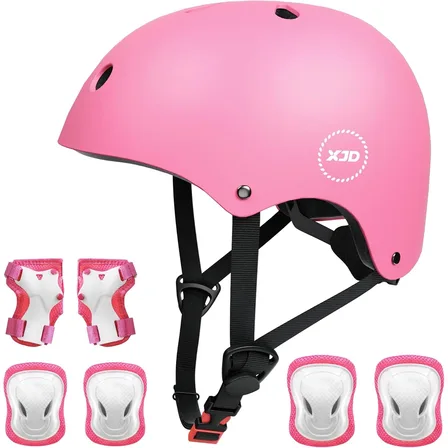
XJD Kids Helmet & Protective Gear Set for Girls, Pink
The XJD Kids Helmet & Protective Gear Set in Pink is a complete safety kit for g…$24.64
-

Kids Bike Helmet by XJD for Boys & Girls – Black, Blue, Green, Pink, Purple
The XJD Kids Bike Helmet covers a wide 2-to-8-year age range thanks to two head-…$59.99