

What kind of bike for 8 year old
For most 8-year-olds, start with an 18-inch or 20-inch bike, then choose by measured height and an in-person fit check—not age alone.
Measure before choosing a wheel size
Measure the child’s height without shoes. Also measure inseam from the floor to the crotch while the child stands straight with feet slightly apart. Height provides the XBikes starting point; inseam helps you judge whether the child can stand over a particular frame comfortably.
Use these ranges to narrow the search:
| Wheel size | XBikes starting range |
|---|---|
| 16 Inch | Ages 4–7; 40–48 in / 102–122 cm |
| 18 Inch | Ages 5–9; 43–52 in / 109–132 cm |
| 20 Inch | Ages 7–12; 48–60 in / 122–152 cm |
| 24 Inch | Ages 10–14; 54–64 in / 137–163 cm |
An average-age match is not proof of fit. A shorter 8-year-old may need an 18-inch bike, while a child at least 48 inches / 122 cm tall may be ready to try a 20-inch model. A 24-inch bike starts at 54 inches / 137 cm, but it should not be selected merely to allow room for growth.
Check the bike with the child aboard
Have the child try the exact bicycle. With the child standing over it, confirm there is comfortable clearance rather than contact with the frame. Seated, the rider should be able to reach the handlebars without stretching, turning the torso or locking the elbows.
Ask the child to operate each brake control. The controls must be within comfortable reach, and the child must have enough hand control to use them confidently. Also watch a short start, stop and turn in a traffic-free area. If the bike feels intimidating, awkward or hard to control, a nominal height match is not enough.
Compare 18-inch and 20-inch choices
Choose an 18-inch bike when the rider falls within its 43–52-inch / 109–132-centimetre range and a 20-inch model is too tall, long or difficult to control. Choose a 20-inch bike only when the rider is within its 48–60-inch / 122–152-centimetre range and passes the stand-over, reach and braking checks.
Where the ranges overlap, confidence settles the decision. A child who is still hesitant about starting, steering or stopping may control the smaller suitable option more easily. A confident rider may prefer the larger of two fitting sizes, but never at the expense of stand-over clearance, brake reach or comfortable steering.
How the supplied XBikes options fit this decision
These catalog options help because all three include a 20-inch choice or designation, letting parents compare different riding styles after confirming that 20 inches fits the child. Only the listed sizes and product descriptions establish their relevance; they do not replace an individual fit check.
 XJD Pink Beach Cruiser for Girls – Rear Rack & V-Brake
A 20 Inch version is relevant for an 8-year-old within the supplied height range who passes fit and V-brake control checks; the 24 Inch and 26 Inch labels require their own height-based assessment.
 Girls' Training Wheel Bike by XJD with Basket – Purple
Available in 14 Inch, 16 Inch and 20 Inch labels. Its training-wheel category is relevant only when that setup is wanted; measured height, reach and control must still determine size.
 Blue XJD Freestyle BMX Bike, 20-Inch – No Pegs
A 20-inch kids’ BMX option with no pegs. Consider it when 20 inches matches the rider’s measured height and the child demonstrates comfortable stand-over, reach, braking and handling.
The XJD Pink Beach Cruiser for Girls – Rear Rack & V-Brake is offered in 20 Inch, 24 Inch and 26 Inch labels. For a typical 8-year-old decision, consider only the 20 Inch version when the child meets the 20-inch height range and can comfortably control its V-brake. The larger labels should follow their separate height starting points, not a desire to buy ahead.
The Girls' Training Wheel Bike by XJD with Basket – Purple comes in 14 Inch, 16 Inch and 20 Inch labels. Its training-wheel category makes it relevant when the family is specifically considering that riding setup, but select among those sizes from measured height and actual control. Do not assume training wheels make an oversized frame appropriate.
The Blue XJD Freestyle BMX Bike, 20-Inch – No Pegs is a 20-inch kids’ BMX option with no pegs. It is relevant only if a 20-inch bike fits and the family wants that category. The supplied facts do not establish dimensions beyond wheel designation, so verify reach, stand-over and brake control on the exact bicycle.
Complete the safety and setup checks
Do not buy an oversized bicycle for future growth. Recheck fit after seat or handlebar adjustments, because a change that helps leg position can still leave the controls too far away. For assembly, adjustment procedures, compatibility, maintenance and torque requirements, follow the exact product manual or use a qualified bicycle mechanic.
Use a bicycle helmet that fits properly, sits level and has straps adjusted according to its manufacturer’s instructions. The helmet and controlled practice area complement a correctly fitting bicycle; neither compensates for poor fit.
Make the 8-year-old fit decision
- Measure height and inseam.
- Shortlist 18 Inch at 43–52 in / 109–132 cm or 20 Inch at 48–60 in / 122–152 cm.
- Have the child test stand-over clearance, reach, braking, starting, turning and stopping.
- Choose the size the child controls confidently today; if none pass every check, keep looking rather than sizing up.
Bikes for your next adventure
-
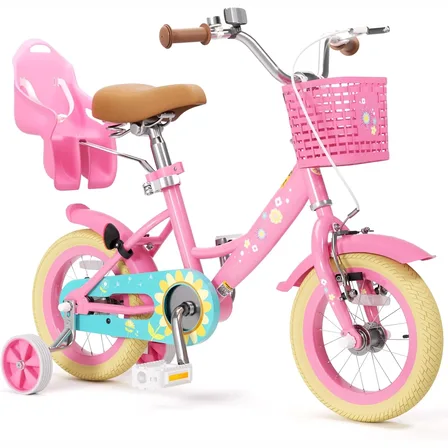
Flower Pink XJD Girls Bike with Doll Seat & Basket
The XJD Flower Pink girls' bike is made for riders 71–122 cm tall (roughly ages …$69.99
-
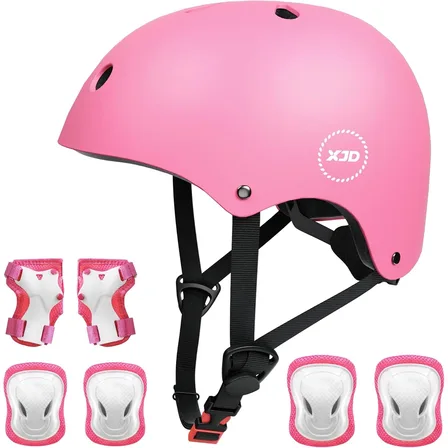
XJD Kids Helmet & Protective Gear Set for Girls, Pink
The XJD Kids Helmet & Protective Gear Set in Pink is a complete safety kit for g…$24.64
-

Kids Bike Helmet by XJD for Boys & Girls – Black, Blue, Green, Pink, Purple
The XJD Kids Bike Helmet covers a wide 2-to-8-year age range thanks to two head-…$59.99