

What kind of womens bikes support child seats
Women’s bikes can support child seats only when the bicycle, seat and mounting system are explicitly compatible. Check the frame, rack, clearances and load limits before buying.
Which women’s bikes can take a child seat?
The label “women’s bike” does not determine compatibility. A suitable bicycle must provide the exact mounting points, tube shape, space and strength required by the child-seat manufacturer. The bicycle manufacturer must also permit that type of child carrier.
Child seats commonly attach to a compatible rear rack, directly to part of the frame, or at the front of the bicycle. These systems are not interchangeable. A low or step-through frame may make mounting easier for the adult, but it does not prove that a particular seat will fit.
Do not rely on appearance, wheel size or a basket as evidence. If either manual does not clearly approve the proposed combination, ask the bicycle and seat manufacturers or have a qualified bicycle mechanic assess it.
What to measure and compare
Identify the exact bicycle model, size and intended seat position. Then compare the bicycle manual with the child-seat instructions. Measure only where those instructions direct you, because each mounting system can require different dimensions and clearances.
- Mounting area: Confirm that the required frame section or rack is present, accessible and shaped as specified.
- Clearance: Check space around the saddle, rear wheel, brakes, cables, basket and any other accessory through the bicycle’s full range of normal movement.
- Rack approval: A rear rack must be approved for that exact seat system and use. A rack merely being present is not enough.
- Load limits: Compare the bicycle, rack and child-seat limits in their manuals. Follow the lowest applicable limit.
- Adult fit: The rider should have comfortable stand-over clearance, reach, brake control and confidence before carrying a passenger.
Use the specified hardware and follow the exact assembly and torque instructions in the manuals. Where those details are unavailable, do not improvise; use a qualified bicycle mechanic.
How the XBikes options help with comparison
The supplied catalog includes one cruiser in adult-relevant and youth wheel sizes, plus two small training-wheel bicycles. They help separate a possible adult-bicycle starting point from children’s bikes that are not substitutes for a child-carrying bicycle. None of the supplied facts confirms child-seat compatibility.
 Pink XJD Beach Cruiser Bike, 24"/26", U-Brake
The 24 Inch and 26 Inch cruiser sizes provide a youth-to-adult comparison point, but the supplied facts do not confirm any child-seat mount, rack approval or load limit.
 Light Pink XJD Girls' Bicycle with Basket & Training Wheels
Available in 12, 14, 16 and 20 Inch sizes, this training-wheel bicycle is a child-size comparison point; its supplied facts do not establish passenger-seat compatibility.
 Blue XJD Girls Bike with Training Wheels – 12/14/16 Inch
Available in 12, 14 and 16 Inch sizes, this training-wheel bicycle is relevant for distinguishing children’s bikes from adult carriers, but no child-seat compatibility is supplied.
Pink XJD Beach Cruiser Bike, 24"/26", U-Brake is offered in 24 Inch and 26 Inch labels. Under the XBikes starting points, 24 Inch corresponds to riders 54–64 inches tall, while 26 Inch is for youth and adults over 60 inches. Height remains only a starting point. The catalog facts do not state whether either size accepts a frame-mounted, rack-mounted or front child seat, so verify the exact size and manual before treating it as a candidate.
Light Pink XJD Girls' Bicycle with Basket & Training Wheels is offered in 12, 14, 16 and 20 Inch labels. Blue XJD Girls Bike with Training Wheels – 12/14/16 Inch is offered in 12, 14 and 16 Inch labels. Those are child-size comparison points, not evidence of passenger-seat support. Their supplied descriptions provide no compatible child-seat system, load limit or mounting approval.
Fit the adult bicycle before adding the seat
A parent should first be able to mount, stop, steer and operate the brakes confidently on the bicycle alone. Have the rider try the bicycle rather than choosing an oversized model for growth or extra carrying space. Check stand-over clearance, reach and easy access to the brake controls.
Wheel size cannot settle adult fit by itself. For the cruiser comparison, measure the intended rider’s height and inseam, then check the exact bicycle’s geometry and adjustment range in its product information or manual. A rider over 60 inches may use 26 Inch as an XBikes starting point, but still needs an individual fit check.
Checks before carrying a child
- Confirm in writing or in the manuals that the exact bicycle, bicycle size, seat and mounting method are compatible.
- Verify every applicable load limit and clearance; include any rack or adapter required by the seat system.
- Have a qualified bicycle mechanic complete or inspect the installation if any mounting, assembly or torque detail is uncertain.
- Follow the child-seat instructions for restraints, positioning and permitted use every ride.
- Fit the child with a properly fitting bicycle helmet. It should sit level, with straps adjusted according to the helmet manufacturer’s instructions. The adult rider should also use an appropriate helmet.
- Practice mounting, starting, steering, braking and dismounting in a controlled area before carrying the child.
Make the compatibility decision
Choose a women’s bicycle only after the exact bike manual and child-seat manual approve the same mounting method and all measurements, clearances and limits agree. Among the supplied products, the 24/26-inch cruiser is the only adult-relevant comparison point, but its compatibility is unverified; the smaller training-wheel bikes should not be treated as substitutes. If approval cannot be confirmed, do not attach the seat.
Bikes for your next adventure
-

Flower Pink XJD Girls Bike with Doll Seat & Basket
The XJD Flower Pink girls' bike is made for riders 71–122 cm tall (roughly ages …$69.99
-
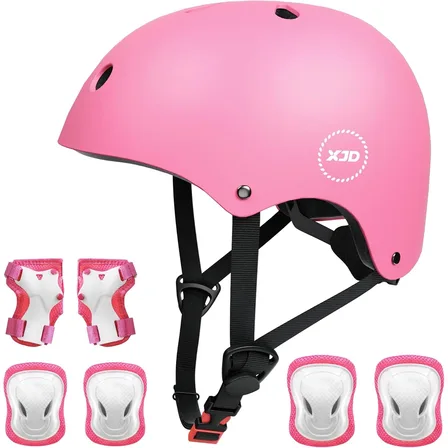
XJD Kids Helmet & Protective Gear Set for Girls, Pink
The XJD Kids Helmet & Protective Gear Set in Pink is a complete safety kit for g…$24.64
-

Kids Bike Helmet by XJD for Boys & Girls – Black, Blue, Green, Pink, Purple
The XJD Kids Bike Helmet covers a wide 2-to-8-year age range thanks to two head-…$59.99