

What size bicycle for a 10 year old
For most 10-year-olds, start by comparing 20-inch and 24-inch bicycles. Measure the child’s height first: 20-inch bikes cover 48–60 in (122–152 cm), while 24-inch bikes cover 54–64 in (137–163 cm). Where those ranges overlap, choose by actual stand-over clearance, reach, brake control and confidence—not age alone.
Measure before choosing a wheel size
Measure the child barefoot, standing upright against a wall. Record total height. Then measure inseam from the floor to the crotch while the child stands with feet slightly apart. The XBikes size ranges use total rider height; the inseam becomes useful when the child tries the bicycle and checks stand-over clearance.
Use these starting points for a 10-year-old:
| Wheel size | XBikes age range | Rider height | Likely role |
|---|---|---|---|
| 20 Inch | 7–12 | 48–60 in / 122–152 cm | Compare first for riders below 54 in or those who need easier control |
| 24 Inch | 10–14 | 54–64 in / 137–163 cm | Compare for riders at least 54 in tall who can control the larger bicycle |
| 26 Inch | Youth and adults | Over 60 in / 153 cm | Consider only after an individual fit check |
These ranges are starting points, not guarantees. A tall 10-year-old may be ready for 24 or 26 inches, while a shorter or less confident rider may fit and control a 20-inch bike better.
How to decide between 20 and 24 inches
If the child is 48–53 in (122–136 cm), the XBikes chart points to a 20-inch bicycle. At 54–60 in (137–152 cm), both 20-inch and 24-inch ranges apply, so a hands-on comparison matters. At 61–64 in (155–163 cm), the chart points to 24 inches. Above 60 in (153 cm), 26 inches also enters the comparison, but height alone does not settle the choice.
Do not move up merely to allow room for growth. The child should try the bicycle in its intended riding position and demonstrate comfortable control before it is selected.
What a proper fit should look like
During a test ride or shop fitting, check all of the following:
- Stand-over: The child can straddle the bicycle with usable clearance and without leaning it sharply to one side.
- Starting and stopping: The rider can get underway and stop without losing balance or becoming overwhelmed by the bicycle’s size.
- Reach: The handlebars are reachable without locking the elbows, stretching the torso or losing steering control.
- Brake control: The child can reach and operate the brake controls reliably while maintaining a secure grip.
- Confidence: Turning, looking around and riding slowly remain controlled rather than hesitant or strained.
If a larger size compromises any of these checks, choose the smaller suitable bicycle even if the child may outgrow it sooner.
How the supplied XBikes options compare
The supplied catalog provides useful 20-inch and 24-inch comparison points—the two sizes most commonly indicated by the XBikes height ranges at age 10. They help you compare wheel-size categories, but the catalog titles and labels do not replace measuring and trying the bicycle.
 Girls' Training Wheel Bike by XJD with Basket – Purple
The 20 Inch SKU is relevant to many 10-year-olds within the 48–60 in height range; the listed 14 Inch and 16 Inch options are smaller comparison sizes, not equivalents.
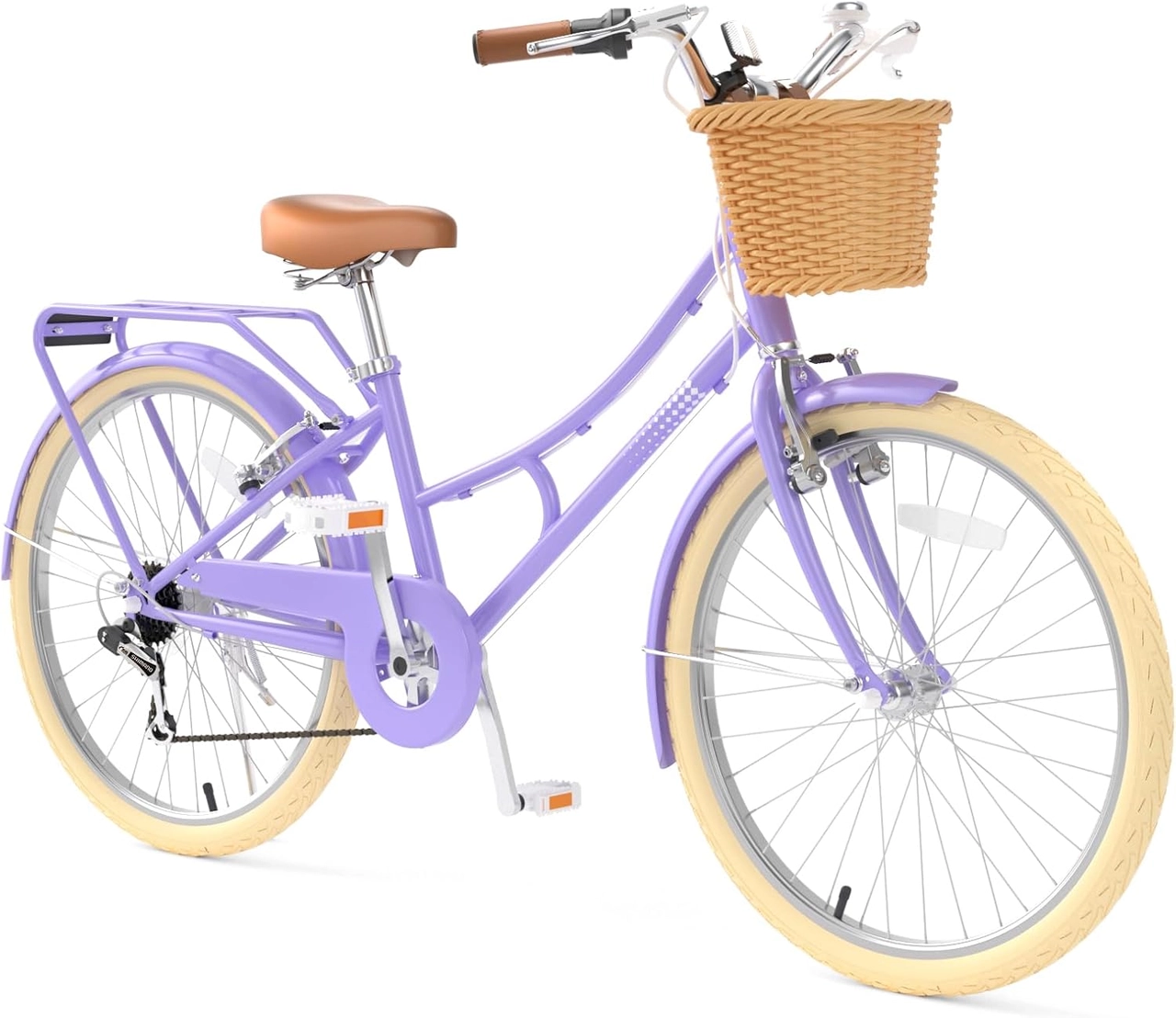 24-Inch Purple XJD Beach Cruiser Bike with U-Brake
This 24-inch bicycle is relevant for measured riders in the 54–64 in range, provided stand-over, reach, U-brake control and confidence are confirmed during an individual fit check.
Girls' Training Wheel Bike by XJD with Basket – Purple is offered with 14 Inch, 16 Inch and 20 Inch SKU labels. For this question, only its 20 Inch option falls within the XBikes starting range for many 10-year-olds. Its 14-inch and 16-inch options correspond to smaller height ranges and should not be treated as equivalent alternatives.
24-Inch Purple XJD Beach Cruiser Bike with U-Brake is the supplied 24-inch comparison. The XBikes chart places 24-inch bicycles at ages 10–14 and heights of 54–64 in (137–163 cm), but this title does not prove that it fits every 10-year-old. Confirm stand-over, reach and the child’s ability to operate its U-brake before choosing it.
Choose between these products only if the relevant listed wheel size matches the child’s measured-height range and the individual fit check succeeds. Follow the exact product manual or use a qualified bicycle mechanic for assembly, adjustments, compatibility, maintenance, load limits and torque information.
Helmet and final pre-ride check
A bicycle helmet must fit properly, sit level on the head and have its straps used according to the helmet manufacturer’s instructions. A larger bicycle is not made appropriate by adding protective equipment; bicycle fit and helmet fit are separate requirements.
Before regular riding, repeat the control check in a quiet, traffic-free area. Confirm that the child can start, steer, brake and stop consistently. If they cannot, pause and reassess the bicycle size or obtain help from a qualified bicycle mechanic.
The decision for your 10-year-old
Measure height now, shortlist 20 inches for 48–60 in (122–152 cm) and 24 inches for 54–64 in (137–163 cm), then have the child try both where the ranges overlap. Buy only the size they can straddle, reach, steer and brake confidently today—never an oversized bicycle chosen solely for future growth.
Bikes for your next adventure
-

XJD Girls Bike for Kids Ages 3-8, 12/14/16 Inch with Training Wheels – Purple
The XJD Girls Bike in Purple is a training-wheel bicycle for kids ages 3 to 8, f…$149
$169 -

Light Purple XJD Toddler Bike Helmet, Adjustable, Size XS (46–51 cm)
This Light Purple XJD toddler bike helmet is made for the smallest riders — the …$20.39
-
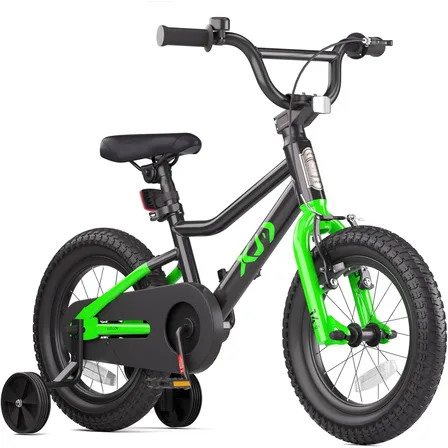
Black XJD Kids' BMX Bicycle with Training Wheels
The XJD Kids' BMX Bicycle with Training Wheels is built for children roughly 3 t…$99.99
$119.99