

What size bike does a 11 year old need
Most 11-year-olds need a 20-inch or 24-inch bike, but measured height decides: use 20 inches at 48–60 in (122–152 cm) and 24 inches at 54–64 in (137–163 cm), then confirm fit and control in person.
Choose the starting size from height
Measure your child without shoes, standing straight against a wall. Record total height from the floor to the top of the head. At age 11, compare that measurement with these XBikes starting points:
| Wheel size | XBikes rider-height range | What it means for an 11-year-old |
|---|---|---|
| 20 Inch | 48–60 in / 122–152 cm | A starting option within the ages 7–12 range |
| 24 Inch | 54–64 in / 137–163 cm | A starting option within the ages 10–14 range |
| 26 Inch | Over 60 in / 153 cm | A youth-and-adult starting point that may be relevant to a taller rider |
The overlap between 20-inch and 24-inch bikes is intentional: wheel size alone does not determine whether a particular frame fits. If your child is 54–60 inches tall (137–152 cm), compare both sizes rather than automatically choosing the larger one.
Measure inseam as well as height
For inseam, have the child stand in socks with feet slightly apart. Place a firm, thin book between the legs, raise it gently to simulate the bicycle saddle, and measure from the floor to the book’s top edge. Keep that number for the in-person fit check; the catalog information supplied here does not include frame stand-over dimensions, so it cannot support a numerical inseam-to-frame match.
When the child straddles the actual bike, they should be able to stand over it without the frame preventing stable footing. Have them get on and off several times. A bike that makes mounting, stopping or standing awkward is not the right fit, even when its wheel size matches the height table.
Check reach, brakes and confidence
Seat the rider on each candidate bike and ask them to hold the handlebars naturally. They should not have to stretch, lock their elbows or shift forward merely to steer. With hands in the normal riding position, check that they can reach and operate the brake controls reliably.
Next, let them start, steer, stop and place a foot down in a controlled setting. Current confidence matters: a hesitant rider may control one appropriately fitted option more comfortably than another. Do not buy an oversized bicycle solely to leave growing room. If neither candidate permits calm steering, dependable braking and an easy stop, keep looking.
How the supplied bikes help with comparison
The supplied catalog includes two 20-inch possibilities and one 24-inch possibility, so these products are useful comparison points for the two sizes commonly indicated by the XBikes height ranges for an 11-year-old. Their categories and listed configurations differ, however; wheel size is only the first filter, not proof of fit.
 24-Inch Purple XJD Beach Cruiser Bike with U-Brake
A 24-inch beach cruiser comparison for riders within the 54–64 in (137–163 cm) starting range; individual stand-over, reach and brake control still require an in-person check.
 Blue XJD Freestyle BMX Bike, 20-Inch – No Pegs
A 20-inch Kids' BMX Bikes option to compare when the rider measures 48–60 in (122–152 cm); the “No Pegs” catalog wording does not establish fit.
 Pink 12/14/16/20" XJD Girls Bike with Training Wheels & Basket
This training-wheel bike includes a 20 Inch SKU relevant to the 48–60 in (122–152 cm) starting range; its smaller listed configurations are not equivalent substitutes.
The 24-Inch Purple XJD Beach Cruiser Bike with U-Brake is the supplied 24-inch option. Its wheel size corresponds to the 54–64 in (137–163 cm) starting range, but the child must still try it and demonstrate comfortable stand-over, reach and brake control.
The Blue XJD Freestyle BMX Bike, 20-Inch – No Pegs is a supplied 20-inch option in the Kids' BMX Bikes category. Compare it when the rider’s measured height falls within the 48–60 in (122–152 cm) range. “No Pegs” is part of the catalog description, not fit evidence.
The Pink 12/14/16/20" XJD Girls Bike with Training Wheels & Basket is offered in several listed size labels, including 20 Inch. For this question, only that 20-inch configuration is a relevant starting comparison; the 12-, 14- and 16-inch configurations correspond to shorter XBikes height ranges and should not be treated as equivalent. Its Training Wheel Bikes category and title describe the catalog item, but do not establish suitability for a particular 11-year-old.
Make the final decision in this order
- Measure standing height and inseam.
- Use height to shortlist 20, 24 or, above 60 inches (153 cm), potentially 26 inches.
- Have the child try the exact bicycle rather than relying on age or wheel size alone.
- Confirm manageable stand-over, natural reach, dependable brake operation and controlled starting and stopping.
- Reject any bike that is oversized or undermines the rider’s confidence.
Before riding, use a properly fitting bicycle helmet. It should sit level, with its straps adjusted according to the helmet manufacturer’s instructions. Follow the exact bicycle manual or ask a qualified bicycle mechanic about assembly, maintenance, compatibility, load limits and torque.
For an 11-year-old, measure first, compare 20- and 24-inch bikes when the height ranges overlap, and choose only the exact bike the child can comfortably straddle, steer and stop.
Bikes for your next adventure
-

Light Purple XJD Toddler Bike Helmet, Adjustable, Size XS (46–51 cm)
This Light Purple XJD toddler bike helmet is made for the smallest riders — the …$20.39
-

XJD Boys 12/14/16" Training Wheel Bike – Blue
The XJD Boys Bike in Blue is a training wheel bike for riders 71–122 cm tall—rou…$169
$199 -
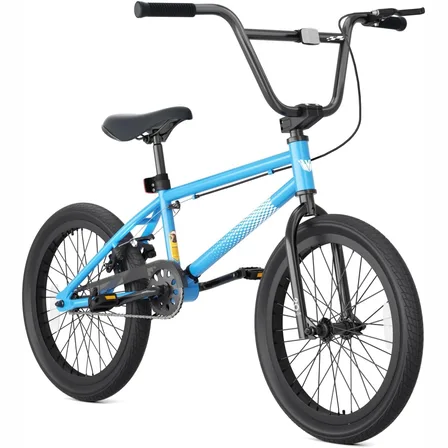
Blue XJD Freestyle BMX Bike, 20-Inch – No Pegs
The XJD 20-Inch Blue Freestyle BMX is an entry-level BMX bike for boys and girls…$189.99