

What size bike does a 12 year old need
Most 12-year-olds should start by comparing 20-inch, 24-inch and 26-inch bikes, but measured height and an individual fit check—not age—determine the right size.
Start with the rider’s measured height
Have the child stand barefoot against a wall, looking straight ahead, and measure from the floor to the top of the head. Compare that result with the XBikes starting points below. These ranges narrow the search; they do not confirm that a particular frame fits.
| Wheel size | XBikes age starting point | Rider height starting point |
|---|---|---|
| 20 Inch | Ages 7–12 | 48–60 in / 122–152 cm |
| 24 Inch | Ages 10–14 | 54–64 in / 137–163 cm |
| 26 Inch | Youth and adults | Over 60 in / 153 cm |
A shorter 12-year-old may still fit a 20-inch bike. Many riders of this age will begin with a 24-inch option, while a child taller than 60 inches may need to compare 24-inch and 26-inch bikes. Overlapping height ranges mean the final choice must be made on the actual bicycle.
Measure inseam as well as height
For an inseam measurement, have the child stand barefoot with feet slightly apart. Place a firm, thin book between the legs, level with the floor and gently raised to mimic the top of a saddle. Measure vertically from the floor to the top edge of the book.
Use that measurement when checking the bicycle’s stand-over position. The child must be able to straddle the bike comfortably and remain balanced when stopping. Because frame shapes differ even when wheel sizes match, compare the inseam with the specific bicycle’s geometry or fit information. Do not invent a clearance rule if the exact product manual does not provide one.
Confirm the fit on the actual bicycle
Do not buy an oversized bicycle merely to leave room for growth. Have the child try it and check the complete riding position before deciding. A suitable candidate should let the rider:
- mount, start and stop without struggling;
- stand over the frame comfortably;
- reach the handlebars without excessive stretching or a cramped posture;
- turn the bars while remaining balanced and in control;
- reach and operate the brakes confidently; and
- place feet appropriately for controlled starts and stops.
Current confidence matters. A rider who is technically within a height range but cannot steer, stop or use the brakes reliably needs a different fit or setup. If two wheel sizes appear possible, compare both rather than assuming the larger one is automatically better.
How the supplied catalog option relates
The XJD Kids Bike for Girls – Pink, 12/14/16/20 Inch with Training Wheels is offered with 12-inch, 14-inch, 16-inch and 20-inch SKU labels. For a 12-year-old, only its 20-inch option overlaps the supplied age starting point, and it is relevant only when the rider measures within the 48–60 inch / 122–152 cm starting range and passes the individual fit checks.
These catalog options help illustrate the upper end of the smaller children’s sizes and provide a 20-inch comparison for a shorter or less-confident 12-year-old. The 12-inch, 14-inch and 16-inch options correspond to younger and shorter starting ranges, so they should not be treated as age-12 choices merely because they share the same product listing.

This product does not offer a supplied 24-inch or 26-inch SKU label. If the child’s height and on-bike fit point to either of those sizes, this listing is only a nearest-size comparison point, not a substitute. Its wording is a catalog title rather than proof that every configuration fits a particular rider.
Complete the decision safely
Once a likely wheel size is identified, let the child try the exact model with normal riding shoes. Recheck stand-over comfort, seated reach, steering control and brake reach. If adjustments, assembly details, load limits, compatibility or torque values are needed, follow the exact product manual or ask a qualified bicycle mechanic; those details cannot be inferred from wheel size.
Add a properly fitting bicycle helmet. It should sit level and its straps should be adjusted according to the helmet manufacturer’s instructions. A helmet does not correct a poorly fitting bicycle, so verify both separately.
For this 12-year-old, measure height and inseam now, shortlist 20, 24 or 26 inches from the table, then choose only the bicycle the child can straddle, reach, steer and brake with confidence.
Bikes for your next adventure
-

Light Purple XJD Toddler Bike Helmet, Adjustable, Size XS (46–51 cm)
This Light Purple XJD toddler bike helmet is made for the smallest riders — the …$20.39
-
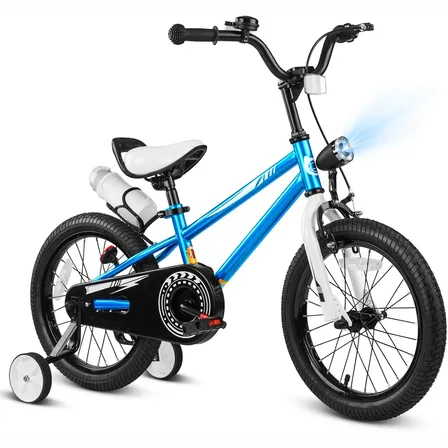
XJD Boys 12/14/16" Training Wheel Bike – Blue
The XJD Boys Bike in Blue is a training wheel bike for riders 71–122 cm tall—rou…$169
$199 -
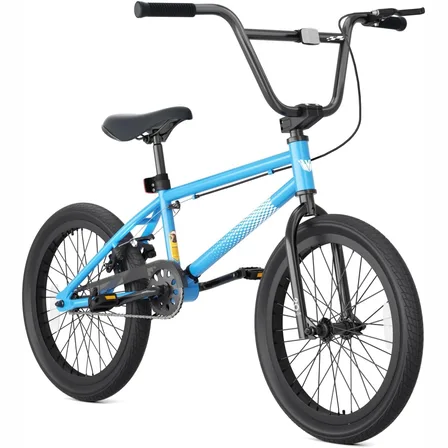
Blue XJD Freestyle BMX Bike, 20-Inch – No Pegs
The XJD 20-Inch Blue Freestyle BMX is an entry-level BMX bike for boys and girls…$189.99