

What size bike does 12 year old need
A 12-year-old usually needs a 20-inch, 24-inch or 26-inch bike, depending first on measured height—not age alone. Use 20-inch for 48–60 in (122–152 cm), 24-inch for 54–64 in (137–163 cm), and 26-inch above 60 in (153 cm), then confirm the individual fit.
Choose the starting size from height
Measure your child without shoes, standing straight against a wall. Compare that height with the XBikes starting points below. The ranges overlap because two riders of the same height can have different proportions, reach and confidence.
| Wheel size | XBikes age starting point | Rider height |
|---|---|---|
| 20 Inch | Ages 7–12 | 48–60 in / 122–152 cm |
| 24 Inch | Ages 10–14 | 54–64 in / 137–163 cm |
| 26 Inch | Youth and adults | Over 60 in / 153 cm |
For a child between 54 and 60 inches tall, both 20-inch and 24-inch ranges are starting points. Do not choose the larger bike merely to leave growing room. Have the rider try both sizes and select the one they can stand over, steer, start, stop and brake with greater control.
Measure inseam as well as total height
Height narrows the wheel-size choice; inseam helps confirm whether the bicycle itself fits. With the child barefoot, place a firm, thin book between the legs as though it were a saddle, keep it level, and measure from the floor to its top edge.
Compare that measurement with the stand-over clearance and saddle adjustment instructions for the exact bicycle. The child should be able to straddle the bike securely rather than being forced onto tiptoes. Because frame shapes vary, wheel diameter alone cannot establish clearance. Follow the product manual or ask a qualified bicycle mechanic if the required measurements are unclear.
Perform a hands-on control check
Once height and inseam suggest a size, have the 12-year-old try the assembled bicycle in a controlled area. Check that the rider can:
- mount and dismount without struggling or catching on the frame;
- reach the handlebar without locking the elbows or stretching the torso;
- turn the handlebar while remaining balanced and seated appropriately;
- place hands comfortably on the controls and operate the brakes with dependable force;
- start, ride slowly, stop and put a foot down without panic.
Current confidence matters. A hesitant or less-experienced rider may control the smaller of two genuinely fitting options more easily, while a taller, proportionally longer rider may fit the larger one. Never trade control for anticipated growth.
How the supplied 20-inch options are relevant
The supplied catalog products help only when a measured 12-year-old falls within the 20-inch starting range and passes the fit check. They do not include a verified 24-inch or 26-inch choice, so for taller riders they are comparison points rather than substitutes for those wheel sizes.
 XJD Girls' Bike with Training Wheels, 12/14/16/20 Inch – Purple
Its 20-inch SKU label is relevant only for a rider measuring 48–60 inches who passes an individual stand-over, reach, brake-control and confidence check.
 XJD Kids Bike for Girls – Pink, 12/14/16/20 Inch with Training Wheels
This training-wheel bike lists a 20-inch option, a possible starting point for a 12-year-old measuring 48–60 inches; age alone does not establish fit.
 XJD Light Purple Girls Bike with Basket, Training Wheels, 12/14/16/20 Inch
Although its exact title mentions 20 inch, the supplied available SKU labels are only 12, 14 and 16 inches, so it is a comparison point rather than a suitable size option for this query.
XJD Girls' Bike with Training Wheels, 12/14/16/20 Inch – Purple and XJD Kids Bike for Girls – Pink, 12/14/16/20 Inch with Training Wheels both list 12-, 14-, 16- and 20-inch SKU labels. Only their 20-inch versions are relevant to the 48–60-inch height starting point discussed for a 12-year-old.
XJD Light Purple Girls Bike with Basket, Training Wheels, 12/14/16/20 Inch has an exact catalog title mentioning four sizes, but the supplied available SKU labels list only 12, 14 and 16 inches. None is an appropriate substitute for a 20-, 24- or 26-inch requirement. Confirm current selectable options on the product listing rather than inferring availability from its title.
These are training-wheel-bike catalog options. Training wheels do not correct a frame that is too small or too large, and their presence alone does not establish suitability for a particular 12-year-old.
Complete the safety and setup check
Use a properly fitting bicycle helmet that sits level, with straps adjusted according to the helmet manufacturer's instructions. Before riding, follow the exact bicycle manual for assembly, adjustments, maintenance, compatibility, load limits and torque requirements. If anything is uncertain, use a qualified bicycle mechanic.
Your next decision is specific: measure height and inseam today, shortlist 20, 24 or 26 inches from the height table, and buy only after the 12-year-old demonstrates comfortable stand-over, reach, braking and control on that exact bicycle.
Bikes for your next adventure
-

Light Purple XJD Toddler Bike Helmet, Adjustable, Size XS (46–51 cm)
This Light Purple XJD toddler bike helmet is made for the smallest riders — the …$20.39
-

XJD Boys 12/14/16" Training Wheel Bike – Blue
The XJD Boys Bike in Blue is a training wheel bike for riders 71–122 cm tall—rou…$169
$199 -
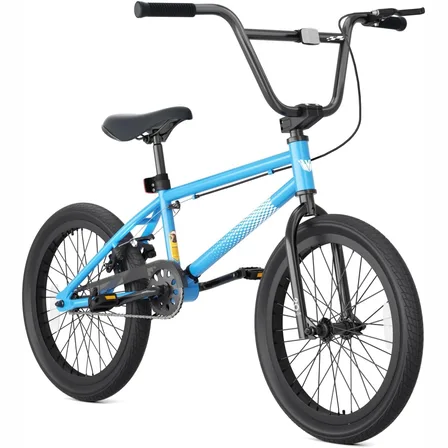
Blue XJD Freestyle BMX Bike, 20-Inch – No Pegs
The XJD 20-Inch Blue Freestyle BMX is an entry-level BMX bike for boys and girls…$189.99