

What size bike does 11 year old need
Most 11-year-olds need a 20-inch or 24-inch bike, chosen by measured height and an individual fit check—not by age alone.
Choose the starting size from height
Measure the child without shoes, standing straight against a wall. Compare that height with the XBikes starting points below. An 11-year-old may fall into either the 20-inch or 24-inch range, and taller riders may be ready to compare a 26-inch bike.
| Wheel size | XBikes age starting point | Rider height |
|---|---|---|
| 20 Inch | Ages 7–12 | 48–60 in / 122–152 cm |
| 24 Inch | Ages 10–14 | 54–64 in / 137–163 cm |
| 26 Inch | Youth and adults | Over 60 in / 153 cm |
The ranges overlap because wheel size is only a starting point. If the child is 54–60 inches tall, compare both a 20-inch and a 24-inch model in person. Do not automatically select the larger one for extra growing room.
Measure height and inseam correctly
Height narrows the choices; inseam helps determine whether the child can stand over the bicycle comfortably. To measure inseam, have the child stand in socks with feet slightly apart. Place a firm, thin book between the legs, raise it gently to simulate a saddle, and measure from the floor to the top edge.
Compare that measurement with the actual stand-over clearance and frame dimensions for the exact bicycle. Those dimensions are not supplied here, so consult its product manual or have a qualified bicycle mechanic check the fit. A wheel label alone cannot confirm adequate clearance.
Perform a real fit check
Have the child try the bicycle before deciding. The American Academy of Pediatrics advises against buying an oversized bike merely for growth. Check the following while the bicycle is supported securely:
- Stand-over: The child can straddle the frame with comfortable clearance rather than being pressed against it.
- Starting and stopping: The child can mount, start, stop and put a foot down without struggling or leaning excessively.
- Reach: The handlebars can be held without locking the elbows, stretching the torso or losing steering control.
- Brake control: The child can reach and operate the brake controls confidently while maintaining a secure grip.
- Confidence: Steering, turning and low-speed balance look controlled rather than tense or hesitant.
If the child is between sizes, current control should settle the decision. A manageable 20-inch bicycle may be more appropriate than a 24-inch bicycle that compromises stand-over, reach or braking. Conversely, a taller, confident rider may find the 24-inch fit more natural. Over 60 inches, a 26-inch option becomes a starting point, but it still requires the same checks.
How the supplied cruiser options help
Both supplied bicycles offer 20 Inch, 24 Inch and 26 Inch SKU labels, so they let a family compare the three relevant starting points within similar beach-cruiser offerings. The XJD Kids Beach Cruiser Bicycle, Rear Rack & V-Brakes, Mint Green and the XJD Pink Beach Cruiser for Girls – Rear Rack & V-Brake are both cataloged as Beach Cruiser Bikes. Their supplied facts identify rear racks and V-brakes; they do not provide frame geometry, stand-over measurements, load limits or detailed component specifications.
These particular catalog options are useful because an 11-year-old can compare the listed 20-inch and 24-inch versions, with a 26-inch version available as a fit-check comparison for a rider over 60 inches.
 XJD Kids Beach Cruiser Bicycle, Rear Rack & V-Brakes, Mint Green
Available in 20 Inch, 24 Inch and 26 Inch labels, this mint-green beach cruiser provides relevant comparison sizes for an 11-year-old after height, inseam, reach and control checks.
 XJD Pink Beach Cruiser for Girls – Rear Rack & V-Brake
This pink beach cruiser is offered with 20 Inch, 24 Inch and 26 Inch labels, allowing size comparisons based on the rider’s measured height and an individual fit check.
Do not treat matching wheel labels as proof that the two models fit identically. Compare the exact version the child will ride, confirm control reach, and follow its product manual for assembly, adjustment, maintenance, compatibility and load guidance. Use a qualified bicycle mechanic when the manual does not resolve a fit or setup question.
Complete the decision safely
After identifying the likely wheel size, repeat the fit check with ordinary riding clothes and the child’s properly fitted bicycle helmet. The U.S. Consumer Product Safety Commission advises that the helmet should fit properly, sit level and have its straps used according to the helmet manufacturer’s instructions.
- Measure height and inseam.
- Use height to shortlist 20, 24 or, if over 60 inches, 26 inches.
- Try the exact bicycle and verify stand-over, reach, stopping and brake control.
- Reject any size that feels oversized or reduces confidence, even if it promises more room to grow.
For an 11-year-old, begin with 20 and 24 inches, then choose the exact bike the child can straddle, reach, brake and steer with confidence today.
Bikes for your next adventure
-

Light Purple XJD Toddler Bike Helmet, Adjustable, Size XS (46–51 cm)
This Light Purple XJD toddler bike helmet is made for the smallest riders — the …$20.39
-
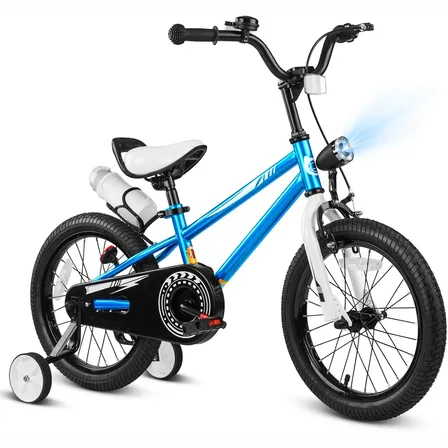
XJD Boys 12/14/16" Training Wheel Bike – Blue
The XJD Boys Bike in Blue is a training wheel bike for riders 71–122 cm tall—rou…$169
$199 -
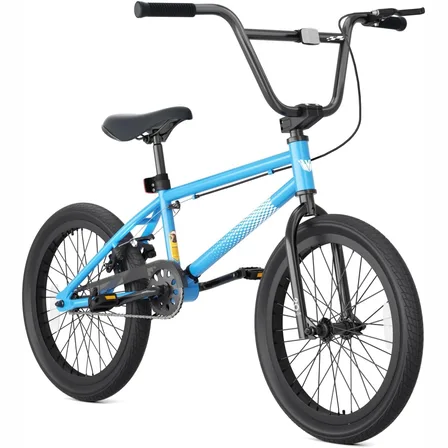
Blue XJD Freestyle BMX Bike, 20-Inch – No Pegs
The XJD 20-Inch Blue Freestyle BMX is an entry-level BMX bike for boys and girls…$189.99