

What size bike does a 10 year old need
Most 10-year-olds should start by trying a 20-inch or 24-inch bike. Measure the child first: height, inseam, reach, brake control and confidence decide the fit—not age alone.
Choose the starting size from measured height
Have the child stand straight without shoes and measure from the floor to the top of the head. At age 10, compare that measured height with the XBikes starting points below. A 20-inch bike covers a wider height range that includes many 10-year-olds, while a 24-inch bike begins at 54 inches (137 cm).
| Wheel size | XBikes age starting point | Rider height |
|---|---|---|
| 20 Inch | Ages 7–12 | 48–60 in / 122–152 cm |
| 24 Inch | Ages 10–14 | 54–64 in / 137–163 cm |
| 26 Inch | Youth and adults | Over 60 in / 153 cm |
If the child is under 54 inches (137 cm), begin with a 20-inch model. From 54 inches (137 cm), compare both 20-inch and 24-inch bikes in person. Above 60 inches (153 cm), a 26-inch bike also becomes a comparison point, but the overlapping ranges do not make the sizes interchangeable. Frame shape and component position can change how two bikes with the same wheel size feel.
Measure inseam as well as total height
Measure inseam with the child standing upright in socks, feet slightly apart. Place a straight-edged book firmly between the legs to represent the saddle, then measure from the floor to the book’s top edge. Record the result and compare it with the stand-over information for the exact bicycle.
The child should try the bike rather than relying on a wheel-size label. When straddling the frame, there should be usable clearance instead of contact that makes stopping or dismounting awkward. Because no frame dimensions are supplied here, confirm them in the exact product information or manual. A qualified bicycle mechanic can help when the measurements are unclear.
Check reach, braking and control
A technically plausible wheel size can still be too large. During a supervised fit check, look for these signs:
- The child can mount, start, steer, stop and dismount without struggling against the bicycle.
- The handlebar is reachable without an extreme forward stretch or locked arms.
- The child can operate the brakes deliberately while keeping control of the handlebar.
- The child appears composed at low speed and can place a foot down when needed.
Do not buy an oversized bicycle solely to allow room for growth. If the 24-inch option makes starting, stopping, turning or reaching the brakes less controlled, choose the better-fitting 20-inch option and reassess later. Current confidence matters alongside body measurements, especially when a rider is moving up from a smaller bicycle.
How the available XBikes model helps the comparison
The XJD Pink Beach Cruiser for Girls – Rear Rack & V-Brake is a beach cruiser offered with 20 Inch, 24 Inch and 26 Inch SKU labels. Those three options make it relevant for comparing the likely sizes around age 10: 20 Inch and 24 Inch are the primary starting points, while 26 Inch is only relevant for a rider over 60 inches (153 cm) who also passes the individual fit check.
These catalog options help answer the size question because the same exact product title offers the three neighboring wheel-size labels that may apply to taller children. The listed rear rack and V-brake distinguish the model, but neither feature proves that a particular size fits an individual child.

Do not select its 24 Inch or 26 Inch version merely because it leaves more growth room. Compare the child’s measurements with the XBikes ranges, then have the child try the exact selected version. For assembly, adjustments, compatibility, load limits, maintenance and torque requirements, follow the exact product manual or use a qualified bicycle mechanic.
Make the final decision in this order
- Measure standing height and inseam rather than choosing from age alone.
- Use 20 Inch as the first comparison from 48–60 inches (122–152 cm), and add 24 Inch from 54–64 inches (137–163 cm).
- Have the child straddle and ride the exact bicycle under supervision.
- Confirm comfortable reach, dependable brake operation, controlled turns, starts and stops.
- Choose the smaller candidate whenever the larger one reduces control or confidence.
Also fit a bicycle helmet for every ride. It should sit level, fit properly and have its straps used according to the helmet manufacturer’s instructions.
For a 10-year-old, the next step is therefore simple: measure height and inseam today, shortlist 20 Inch and—only if the child is at least 54 inches (137 cm)—24 Inch, then let the hands, feet and riding control settle the choice.
Bikes for your next adventure
-

Light Purple XJD Toddler Bike Helmet, Adjustable, Size XS (46–51 cm)
This Light Purple XJD toddler bike helmet is made for the smallest riders — the …$20.39
-

XJD Boys 12/14/16" Training Wheel Bike – Blue
The XJD Boys Bike in Blue is a training wheel bike for riders 71–122 cm tall—rou…$169
$199 -
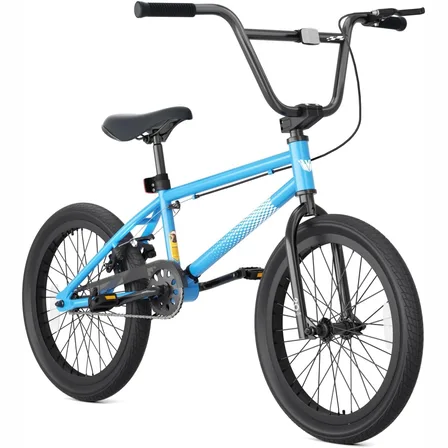
Blue XJD Freestyle BMX Bike, 20-Inch – No Pegs
The XJD 20-Inch Blue Freestyle BMX is an entry-level BMX bike for boys and girls…$189.99