

What size bike does a 13 year old need
Most 13-year-olds should start with a 24 Inch bike; riders over 60 in (153 cm) should also compare a 26 Inch bike. Measure and test fit before buying.
Choose by measured height, not age alone
At age 13, a rider often falls near the transition between 24 Inch and 26 Inch wheels. Under the XBikes starting points, a 24 Inch bike covers ages 10–14 and heights of 54–64 in (137–163 cm). A 26 Inch bike is a starting point for youth and adults over 60 in (153 cm).
Those ranges overlap deliberately: wheel size narrows the search, but it does not confirm that a particular bicycle fits. Frame shape, saddle adjustment, reach and the rider’s confidence can make two bicycles with the same wheel size feel different.
Measure these two things first
- Standing height: Have the child stand straight without shoes against a wall. Measure from the floor to the top of the head, then compare the result with the wheel-size ranges.
- Inseam: With feet slightly apart, measure from the floor to the crotch. Use this measurement when checking whether the rider can stand over the actual bicycle with comfortable clearance.
Do not estimate from clothing size or rely on the age printed in a general chart. If the child is still within the 24 Inch height range but is over 60 in, try both 24 Inch and 26 Inch bicycles and choose according to control and comfort.
Quick wheel-size comparison for a 13-year-old
| Wheel size | XBikes starting point | What it means at age 13 |
|---|---|---|
| 20 Inch | Ages 7–12; 48–60 in (122–152 cm) | Consider only if the rider’s measured height remains in this range and the individual fit check succeeds. |
| 24 Inch | Ages 10–14; 54–64 in (137–163 cm) | The usual first size to try for a 13-year-old within this height range. |
| 26 Inch | Youth and adults over 60 in (153 cm) | A relevant comparison once the rider is over 60 in, provided reach and control are comfortable. |
A shorter 13-year-old should not be pushed onto a larger bicycle merely because of age. Likewise, a taller rider should not remain on a smaller size if it causes cramped pedaling or awkward steering.
Perform the fit check on the actual bicycle
Have the child try the bicycle rather than buying extra size for future growth. With the rider standing over the frame, confirm there is comfortable clearance and that mounting and stopping feel controlled. Seated in a normal riding position, the rider should be able to steer without stretching, crowding or locking the arms.
Ask the child to place their hands naturally on the controls and operate both brakes confidently. Brake-lever reach matters: the rider should not have to shift the hand into an unstable position to apply a brake. Also check that starts, turns and stops feel manageable at the child’s current skill level. If the rider looks tense or cannot control the bicycle smoothly, try a different size or frame fit.
How the supplied XBikes option helps
The XJD Kids Beach Cruiser Bicycle, Rear Rack & V-Brakes, Mint Green is offered with 20 Inch, 24 Inch and 26 Inch SKU labels. That makes it useful for comparing the three wheel-size starting points around this decision, while its Beach Cruiser Bikes category describes the type of bicycle rather than proving fit.

For a typical 13-year-old in the 24 Inch range, begin with its 24 Inch option. Compare the 26 Inch option only when the rider is over 60 in (153 cm), and consider the 20 Inch option only when measured height remains within 48–60 in (122–152 cm). None of these labels replaces an in-person stand-over, reach and brake-control check.
For assembly, adjustments, compatibility, maintenance, load limits or torque requirements, follow the exact product manual or ask a qualified bicycle mechanic. Do not improvise settings from a general size chart.
Complete the decision before riding
Once a size passes the stationary check, let the child make controlled starts, turns and stops in a traffic-free area. Reconsider the fit if mounting is difficult, the handlebars feel too far away, braking is unreliable or the rider lacks confidence.
Add a properly fitted bicycle helmet. It should sit level and its straps should be adjusted according to the helmet manufacturer’s instructions.
For this 13-year-old, measure height and inseam now, shortlist 24 Inch or—above 60 in (153 cm)—26 Inch, then buy only the bicycle the child can stand over, reach, steer and brake confidently.
Bikes for your next adventure
-

Light Purple XJD Toddler Bike Helmet, Adjustable, Size XS (46–51 cm)
This Light Purple XJD toddler bike helmet is made for the smallest riders — the …$20.39
-

XJD Boys 12/14/16" Training Wheel Bike – Blue
The XJD Boys Bike in Blue is a training wheel bike for riders 71–122 cm tall—rou…$169
$199 -
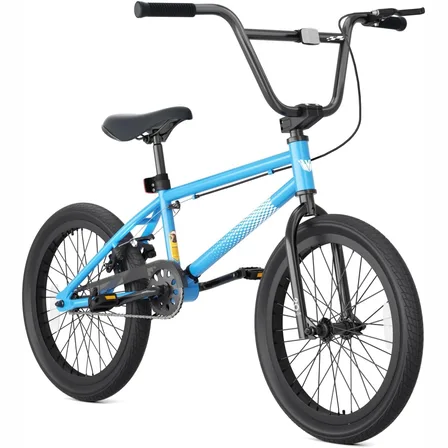
Blue XJD Freestyle BMX Bike, 20-Inch – No Pegs
The XJD 20-Inch Blue Freestyle BMX is an entry-level BMX bike for boys and girls…$189.99