

What size bike for 20 inch inside leg
A 20-inch inside leg does not determine one bike size by itself. Measure the child’s height, confirm the inseam, then check stand-over, reach and brake control on the actual bike.
Start with the measurement, not the wheel label
“20-inch inside leg” means an inseam of about 20 inches, not a need for a 20-inch-wheel bicycle. Wheel size and inside-leg length are different measurements, so matching the two numbers would be misleading.
XBikes does not supply a wheel-size chart based on inseam alone. Use the child’s measured standing height to identify a starting range, then require an individual fit check. Age is only a secondary guide.
Measure the inside leg accurately
- Have the child wear the shoes they normally use for riding.
- Ask them to stand upright against a wall, with their feet slightly apart.
- Place a thin, firm book between their legs and raise it gently to simulate the contact of a saddle.
- Measure vertically from the floor to the top edge of the book. Record the result without rounding it up.
- Measure total standing height as well, without shoes if comparing it with the XBikes height ranges.
Repeat the inseam measurement once. A small measuring error can affect the stand-over assessment, especially for a new or cautious rider.
Use height to choose a starting wheel size
Compare the child’s measured height with these XBikes starting points. Overlapping ranges are intentional: they identify bikes worth trying, not an automatic final answer.
| Wheel size | Starting age | Rider height |
|---|---|---|
| 12 Inch | 3–4 | 34–40 in / 86–102 cm |
| 14 Inch | 3–6 | 37–45 in / 94–114 cm |
| 16 Inch | 4–7 | 40–48 in / 102–122 cm |
| 18 Inch | 5–9 | 43–52 in / 109–132 cm |
| 20 Inch | 7–12 | 48–60 in / 122–152 cm |
| 24 Inch | 10–14 | 54–64 in / 137–163 cm |
| 26 Inch | Youth and adults | Over 60 in / 153 cm |
For example, a child with a 20-inch inseam should not be placed on a 20-inch-wheel bike merely because both measurements say “20 inch.” First locate the child’s height in the table. If it falls within overlapping bands, compare those candidate sizes in person.
What the child must be able to do
Have the child try the exact bicycle. The American Academy of Pediatrics advises against buying an oversized bike for growth and recommends checking stand-over, control and brake reach.
- Stand-over: The child must be able to stand over the bike without the frame preventing a stable stance.
- Starting and stopping: They should mount, set off and stop without the bike overwhelming them.
- Reach: They should hold the controls without stretching or losing a comfortable riding position.
- Braking: They must reach and operate the brakes reliably with their current hand size and strength.
- Confidence: A size that is technically possible may still be inappropriate if the rider cannot control it calmly.
Do not assume that a lower saddle fixes a frame that is too large or a reach that is too long. Follow the exact product manual for adjustment and assembly information; if anything is uncertain, use a qualified bicycle mechanic.
How the supplied bikes help with comparison
The catalog choices below include 14-, 16-, 20-, 24- and 26-inch size labels, plus one explicitly titled 20-inch BMX model. They are useful bikes to compare only after measured height identifies a sensible starting range and an actual fit check confirms control.
 XJD Pink Beach Cruiser for Girls – Rear Rack & V-Brake
Available in 20 Inch, 24 Inch and 26 Inch SKU labels, this cruiser is relevant for comparing larger wheel-size starting points after height and hands-on fit checks.
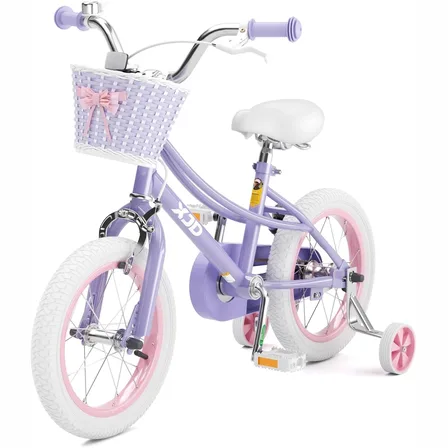
 Girls' Training Wheel Bike by XJD with Basket – Purple
Its 14 Inch, 16 Inch and 20 Inch SKU labels make this bike useful for comparing overlapping height-based starting ranges, while still requiring an individual fit check.
 Blue XJD Freestyle BMX Bike, 20-Inch – No Pegs
This explicitly titled 20-inch BMX model is relevant only when the rider’s measured height supports the 20 Inch band and stand-over, reach, braking and confidence are suitable.
Girls' Training Wheel Bike by XJD with Basket – Purple has 14 Inch, 16 Inch and 20 Inch SKU labels. That range can help a parent compare neighboring starting sizes when the child’s measured height overlaps the XBikes bands.
XJD Pink Beach Cruiser for Girls – Rear Rack & V-Brake is offered with 20 Inch, 24 Inch and 26 Inch SKU labels. Its larger options should not be treated as room to grow: compare only the size supported by height and successful hands-on control.
Blue XJD Freestyle BMX Bike, 20-Inch – No Pegs is explicitly a 20-inch model, with a Default SKU label. It is relevant only if the child’s height points toward the 20 Inch starting band and the individual bike passes the stand-over, reach, braking and confidence checks.
The decision for a 20-inch inside leg
Measure height now, shortlist the wheel-size bands that contain that height, and have the child try those bikes. Reject any option they cannot stand over and control comfortably, even if its label matches the 20-inch inseam or promises longer use.
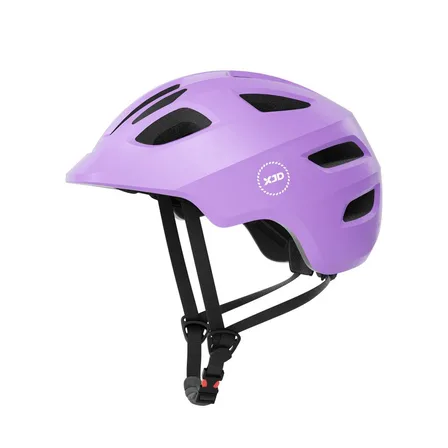
Before riding, use a properly fitting bicycle helmet. The U.S. Consumer Product Safety Commission says it should sit level and its straps should be used according to the helmet manufacturer’s instructions. The practical answer is therefore not “buy a 20-inch bike”: it is “use height to shortlist, then let stand-over, reach, braking and present confidence decide.”
Bikes for your next adventure
-
Girls' Training Wheel Bike by XJD with Basket – Purple
If you're shopping for a first bike for a girl roughly 3 to 12 years old (91–152…$75.99
-
Girls' Bike Helmet from XJD – Purple
The XJD kids bike helmet in purple is a multi-sport helmet built for toddlers an…$59.99
$49 -

Green XJD Toddler Bike Helmet with Adjustable Fit, XS (46–51 cm)
The XJD toddler bike helmet in Green is built for the youngest riders — the size…$20.39
$23.99