

What size bike for 24 inch inseam
A 24-inch inseam does not determine one bike size. Measure the rider’s full height, then compare 20- and 24-inch wheels and confirm stand-over clearance, reach and brake control on the actual bike.
Start with height, not the inseam alone
For a rider with a 24-inch inseam, the key missing measurement is standing height. XBikes uses these wheel-size starting points: a 20-inch bike for riders 48–60 inches (122–152 cm) tall, and a 24-inch bike for riders 54–64 inches (137–163 cm) tall. The ranges overlap, so neither wheel size can be selected from inseam alone.
Age can provide context, but it should not decide the purchase. The XBikes starting points associate 20-inch wheels with ages 7–12 and 24-inch wheels with ages 10–14. Prioritize measured height, inseam, reach, brake control and current riding confidence over age.
Measure the rider accurately
- Measure standing height: Have the rider stand without shoes, heels against a wall and eyes level. Mark the top of the head and measure from the floor.
- Confirm the 24-inch inseam: With feet slightly apart, place a firm, level book between the legs and raise it gently to simulate a saddle. Measure from the floor to the top edge of the book.
- Record both figures: Use height to identify the starting wheel-size range. Keep the inseam for the physical stand-over and saddle check.
Do not confuse a 24-inch inseam with a 24-inch bicycle. The former is a body measurement; the latter describes wheel size. They are not interchangeable.
Choose which size to try first
| Measured rider height | Starting comparison | What to do |
|---|---|---|
| 48–53 inches | 20-inch wheel | Begin with a 20-inch bike, then perform the complete fit check. |
| 54–60 inches | 20- and 24-inch wheels | Try both sizes. Choose by control and fit, not by room to grow. |
| 61–64 inches | 24-inch wheel | Begin with a 24-inch bike and verify every control point. |
| Outside these ranges | Another starting size | Use the XBikes height range appropriate to the measured height and arrange an individual fit check. |
A child near a range boundary may feel substantially more confident on one size. Do not buy an oversized bicycle merely to extend its useful life; the rider needs manageable control now.
Perform the fit check on the actual bicycle
Have the rider try the exact model rather than assuming that all bicycles with the same wheel diameter fit alike. With the rider standing over the bicycle, confirm comfortable clearance and no forced contact. Seated, the rider should be able to reach the handlebar without excessive stretching or a cramped posture.
Next, check steering at low speed and while stopped. The rider should be able to hold a straight line, turn without losing balance and start and stop without the bicycle feeling unwieldy. Ask the rider to operate each brake confidently while maintaining a secure grip. Brake-lever reach matters as much as wheel size.
If stand-over clearance, reach or brake operation is doubtful, reject that fit. Consult the exact product manual for permitted adjustments and assembly instructions, or ask a qualified bicycle mechanic to inspect and adjust the bicycle. Do not improvise component positions or torque settings.
How the supplied bicycles help with comparison
The catalog includes 24-inch cruiser options and one listing with both 20- and 24-inch SKU labels, making these products useful comparison points when the rider’s measured height falls in the overlapping range. They still require an individual fit check; a wheel-size label cannot confirm fit by itself.
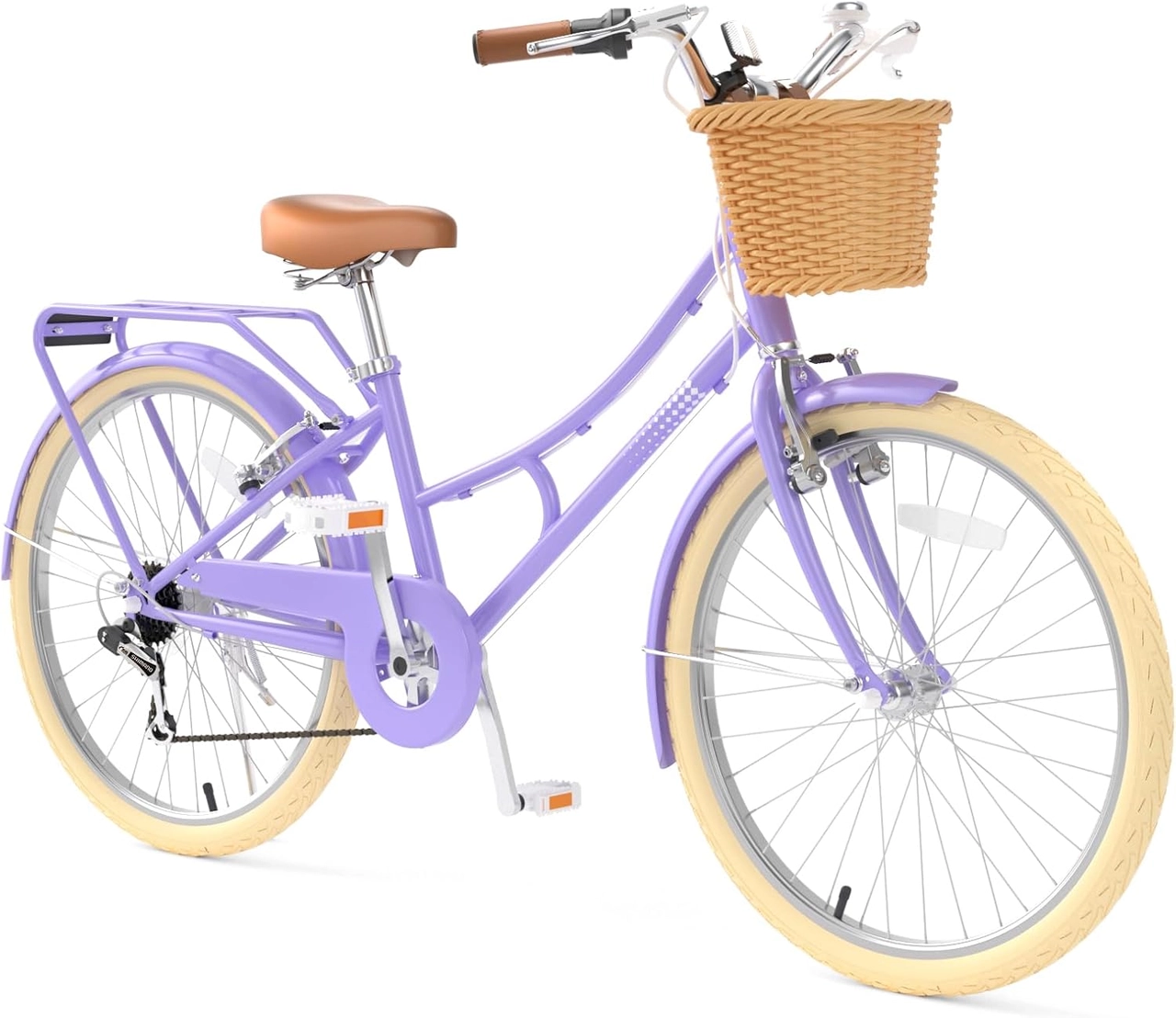 24-Inch Purple XJD Beach Cruiser Bike with U-Brake
A 24-inch beach cruiser comparison option with a U-brake. Its wheel label is relevant when measured rider height supports a 24-inch starting point, but stand-over, reach and brake control still require an individual check.
 26-Inch XJD Beach Cruiser Bike for Girls – Purple, V-Brake
This V-brake listing offers supplied SKU labels in 20-, 24- and 26-inch sizes. The 20- and 24-inch choices can support a direct fit comparison; choose the exact SKU carefully because the product title names 26 inches.
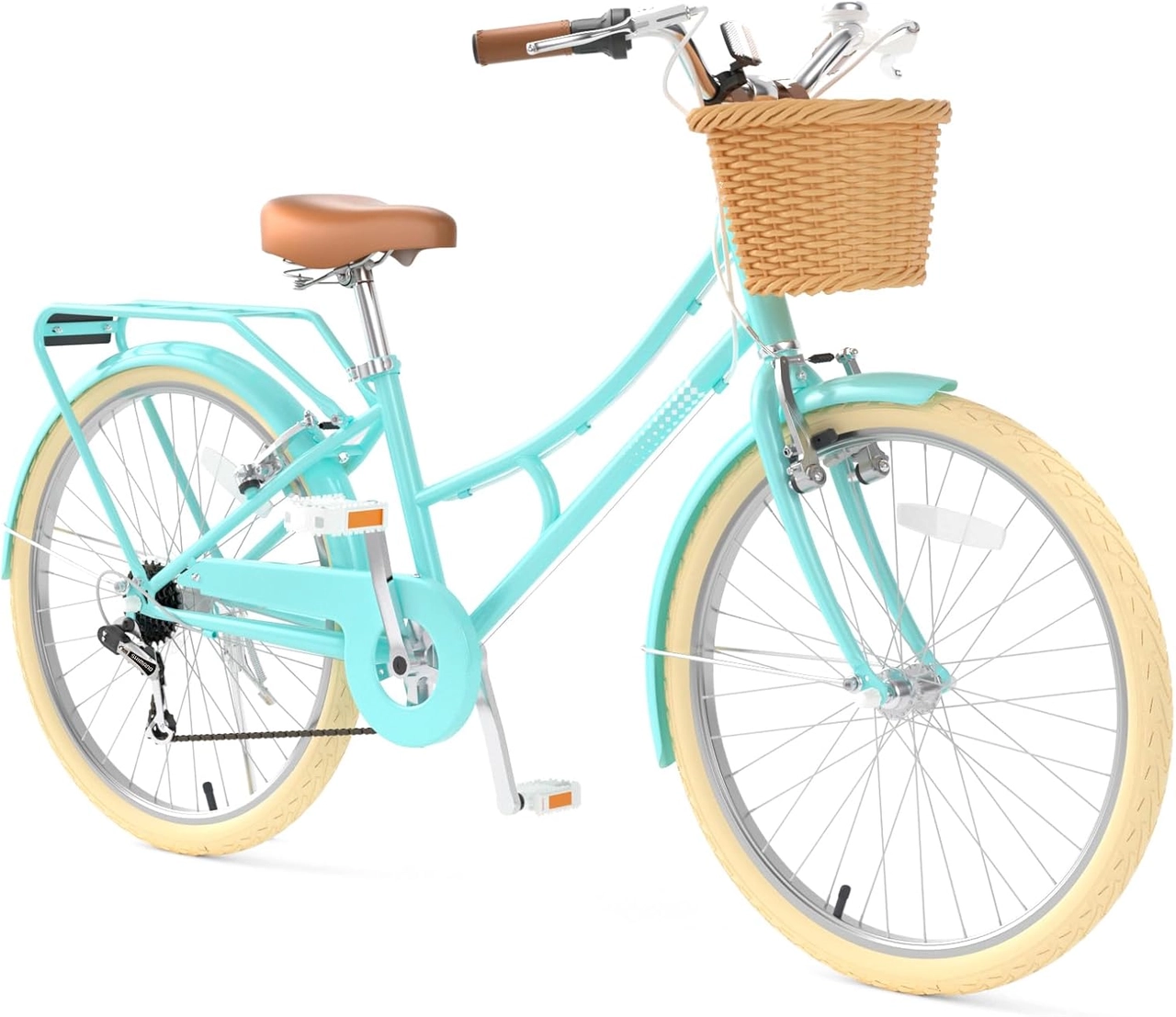 XJD 24-Inch Green Beach Cruiser Bike with U-Brake
A beach cruiser listing with Green / 24 Inch and Pink / 24 Inch SKU labels and a U-brake. It provides 24-inch comparison choices, subject to measured height and a complete individual fit check.
24-Inch Purple XJD Beach Cruiser Bike with U-Brake is a 24-inch catalog option with a U-brake. XJD 24-Inch Green Beach Cruiser Bike with U-Brake is another 24-inch listing with a U-brake; its supplied SKU labels include Green / 24 Inch and Pink / 24 Inch, as well as Pink / 26 Inch.
26-Inch XJD Beach Cruiser Bike for Girls – Purple, V-Brake is titled as a 26-inch model with a V-brake, but its supplied SKU labels also include Mint Green / 20 Inch, Mint Green / 24 Inch, Pink / 20 Inch and Pink / 24 Inch, alongside 26-inch choices. Select by the exact SKU label rather than inferring wheel size from the listing title alone. The catalog labels do not replace checking height, stand-over, reach or brake control.
Make the final decision
Once height narrows the choice, let the rider compare only plausible sizes. A controlled 20-inch fit is preferable to an oversized 24-inch bike bought for growth. A 24-inch bike becomes a reasonable candidate when the rider is within its 54–64-inch height range and can pass the complete fit check.
Before riding, use a bicycle helmet that fits properly, sits level and has its straps secured according to the helmet manufacturer’s instructions. For a 24-inch inseam, the next action is simple: measure standing height, identify the starting wheel range, and try the exact bicycle before choosing.
Bikes for your next adventure
-
24-Inch Purple XJD Beach Cruiser Bike with U-Brake
The XJD 24-Inch Purple Beach Cruiser is built for girls and young women roughly …$159.99
-
XJD Pink Beach Cruiser for Girls – Rear Rack & V-Brake
The XJD Pink Beach Cruiser for girls is the step-up bike for riders who've outgr…$179.99
$209.99 -
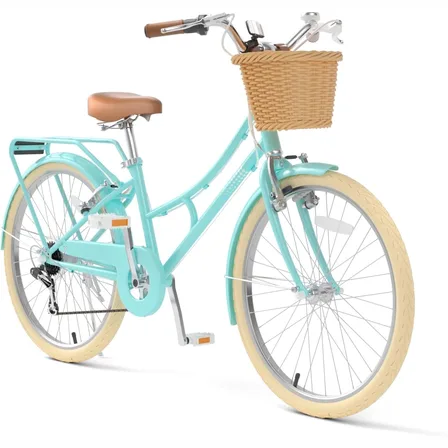
XJD Kids Beach Cruiser Bicycle, Rear Rack & V-Brakes, Mint Green
The XJD Beach Cruiser in Mint Green is a geared, multi-speed cruiser bike for ol…$179.99
$209.99